Milestones
- 1st time seeing elephant seals, in-person, up-close… (as close as I want to be)
- 2nd time camping this month (SHOW ON MAP)
- 3rd time camping in San Luis Obispo county (SHOW 2ND)
- 4th time riding my bike on a pier/jetty (SHOW 3RD)
- 2nd time camping by a State Marine Conservation Area (SHOW 1ST)
Camping along CA Highway 1
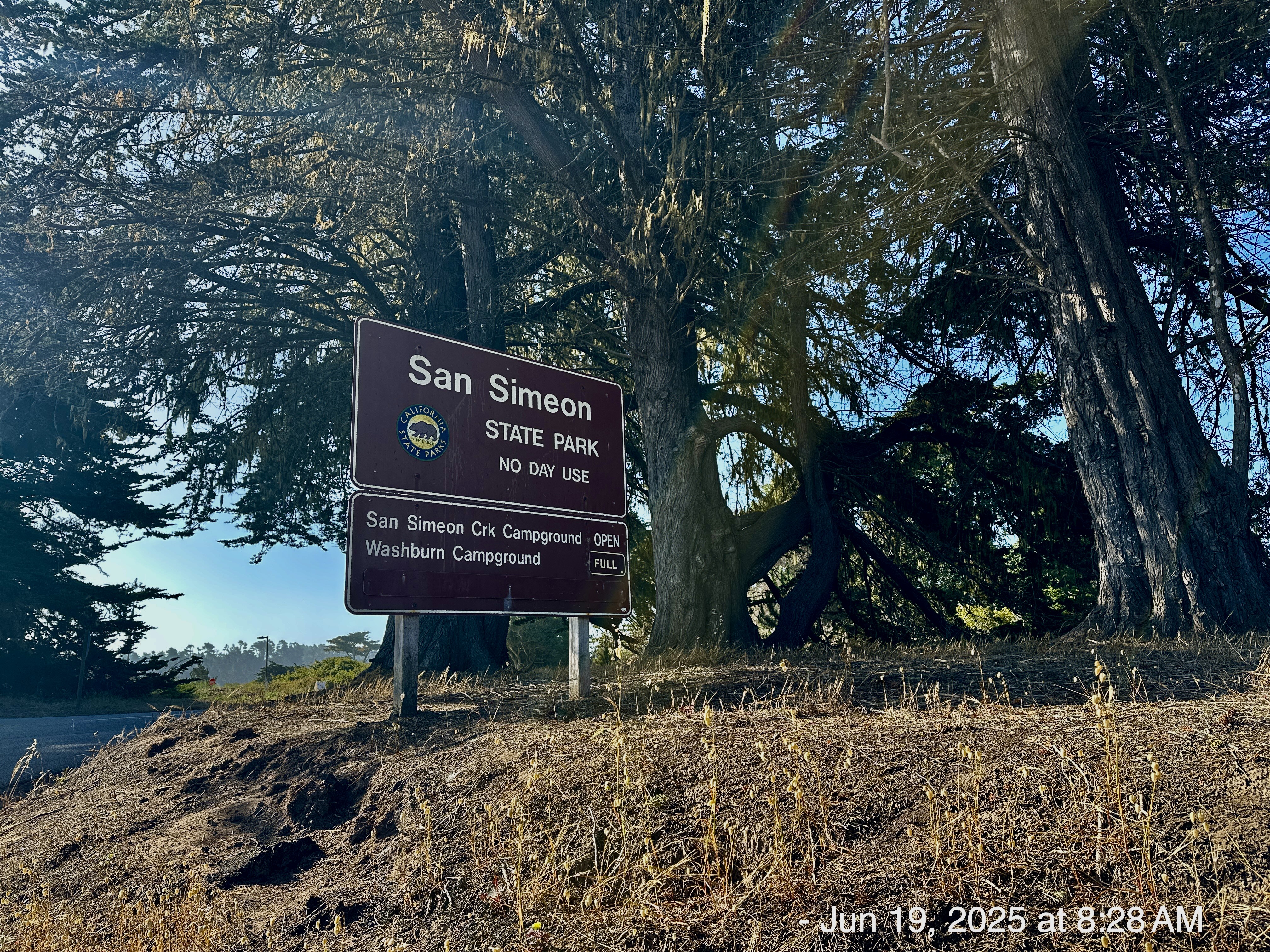
I only had to drive 4.5 hrs from my house to get to the campground (sadly, 30 minutes was wasted in traffic jams getting through Pasadena). But, when I arrived, I was pleased to have a nice campsite with easy access to the bathroom (which isn’t always a benefit, since it’s a very popular destination at night and first thing in the morning). No one camped next to me the first night, so that was a nice too. Temperatures ranged from low 50’s to low 70’s. Great sleeping weather.
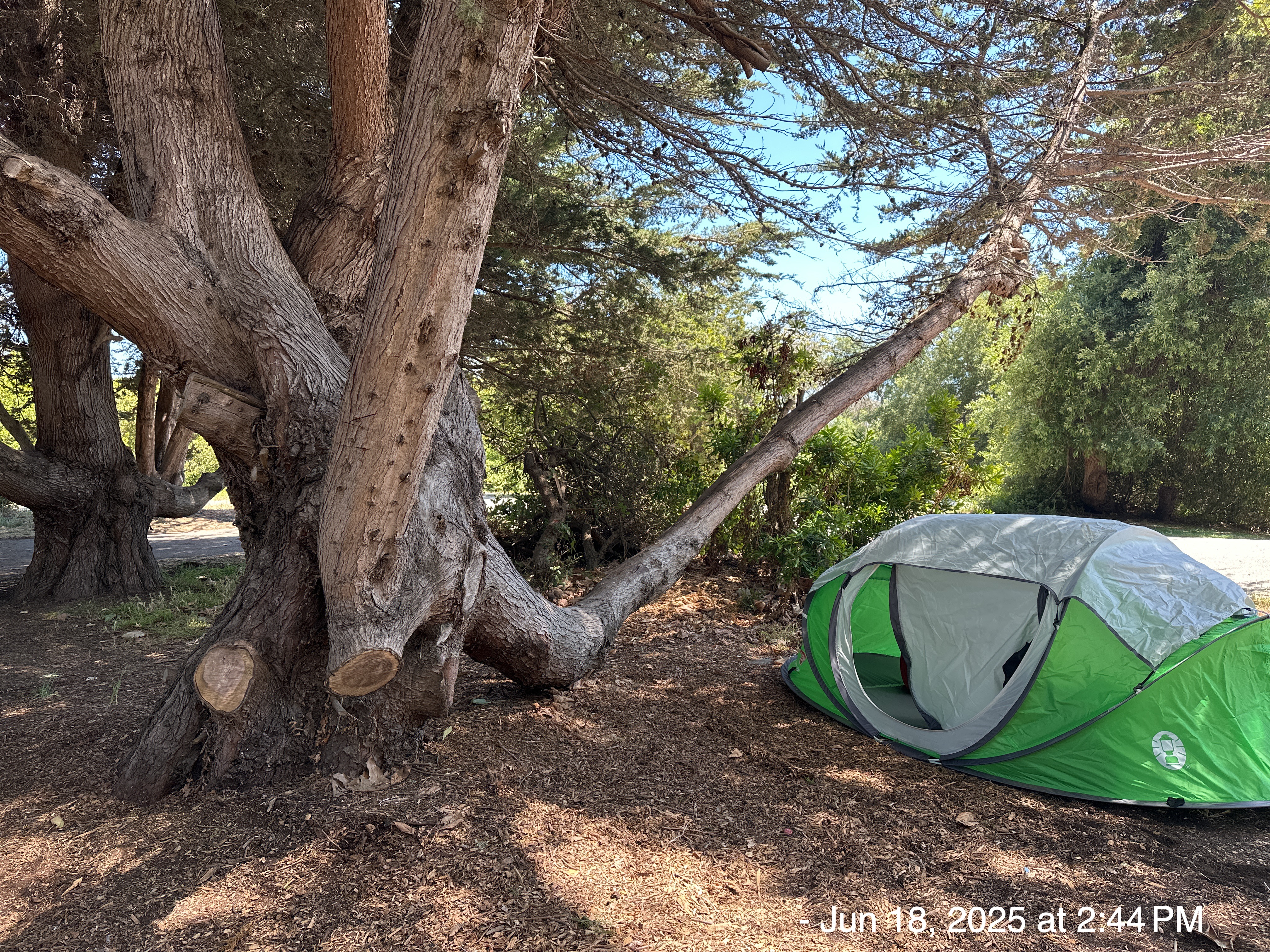
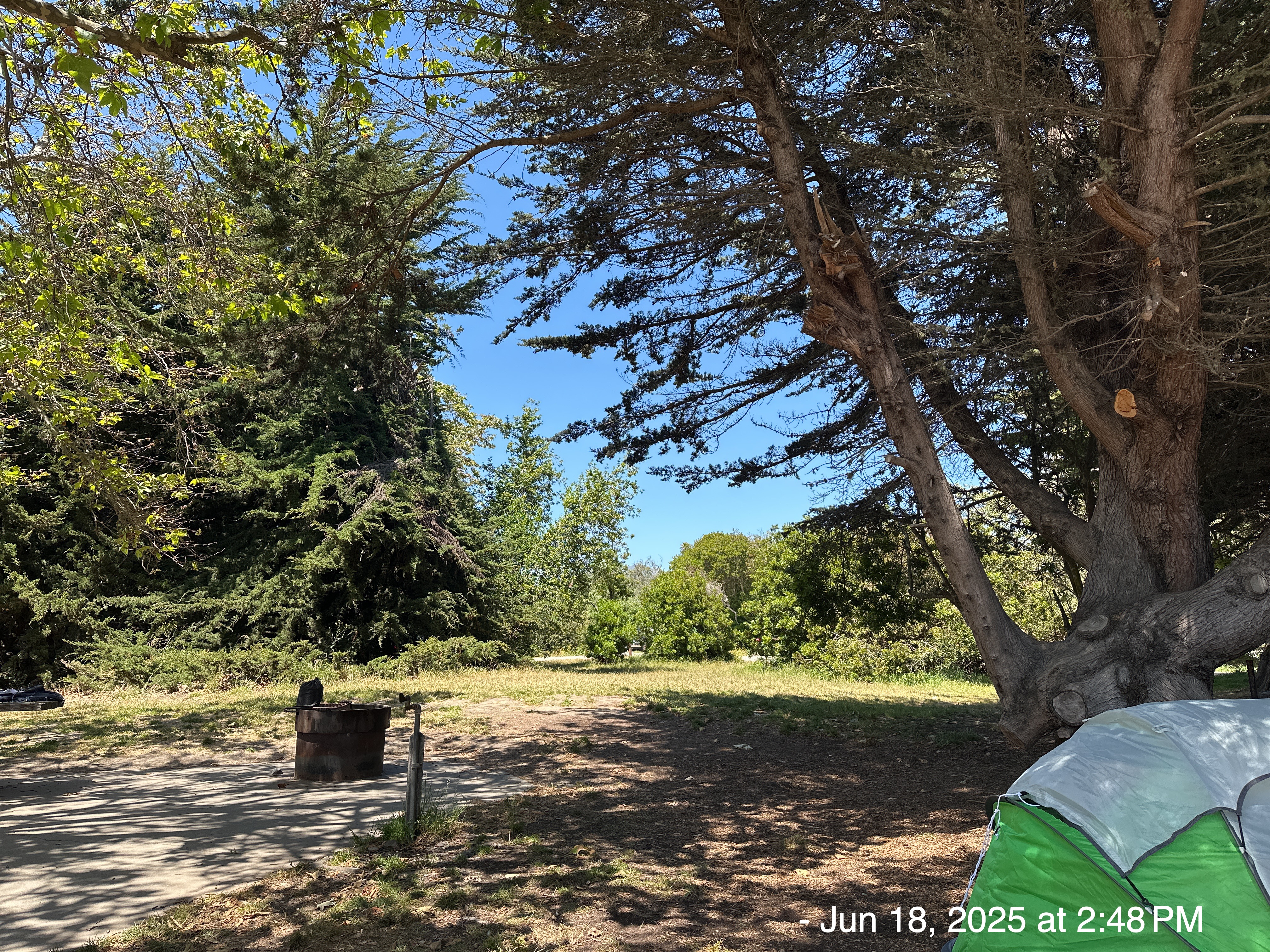
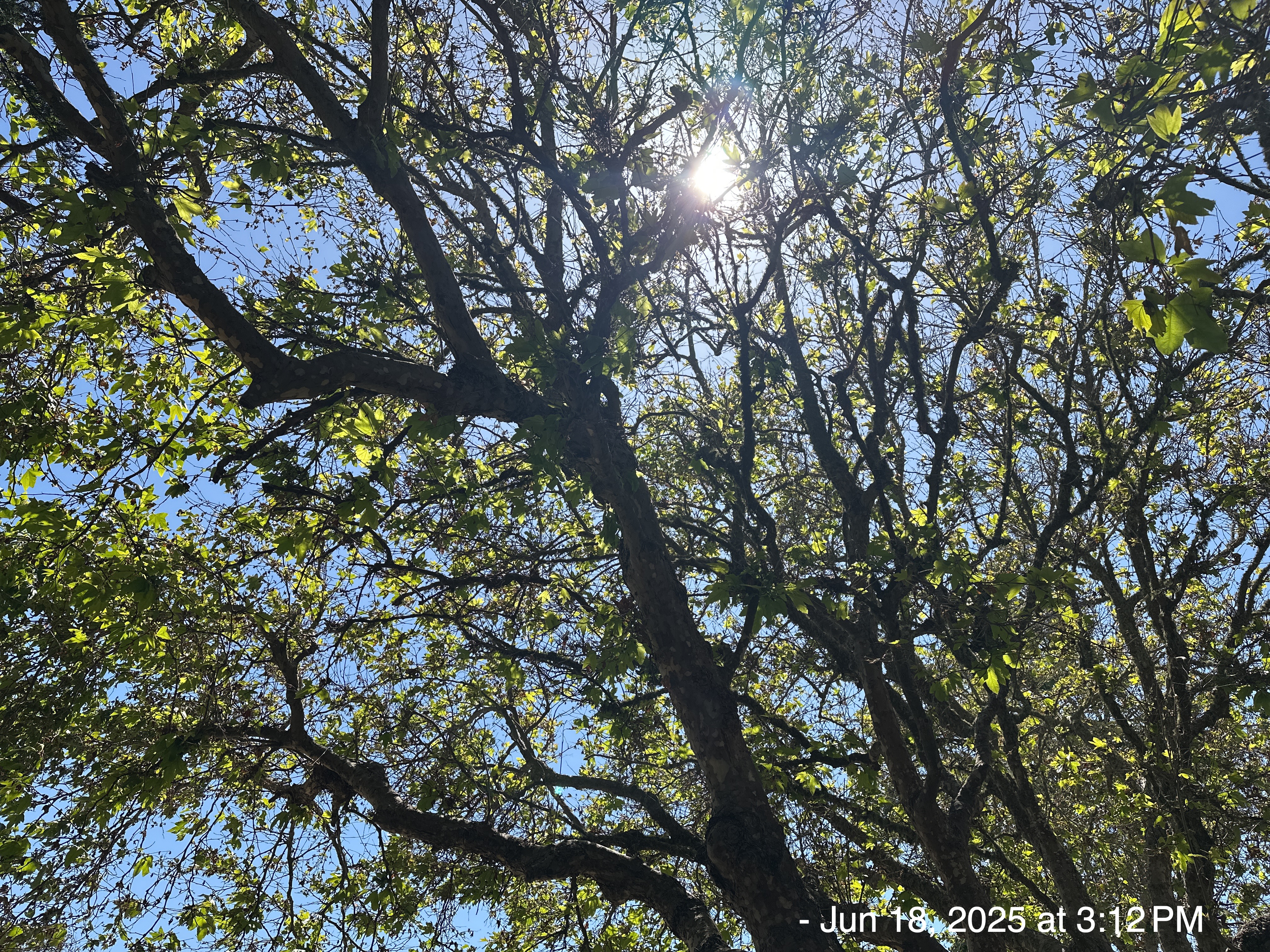
The wind was pretty strong in the late afternoons (steady 20-25mph, gusts 30-35mph). It drops the “feels like” temperature down 10 degrees F.
Riding up the California Coast
I did my research beforehand, so I was expecting safe bike riding along the highway. I passed a dozen riders, so I wasn’t the only weirdo. The shoulder alongside the road wasn’t always wide, but 90% of it was just like this…
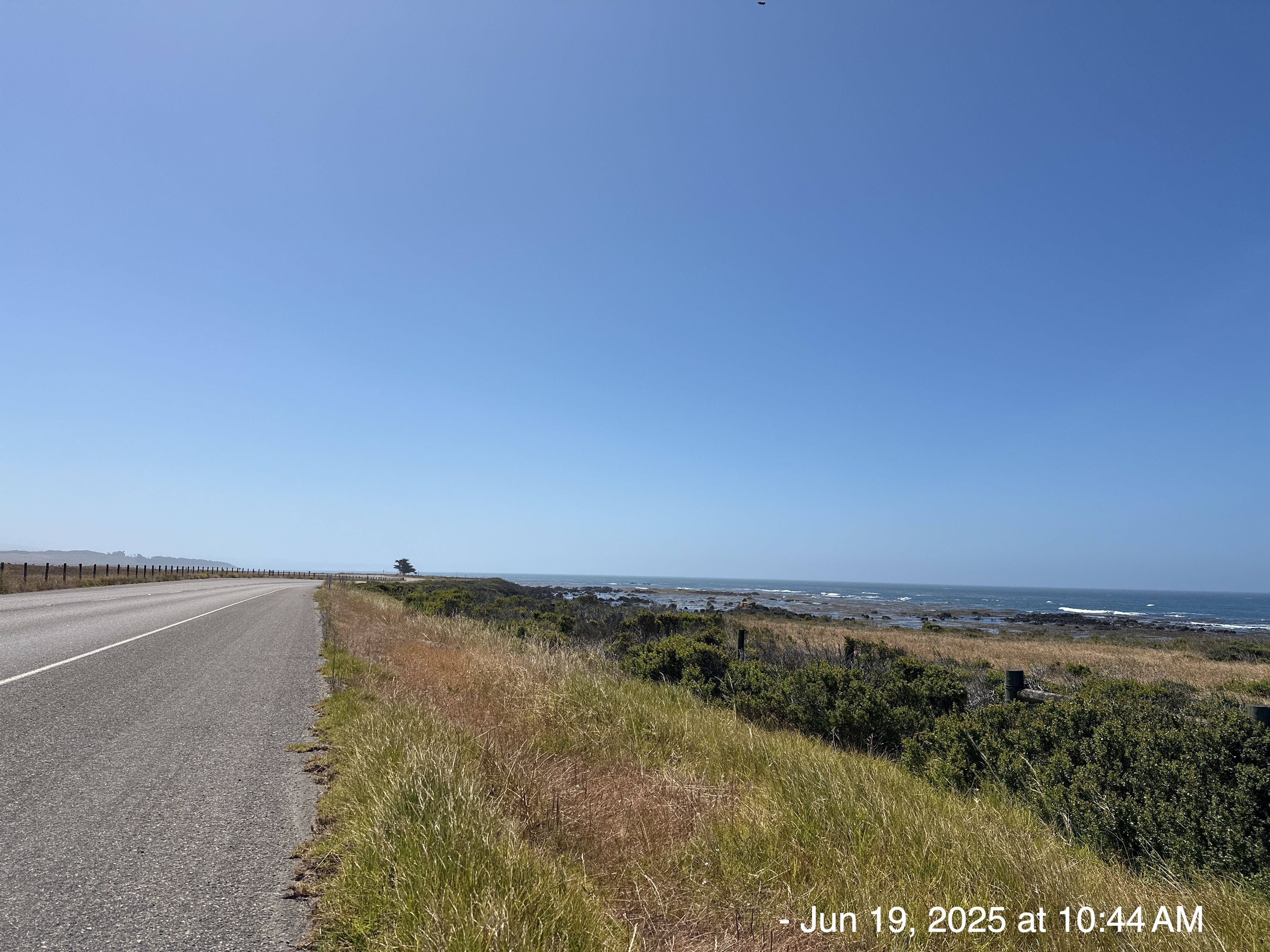
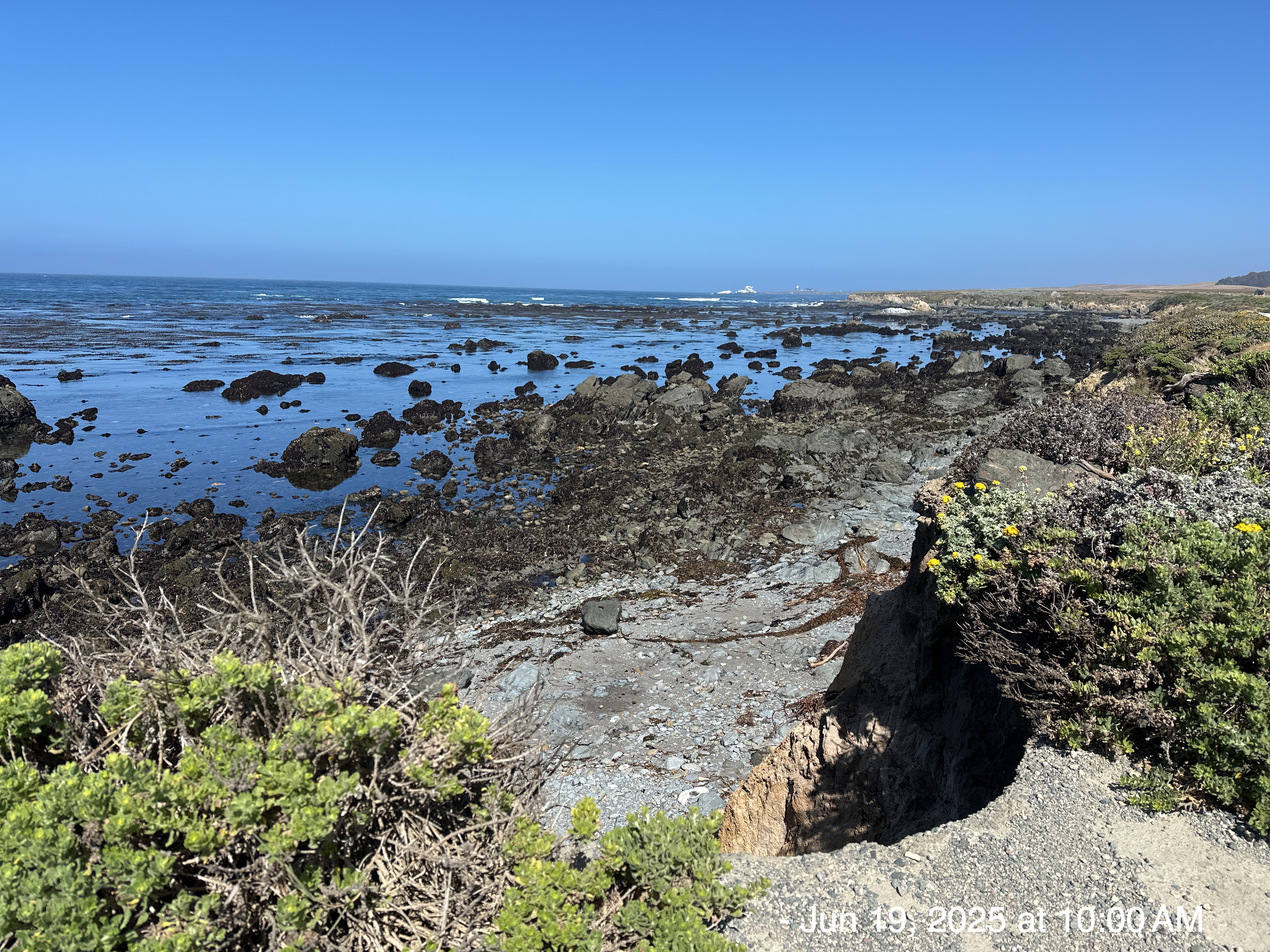
On this day, Sunrise and Low Tide were about 5:40AM. At the time I was biking, I got to see more of the coastline because the tide was still mostly out.
Cambria State Marine Conservation Area (SMCA)
My campground and bike ride on Highway 1 were alongside the Cambria SMCA (covering 6.26 square miles) which is also a State Marine Park. It’s the state’s only dual-designation marine protected area (MPA).
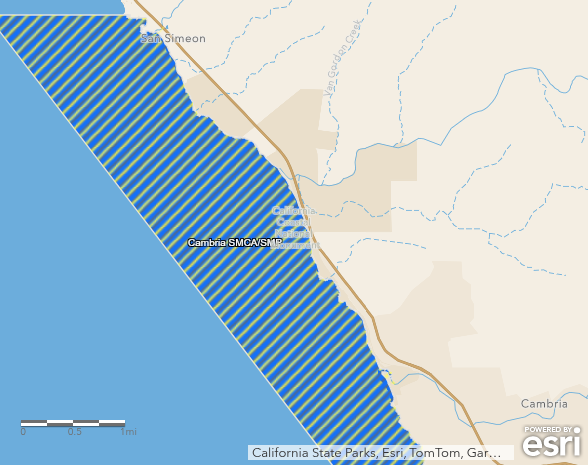
What is an SMCA? Like state and national parks protect wildlife and habitats on land, marine protected areas (MPAs) conserve and restore wildlife and habitats in our ocean. Under the California Marine Life Protection Act (MLPA) passed in 1999, California began a historic effort to establish a science-based, statewide network of MPAs through a collaborative effort that includes the California Department of Fish and Wildlife and California State Parks.
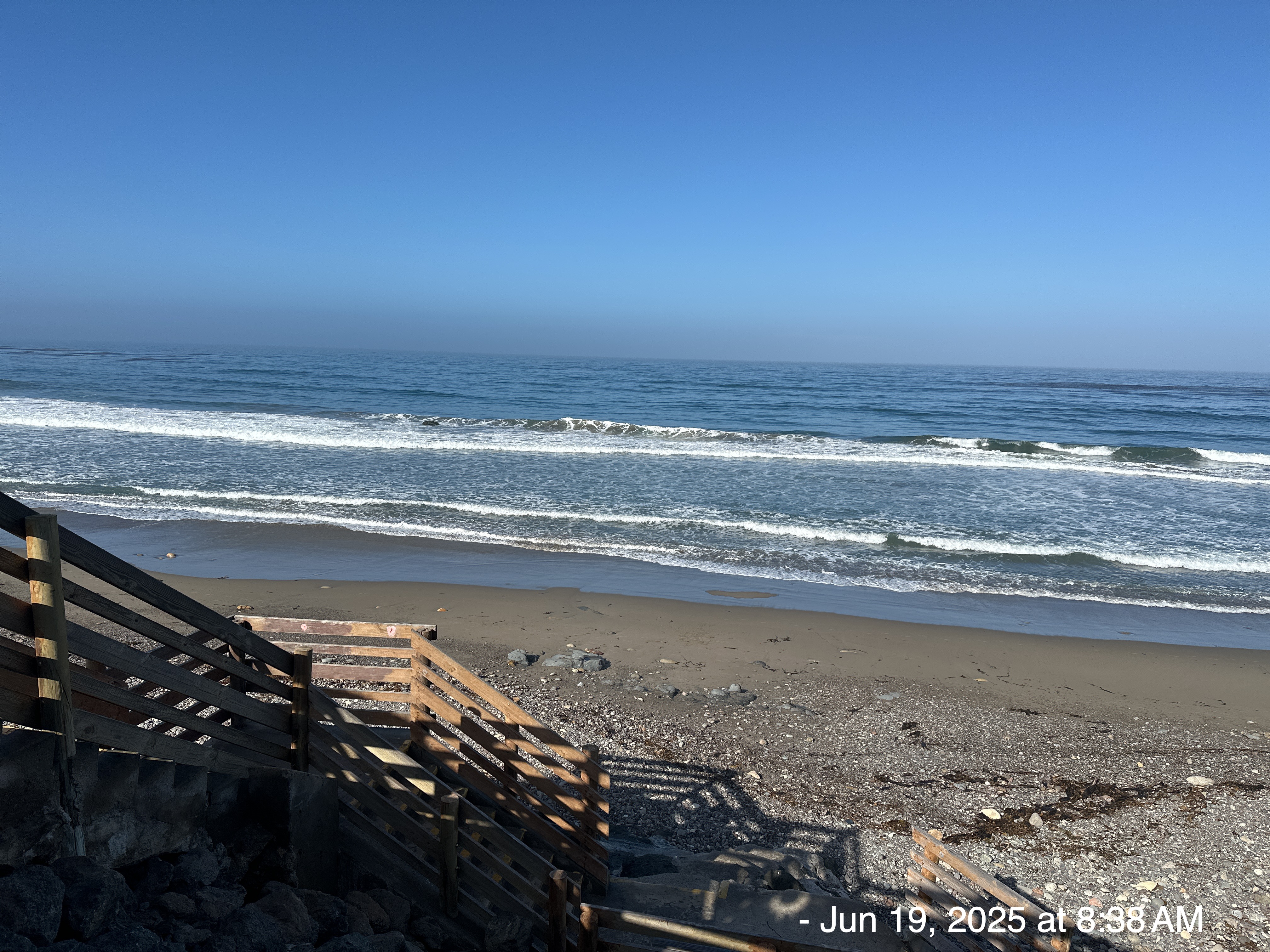
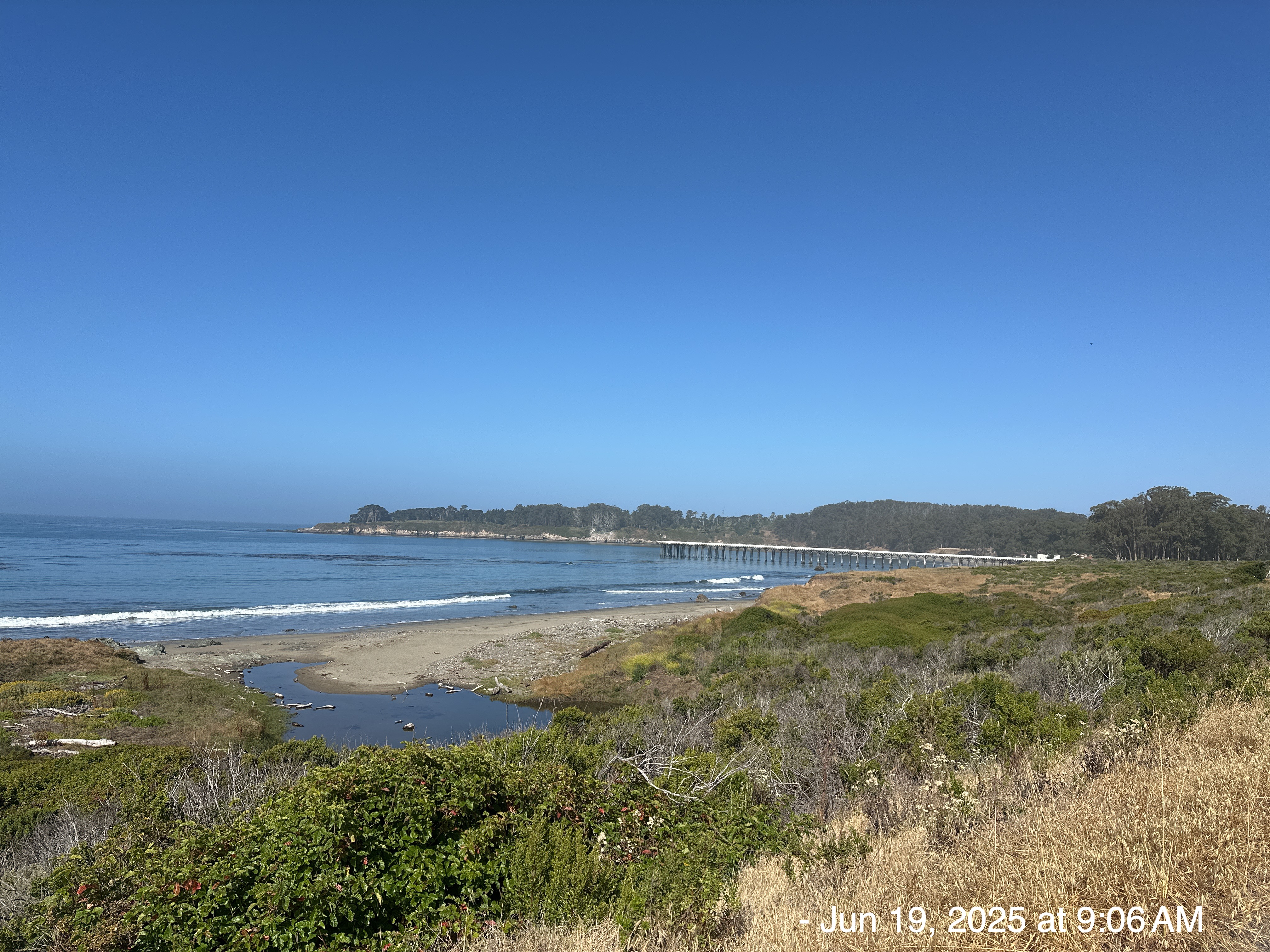
There was a little haze this early in the day, but no wind. I wasn’t disappointed by the views.
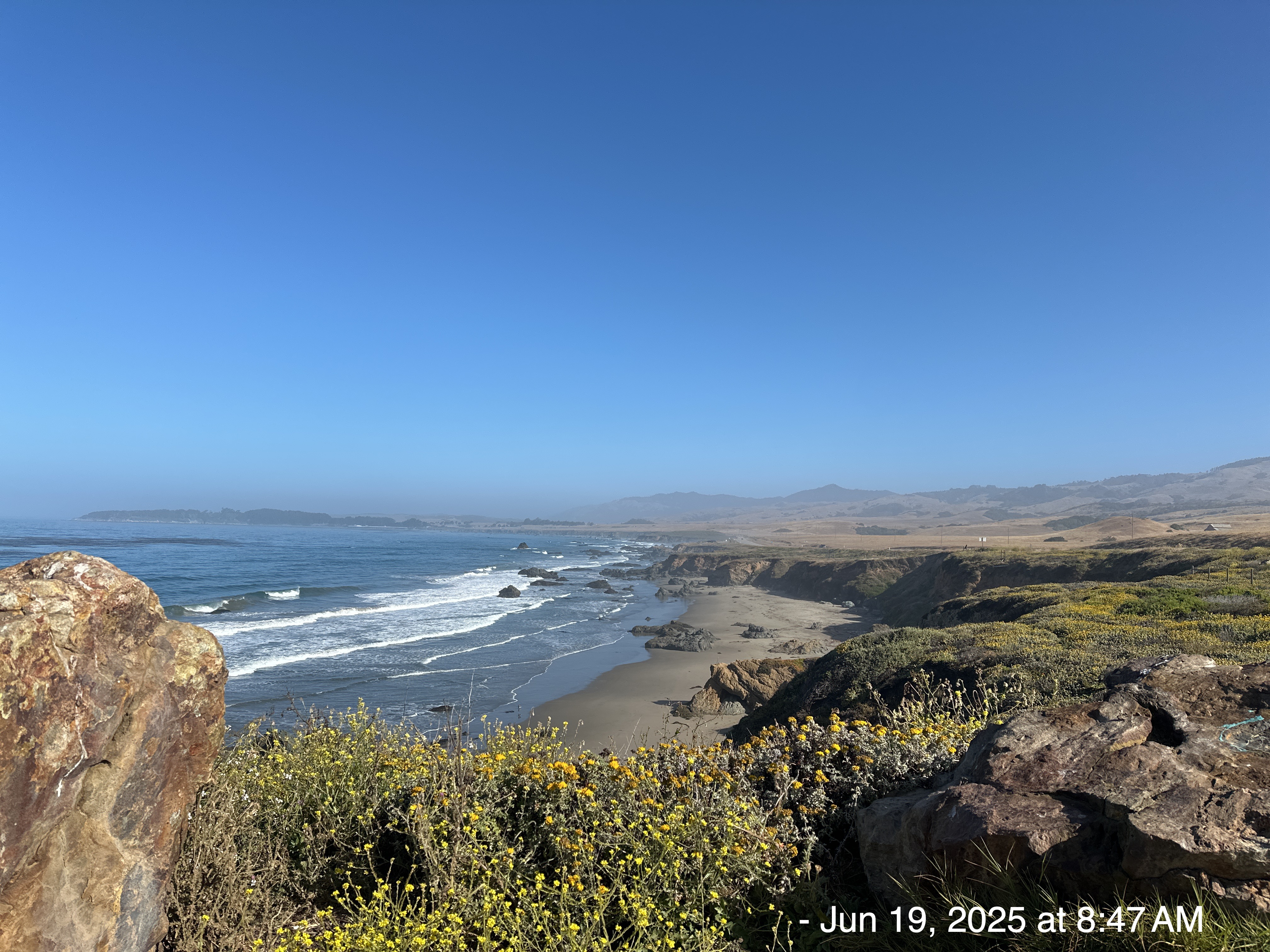
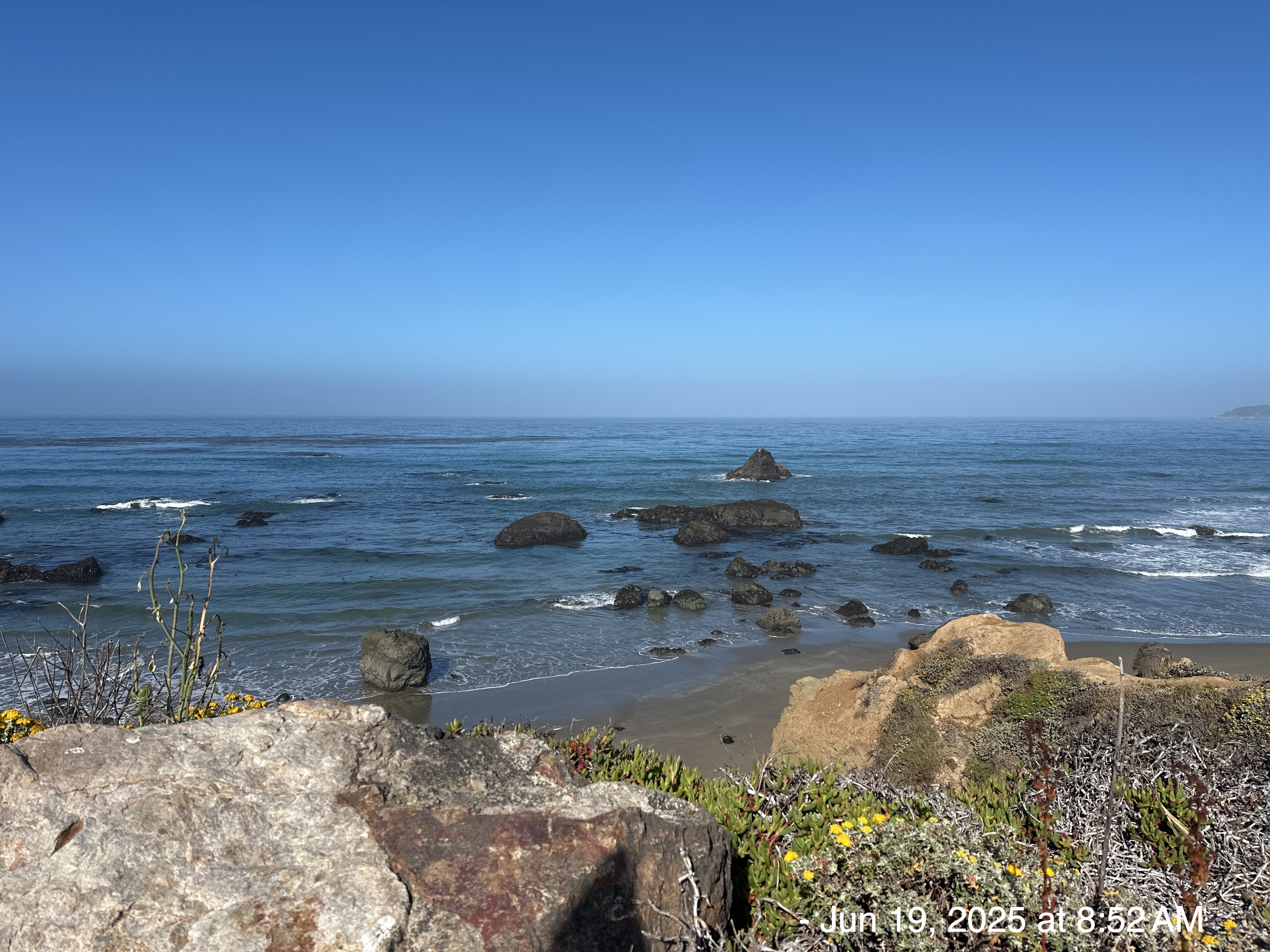
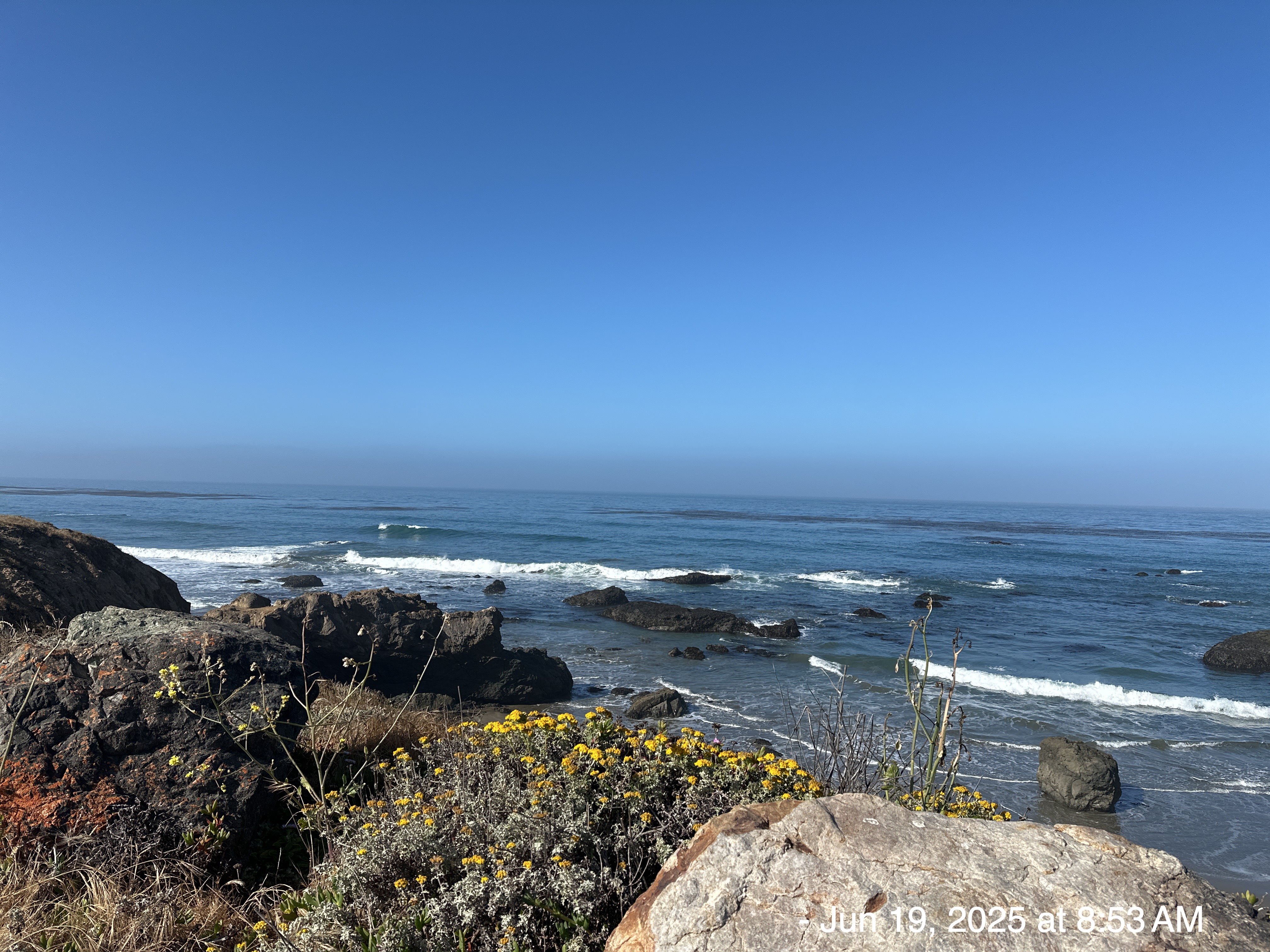
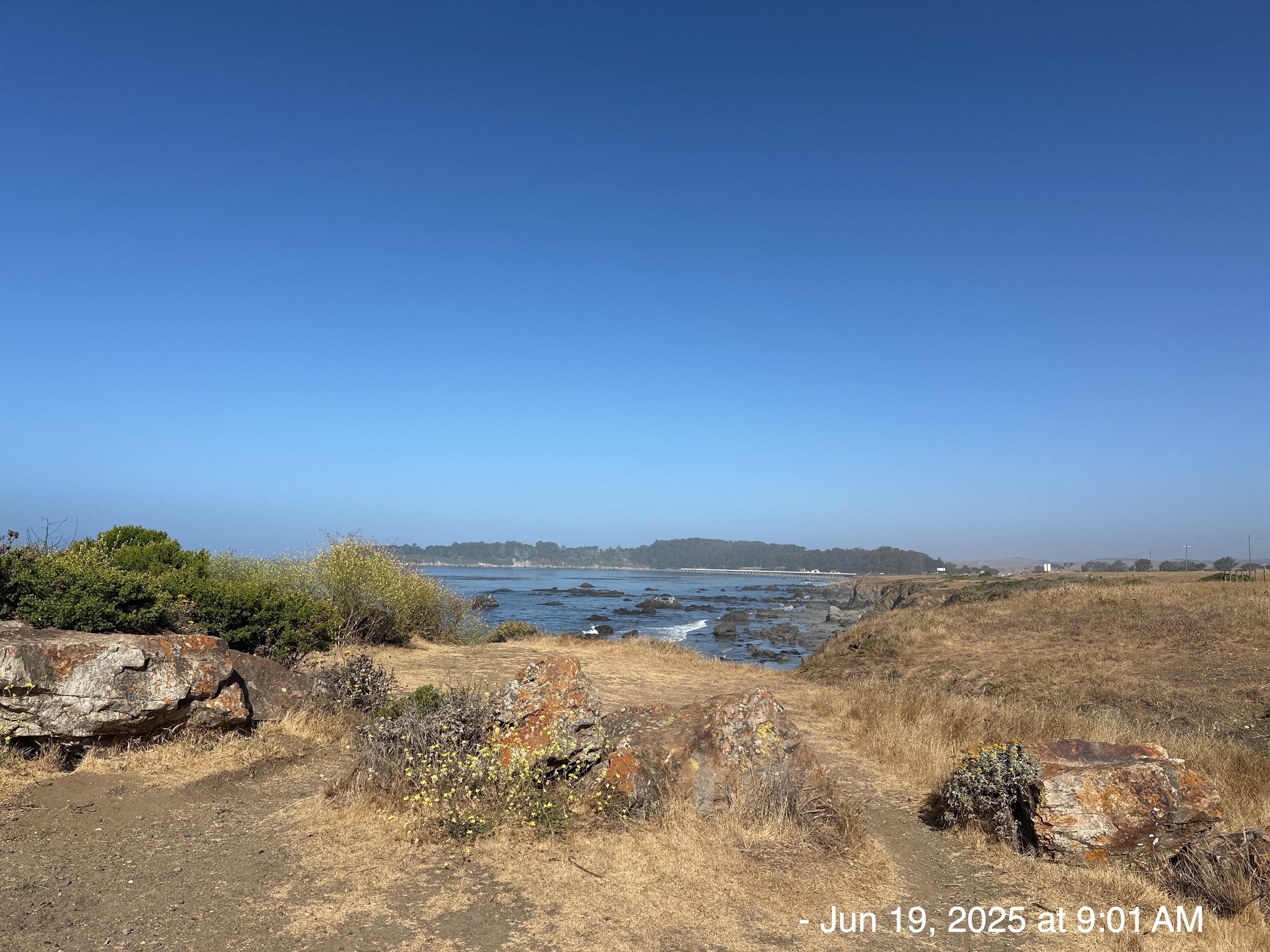
See the pier? I’m going to ride my bike out to the end of it.
The History
The pier I saw in the distance was at Hearst’s State Park, extending from Hearst’s Beach, near the oldest store along the north coast of San Luis Obispo County and… of course across the street from Hearst’s Castle.
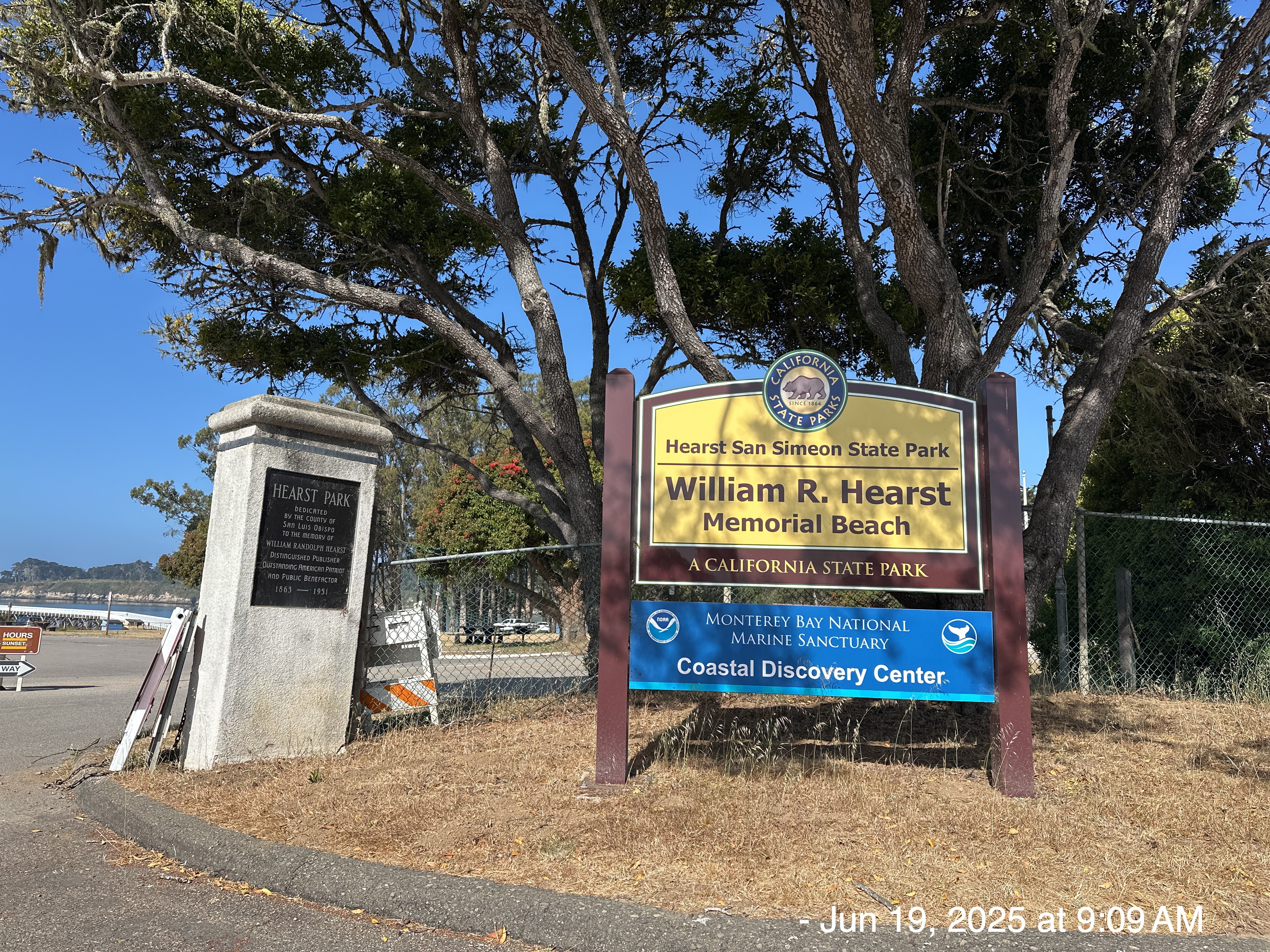
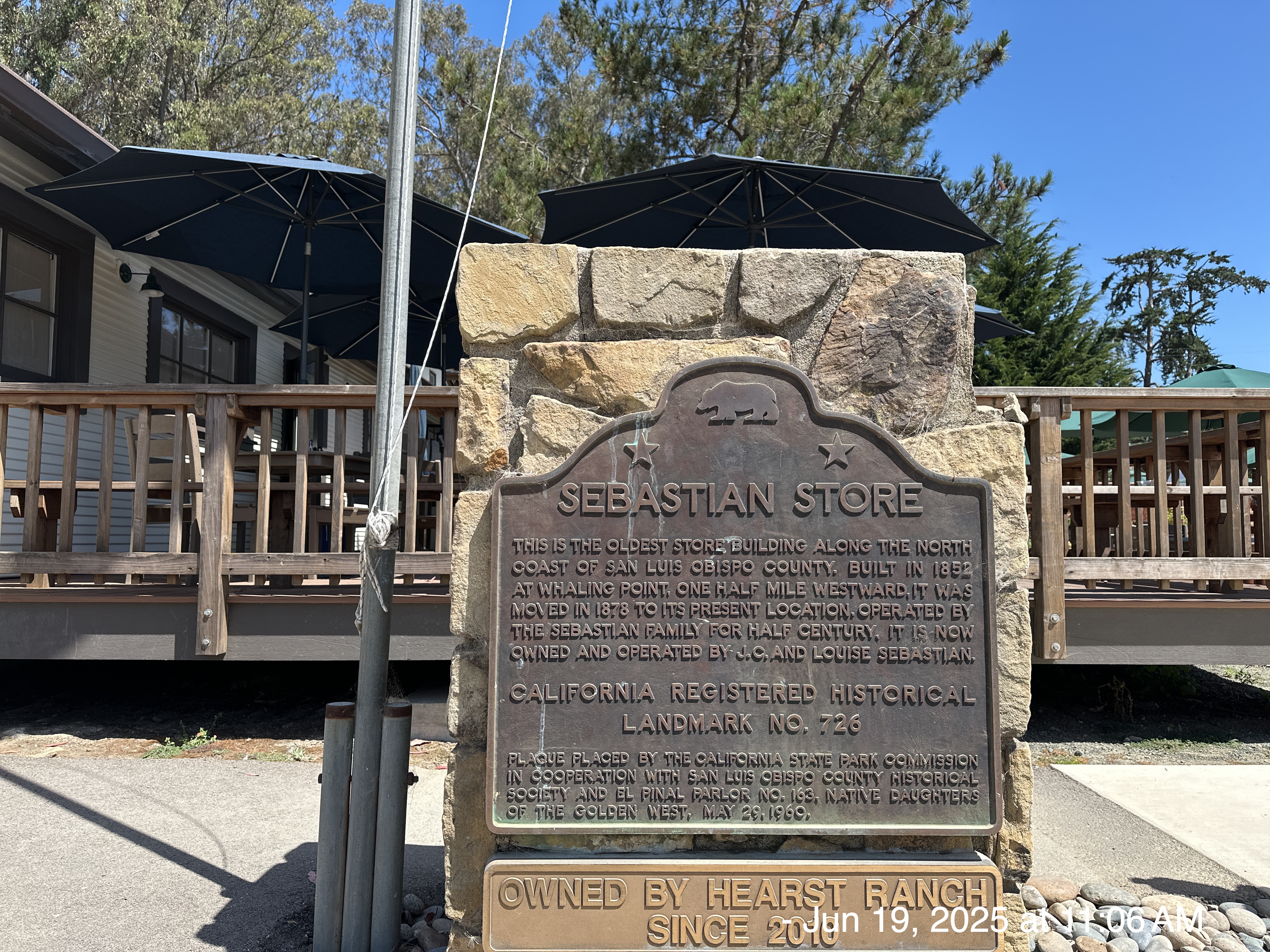
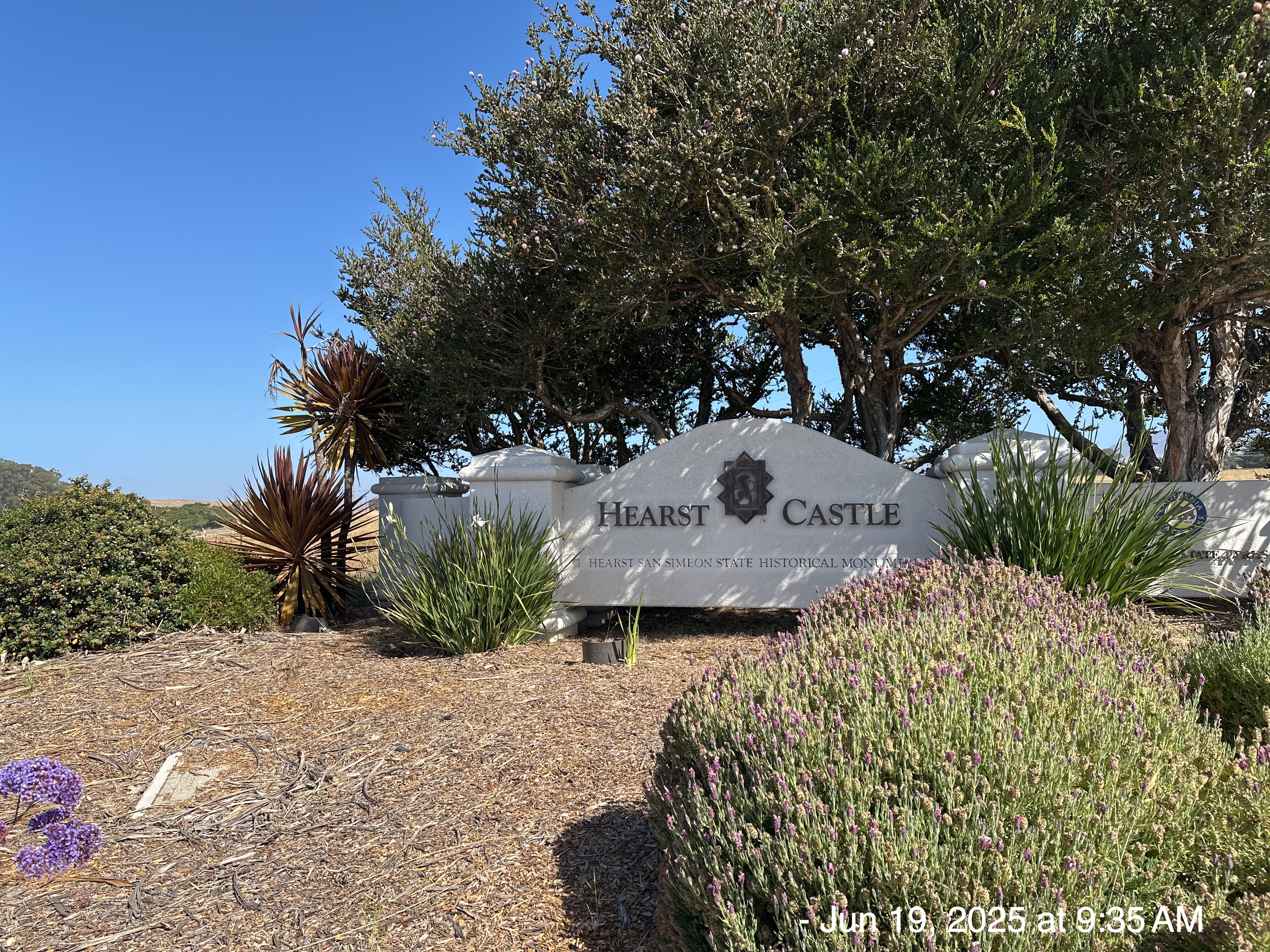
Rancho Piedra Blanca was a 48,806-acre Mexican land grant given to José de Jesús Pico in 1840. In 1865, George Hearst (1820 – 1891), a successful miner during the California Gold Rush era and later a US Senator, started to acquire land in the area. Hearst was able to buy 30,000 acres of Rancho Piedra Blanca from Pico. Hearst continued to buy lots whenever they became available. He also bought most of Rancho San Simeon, and part of Rancho Santa Rosa. George Hearst’s only child was his son William Randolph Hearst.
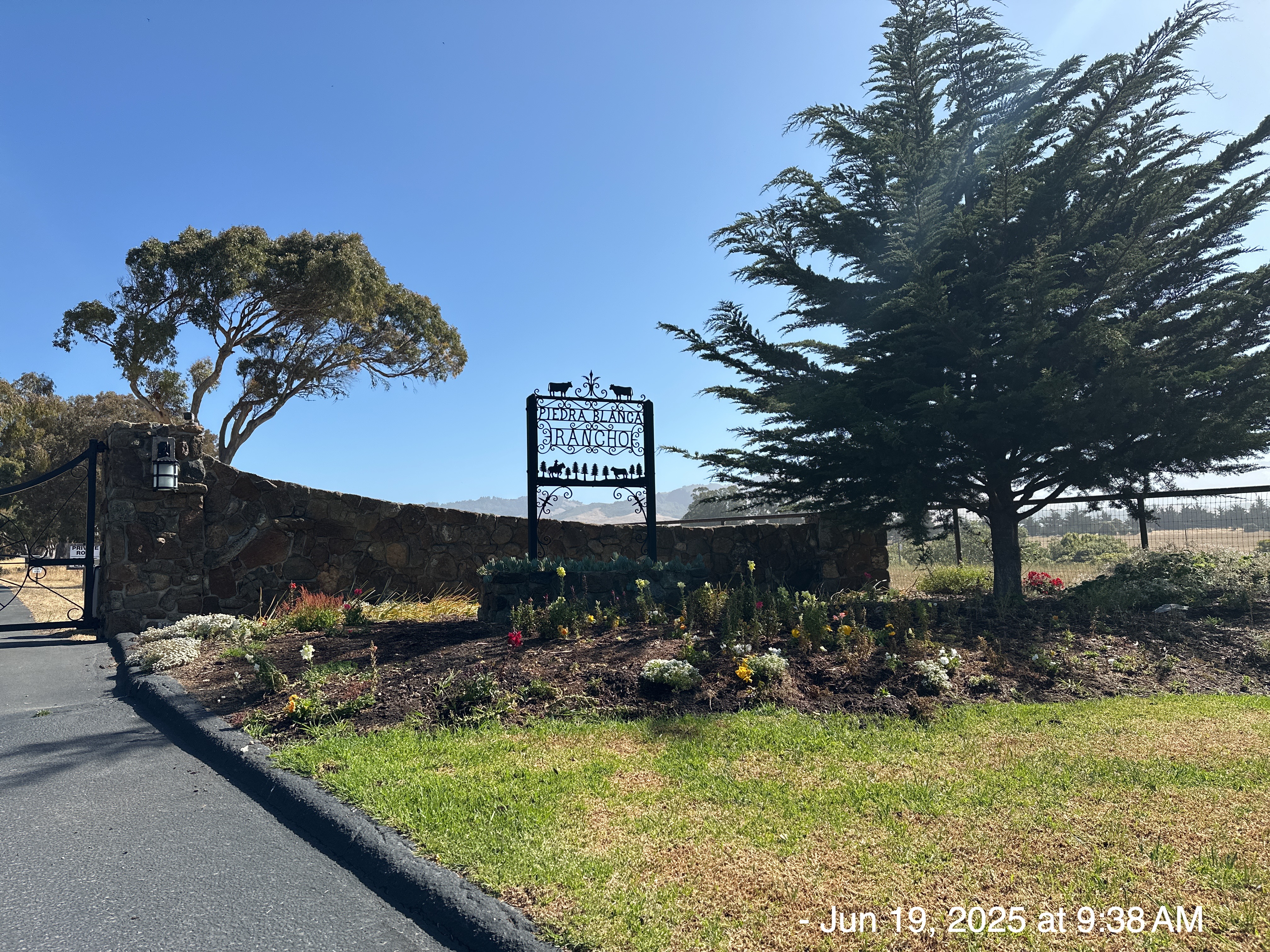
The Pier
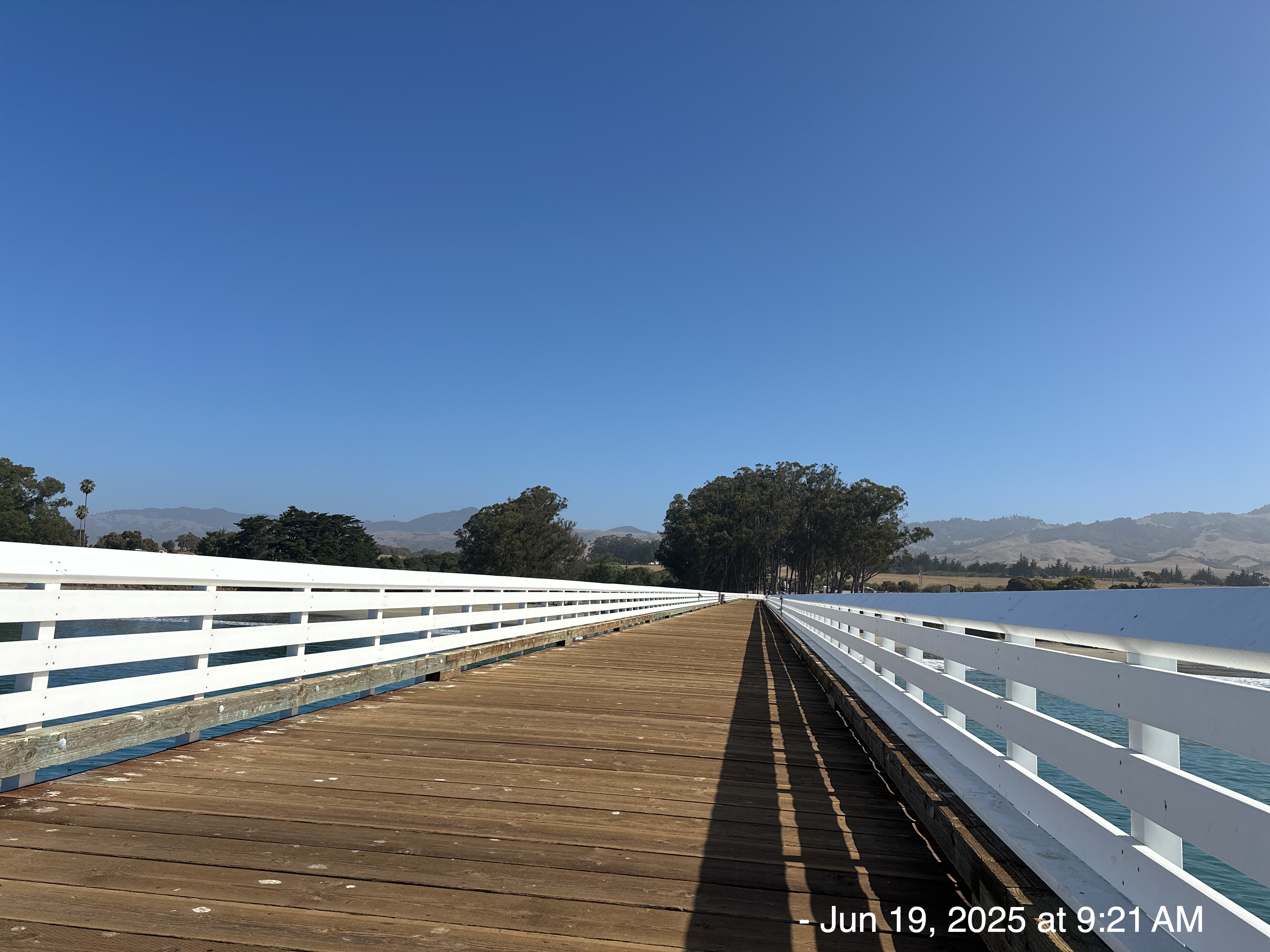
On the pier, looking back…
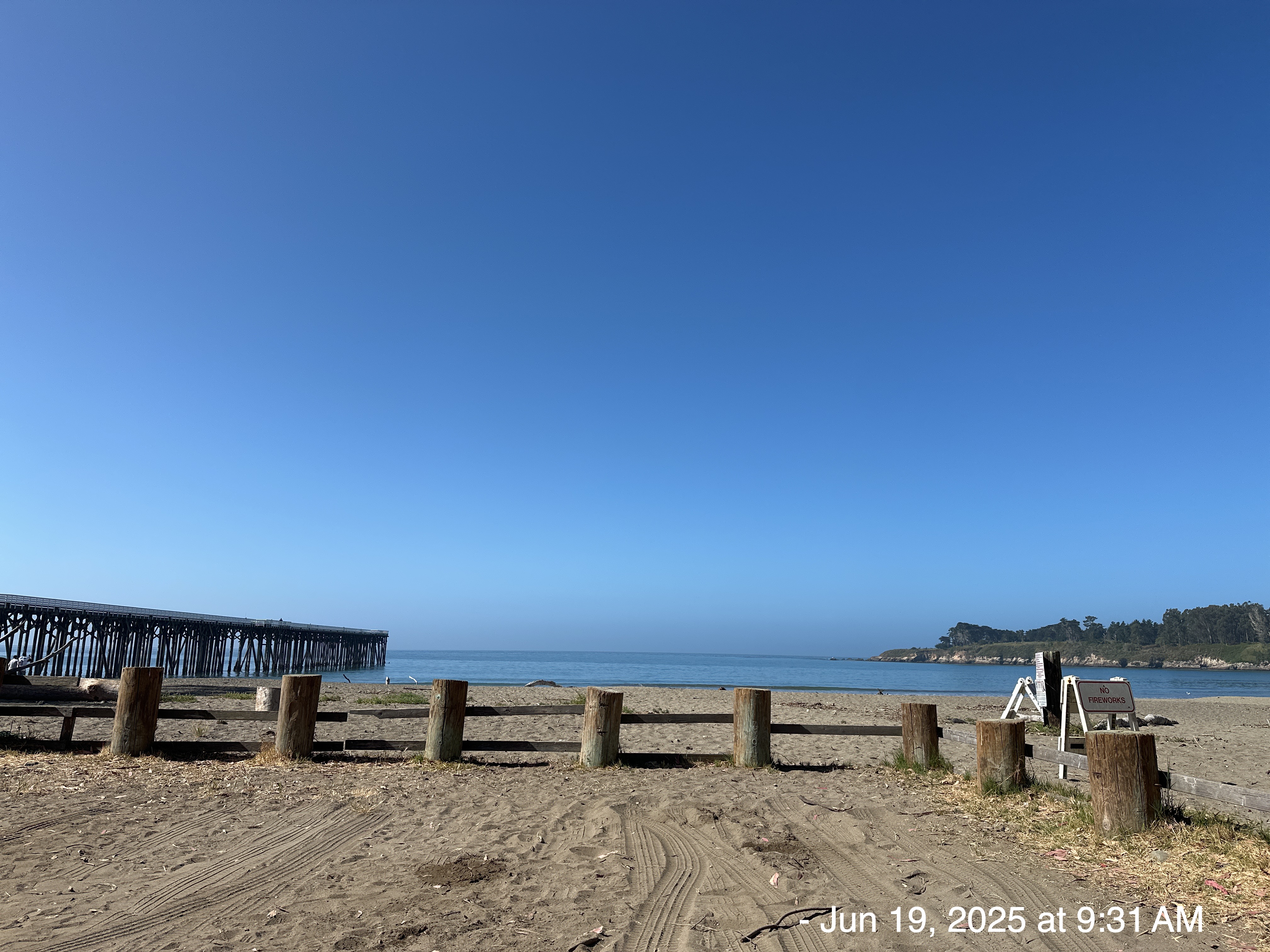
On the beach, looking up…
On the pier, looking north…
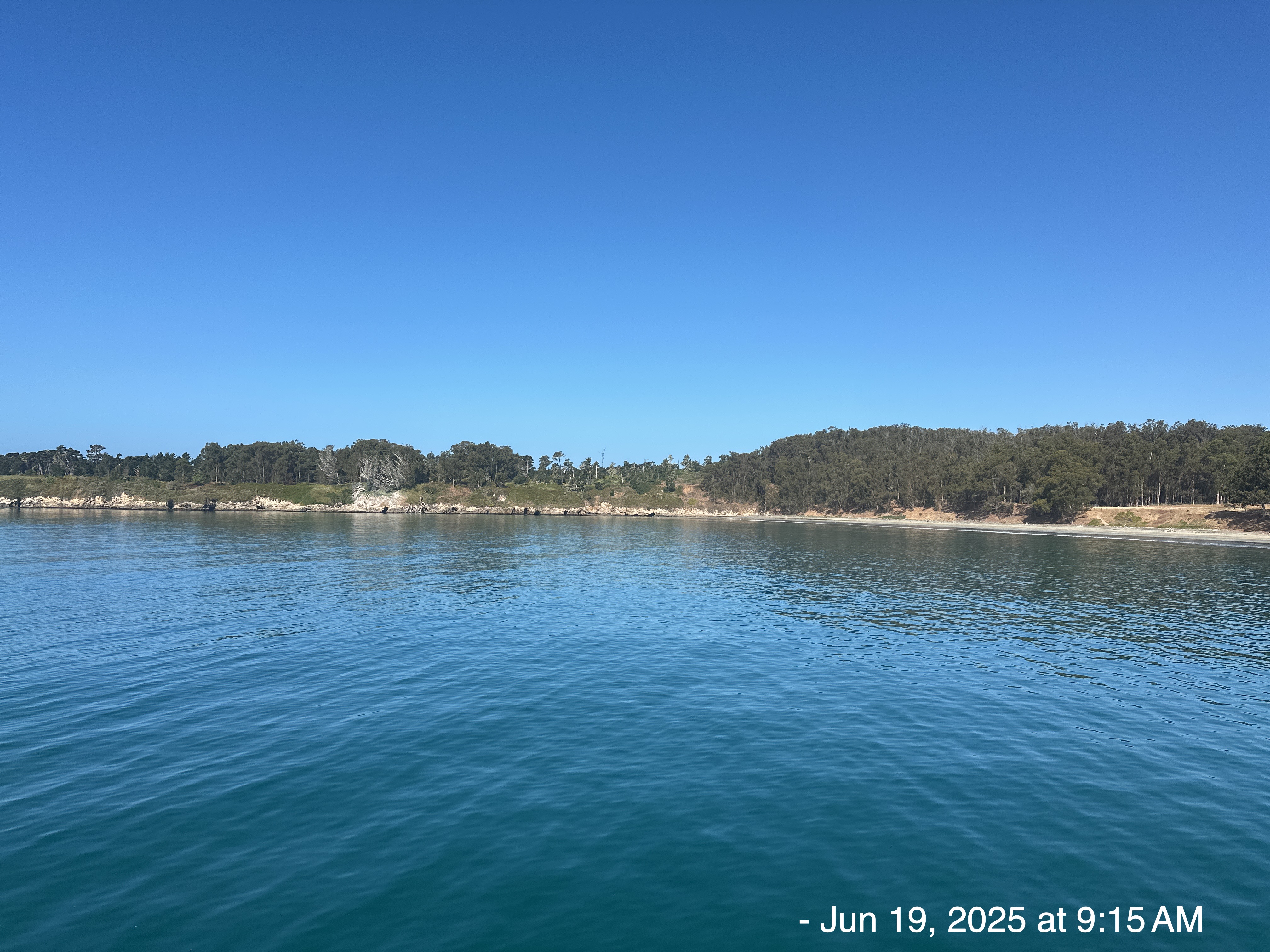
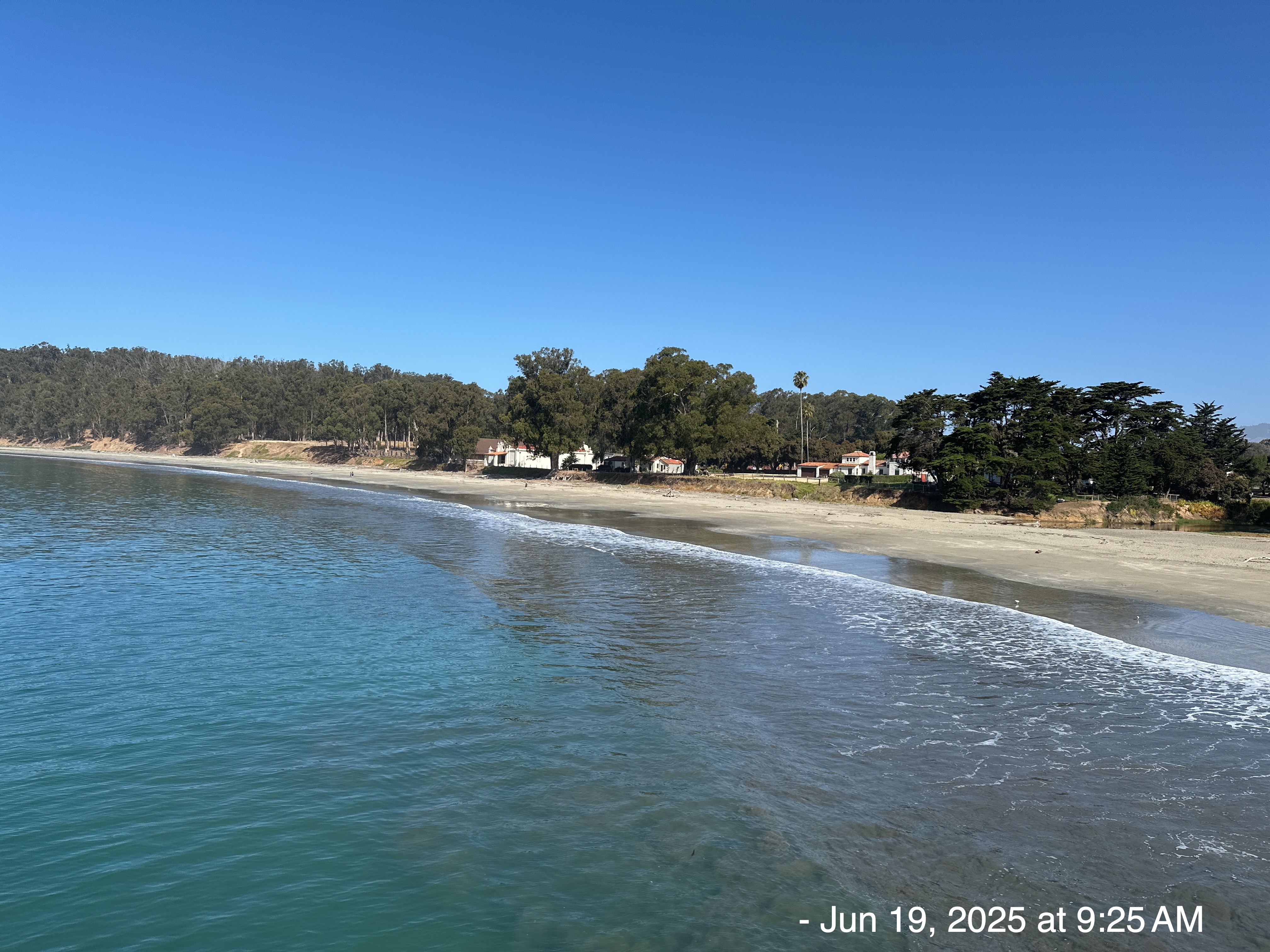
On the pier, looking south…
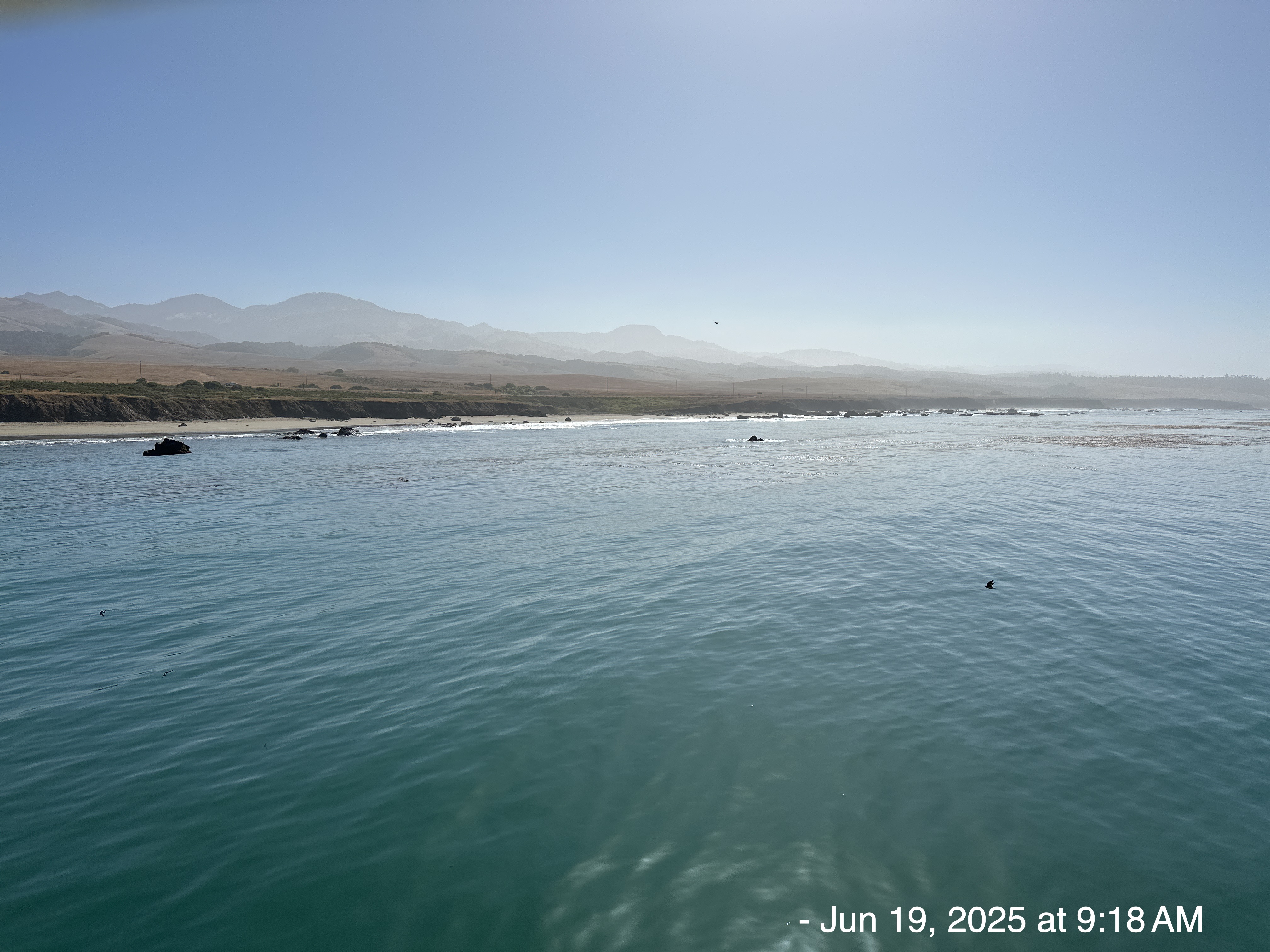
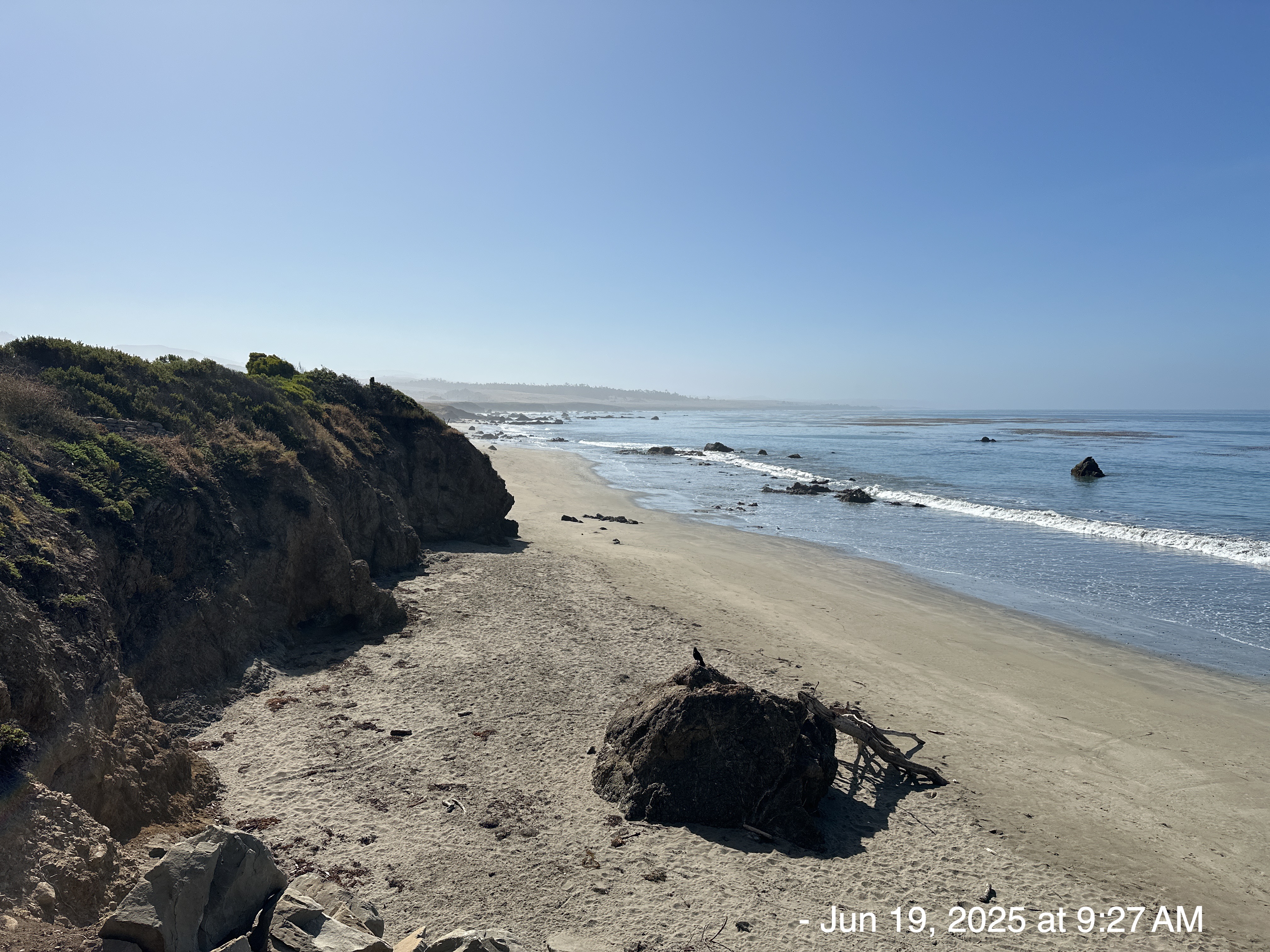
The Wildlife
Find the bird…
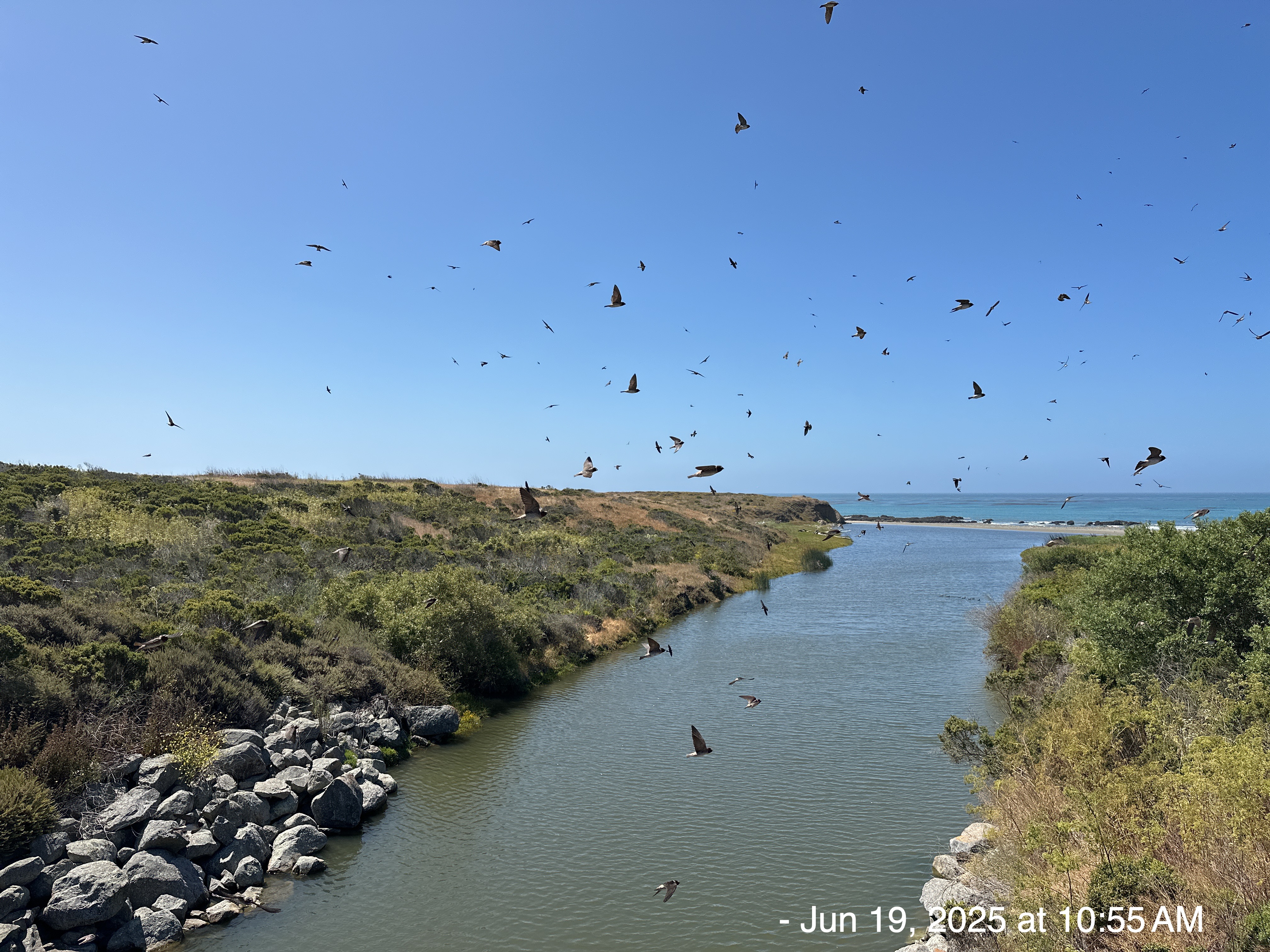
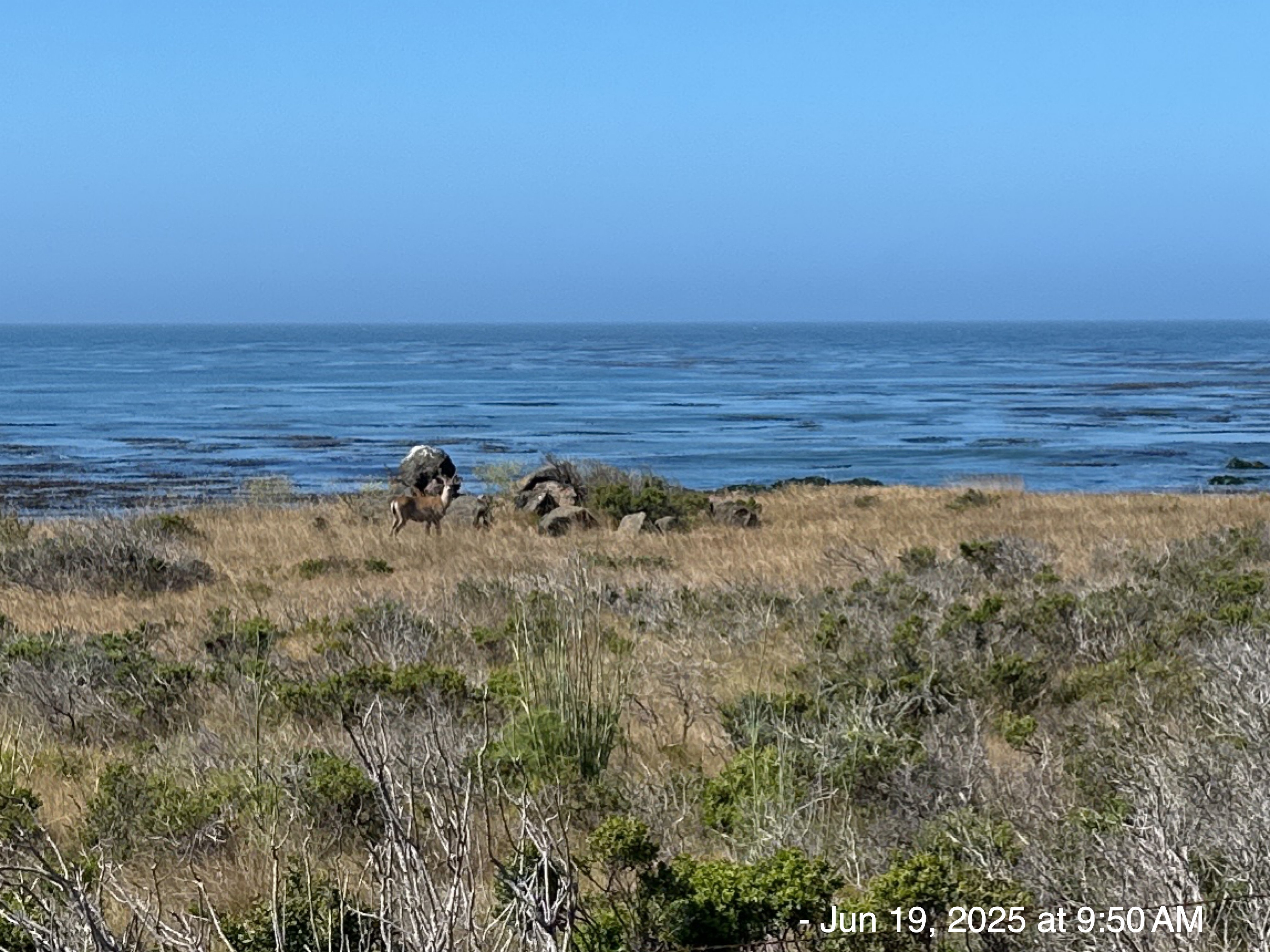
Find the deer…
Find the elephant seals…
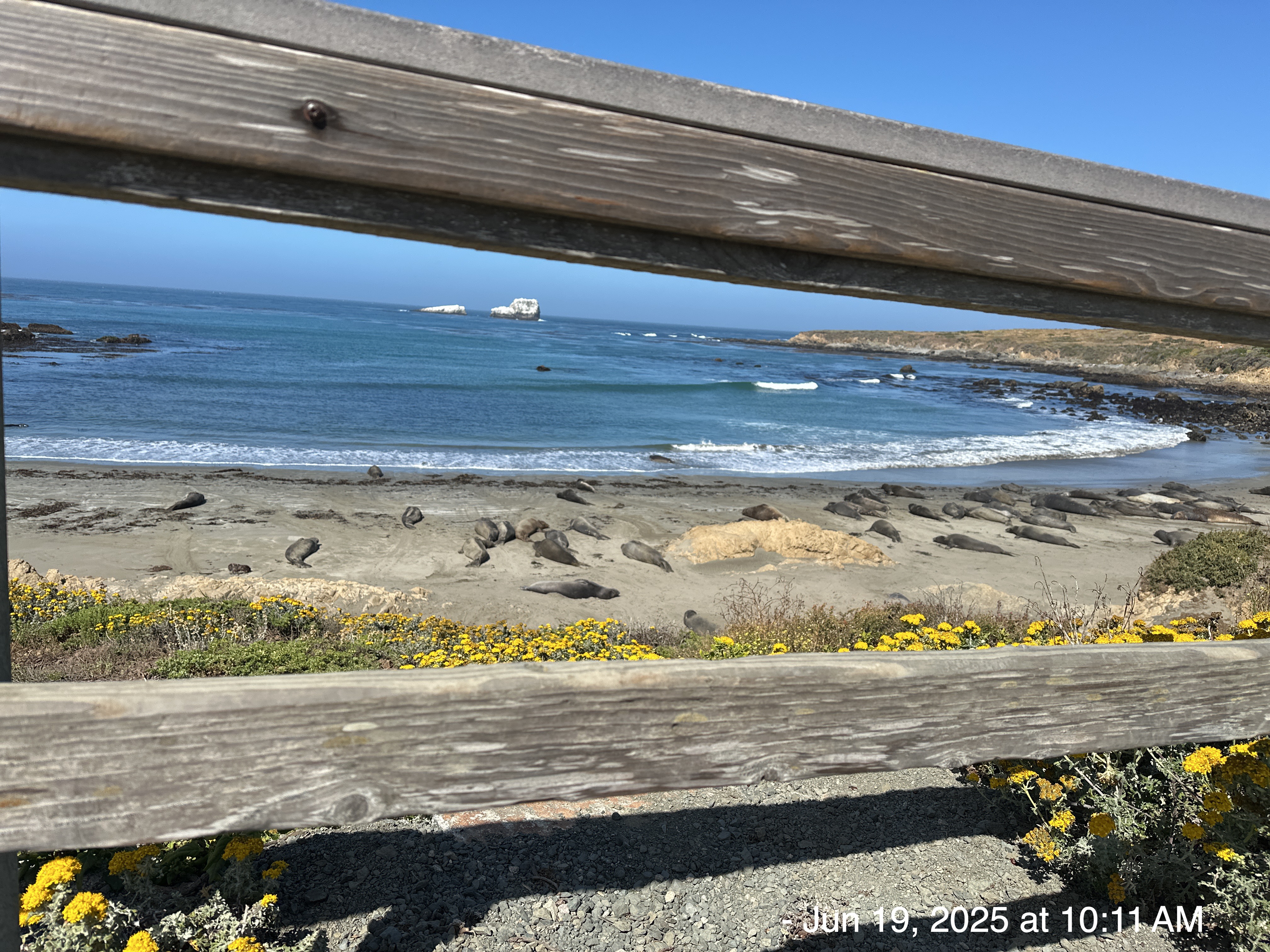
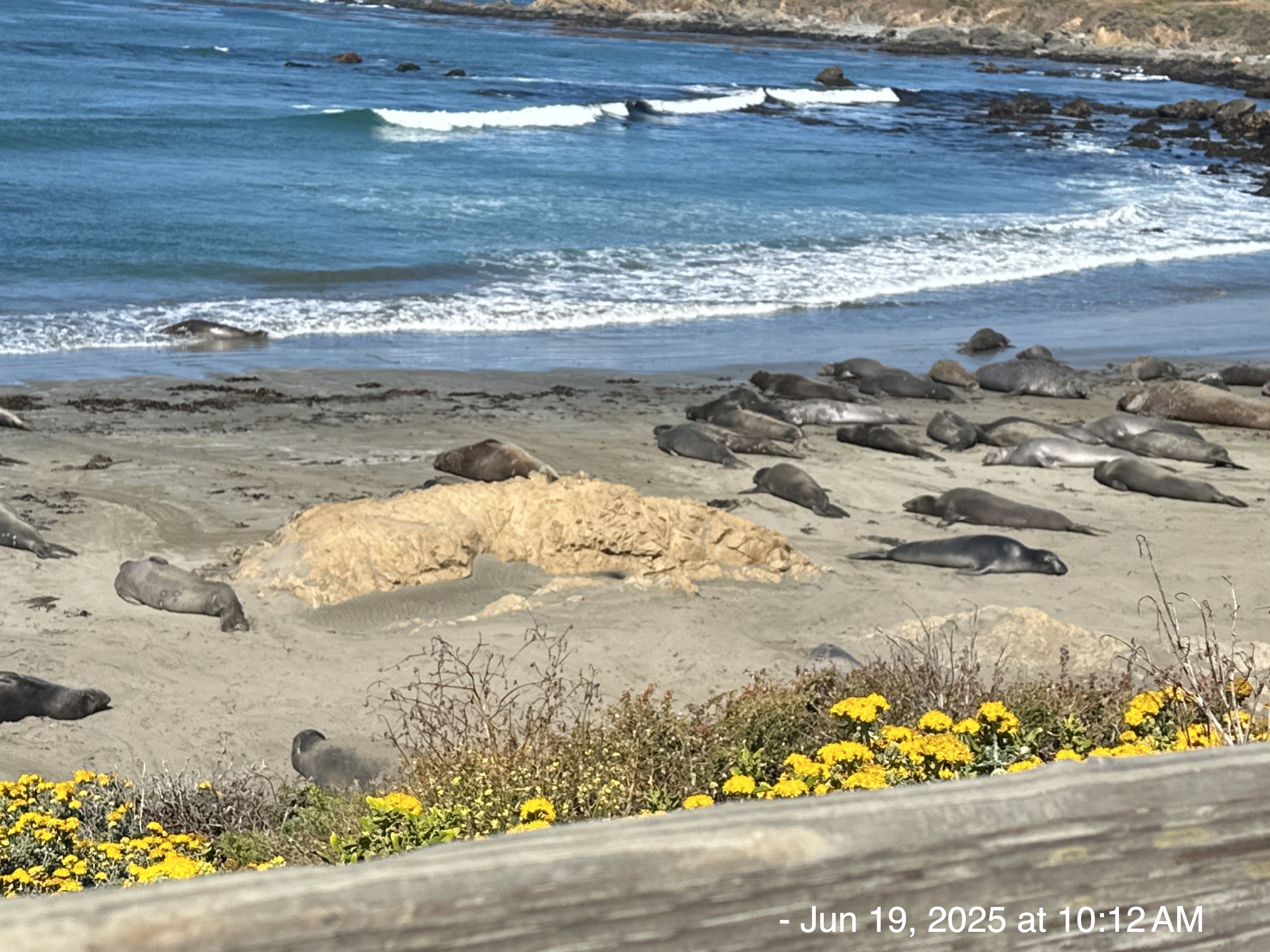
… look carefully…
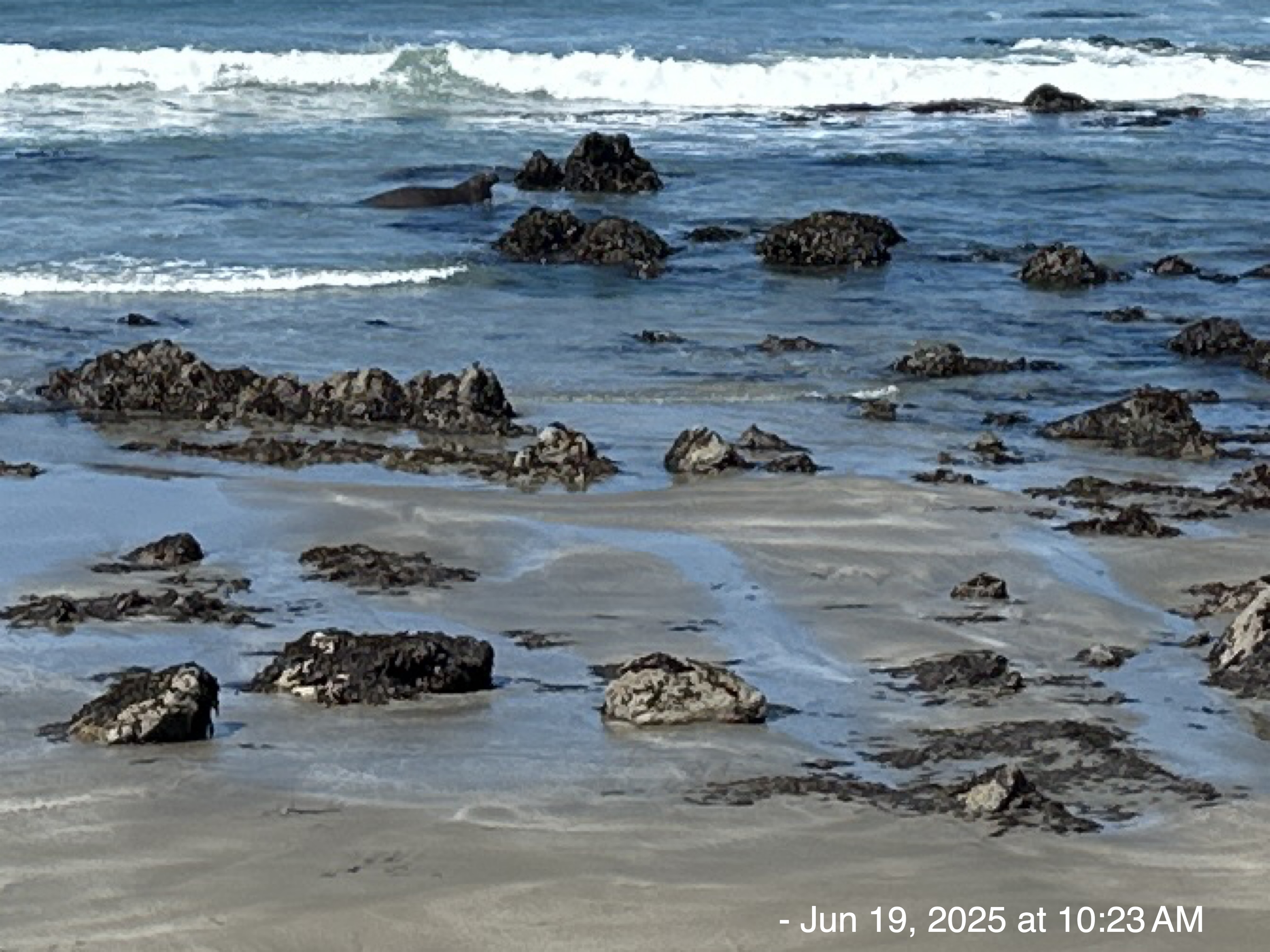
… here’s another chance… can you see him swimming among the rocks?
Can you hear him?…
… how about now?…
Ocean Video
If this video doesn’t tame your savage beast… I don’t know what will…
Really beautiful Van. You are quite the adventurer. You are getting to see so many beautiful places. Good on you and thanks for sharing your adventures with us.
I miss our regular chats – perhaps we can catch up sometime.
Blessings to you
What a beautiful spot and lovely pictures; you’re getting to be quite a camera pro. Highway 1 appears lonely and sparce if you’re driving along in a car but you found it teeming with wildlife when you paused to look closely. Those sea lions do a lot of resting. And awk awk awking! Thanks for mentioning some early California history that “central coasters” are very familiar with but is rarely touched upon in school nowadays.
An hour’s drive south of San Simeon and also in San Luis Obispo County, we were lucky enough to live in a home of a descendant of William Goodwin Dana of Rancho Nipomo. Dana was a Bostonian who sailed around the Horn in 1825. He received the land grant as a wedding present from Governor Don Carlos Antonio Carillo upon marrying Carillo’s daughter, Maria Josepha, at Mission Santa Barbara. The Mexican land grant was some 45,000 acres and named Rancho Nipomo (a Chumash word for “at the foot of the hill).” Dana and Maria had 21 children though eight died in infancy. Many Dana family members still reside in San Luis Obispo County.
The smell the sound, and just the air around it; ocean the words, not big enough. Thank you, especially for the video Van.