Milestones
- Part of my 3rd Annual “Bike-A-Palooza” (SEE the Whole Trip)
Wait… what is a national monument?… and how is that different than a national park?
The principal qualities considered in studying areas for park purposes are their inspirational, educational, and recreational values.
National monuments, on the other hand, are areas reserved by the National Government because they contain objects of historic, prehistoric, or scientific interest.
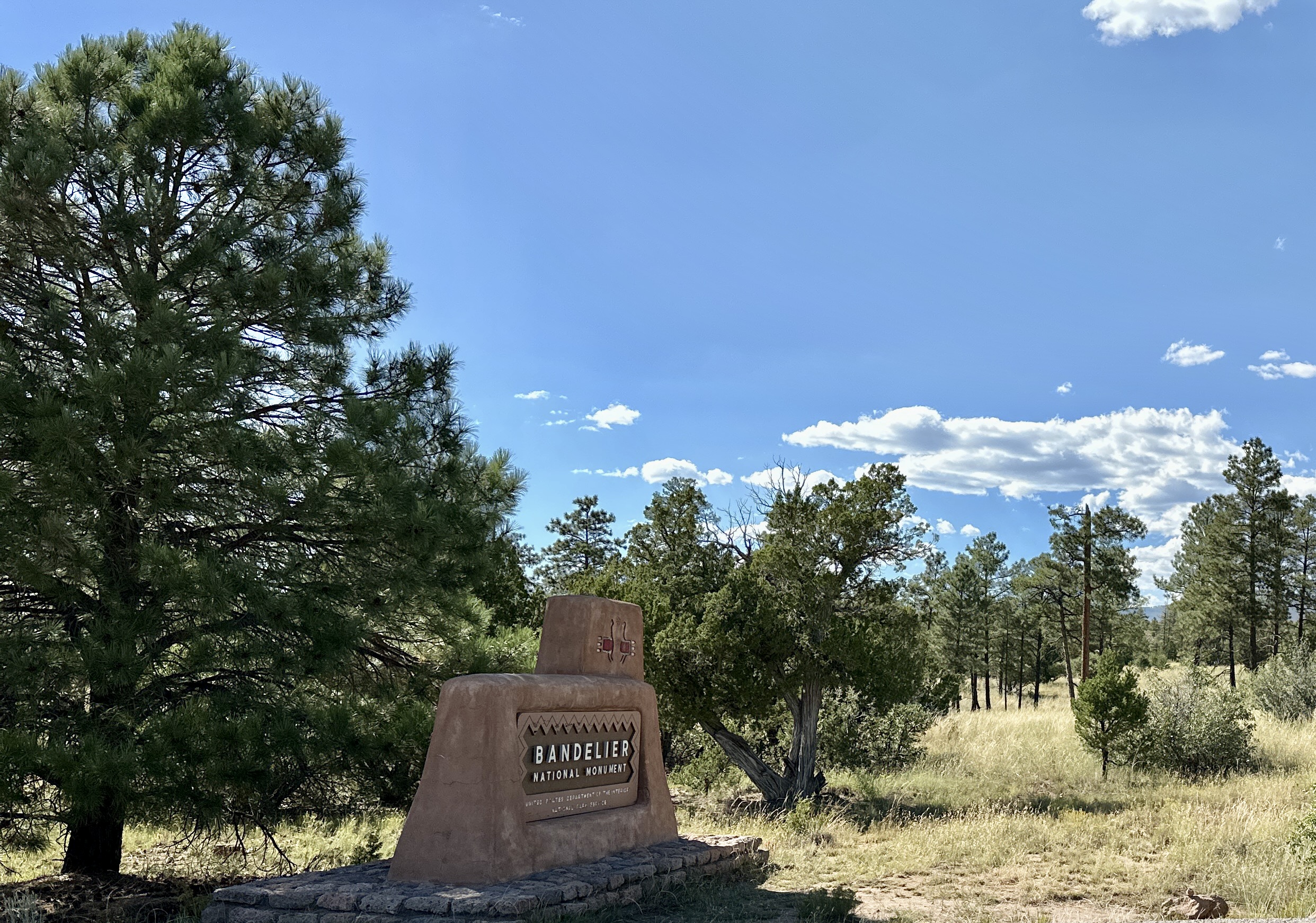
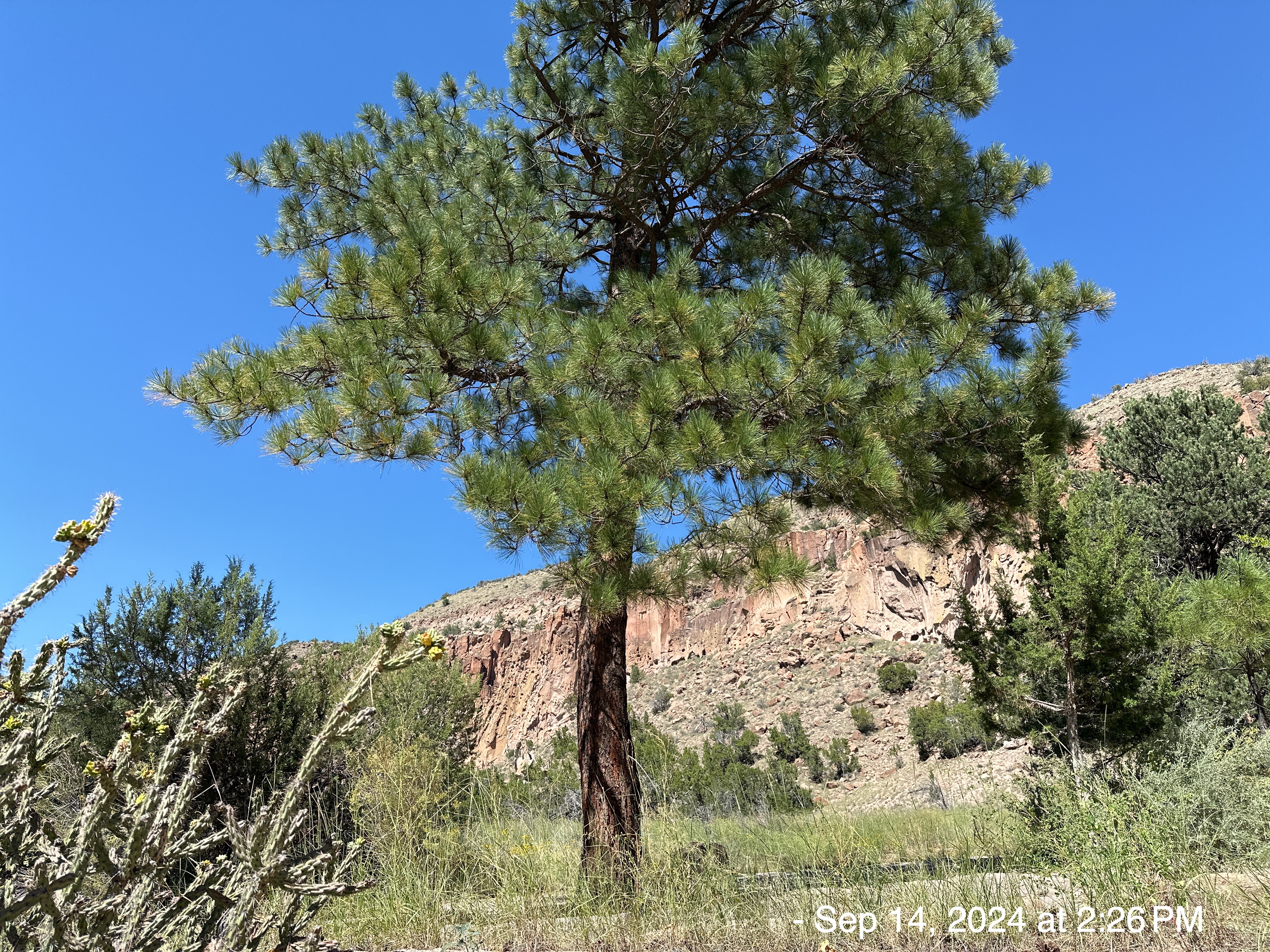
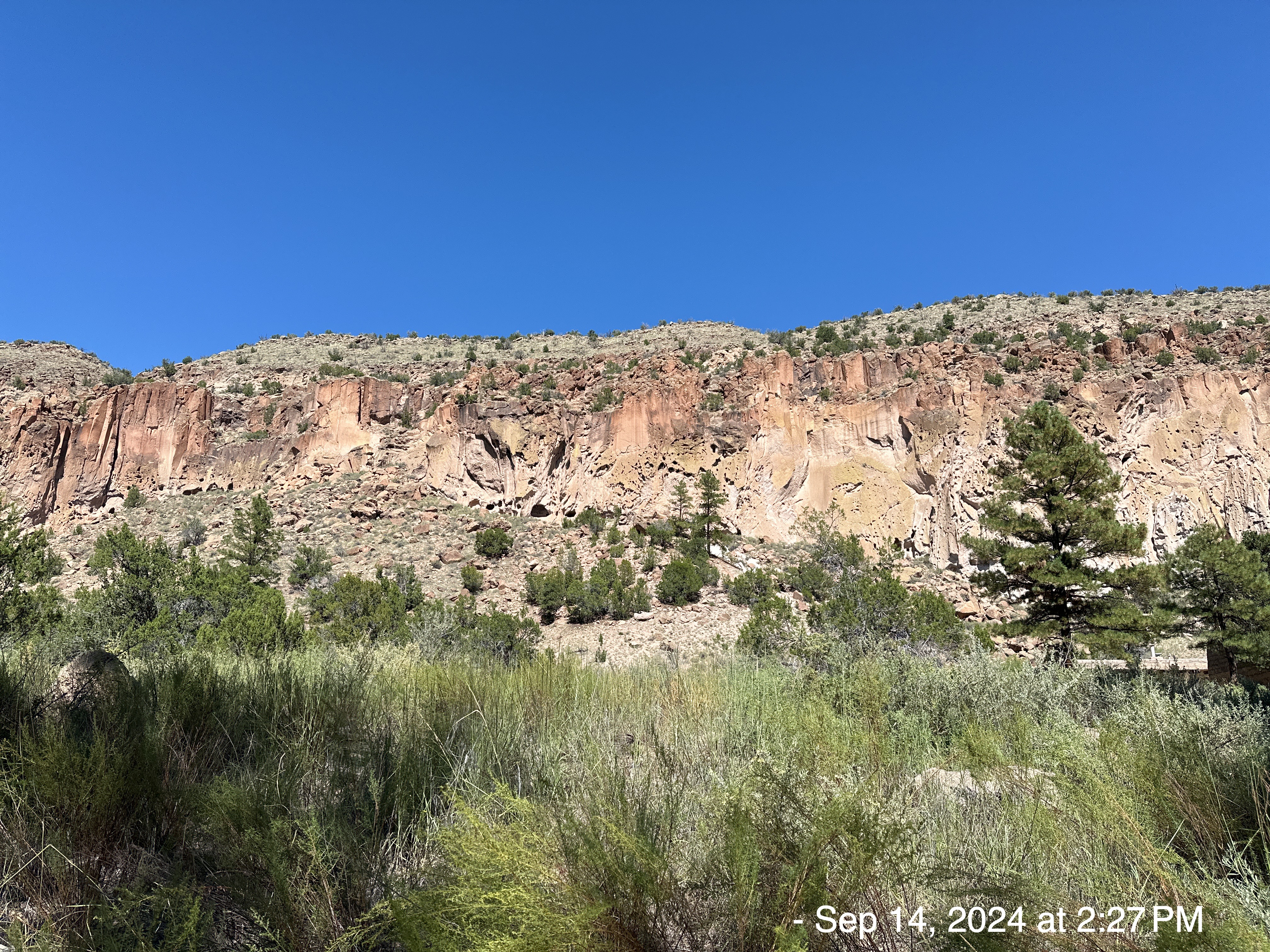
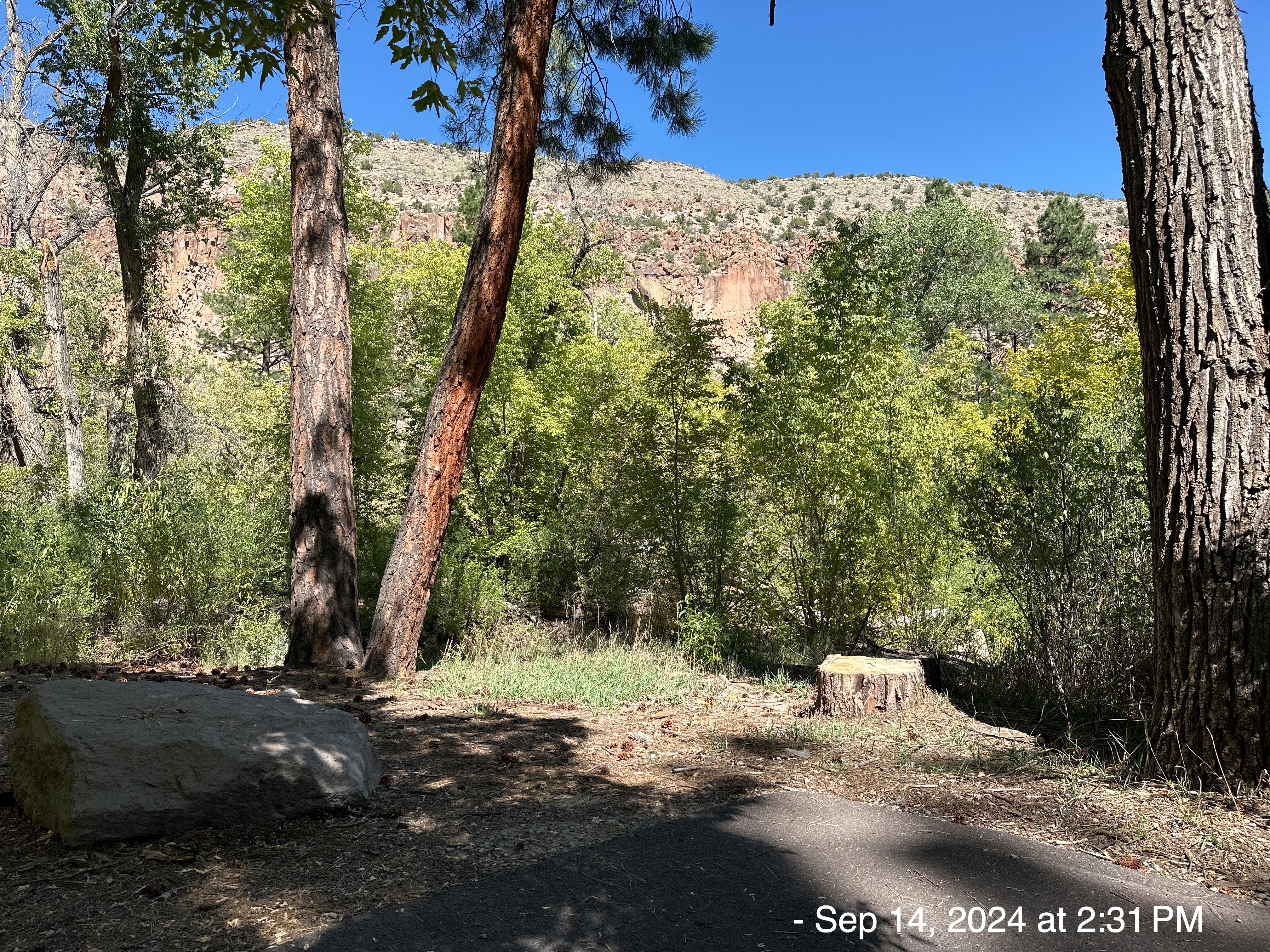
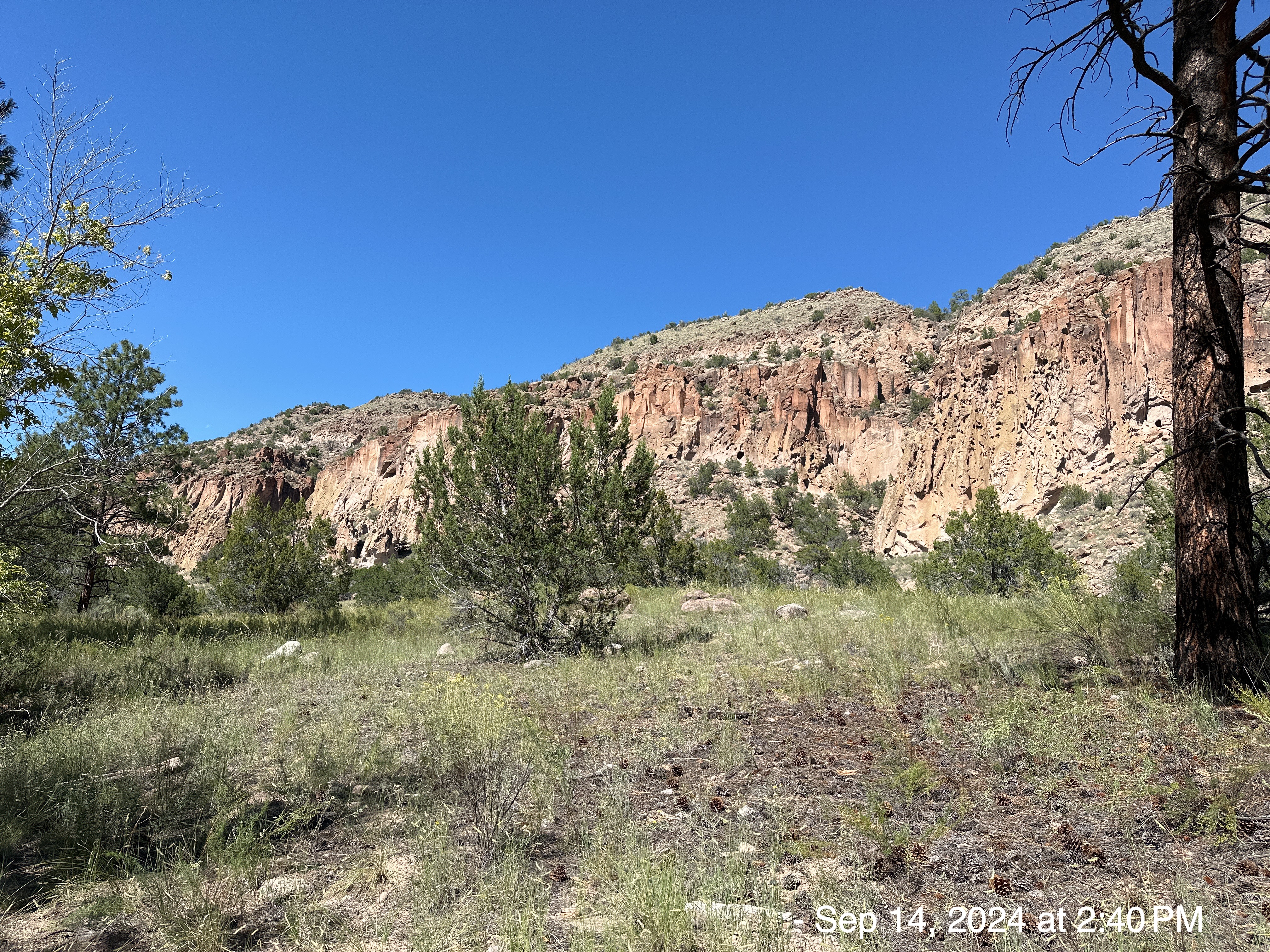
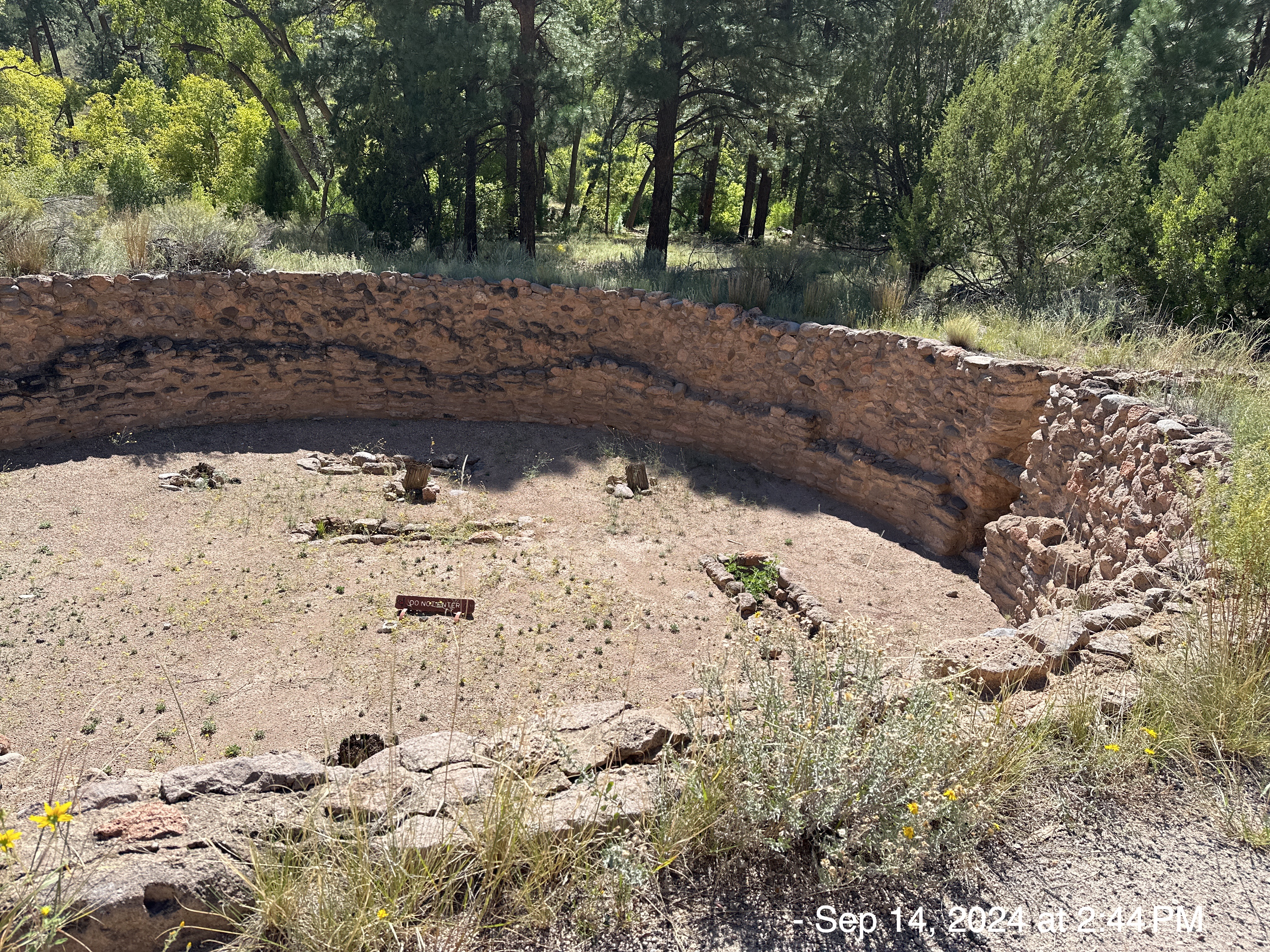
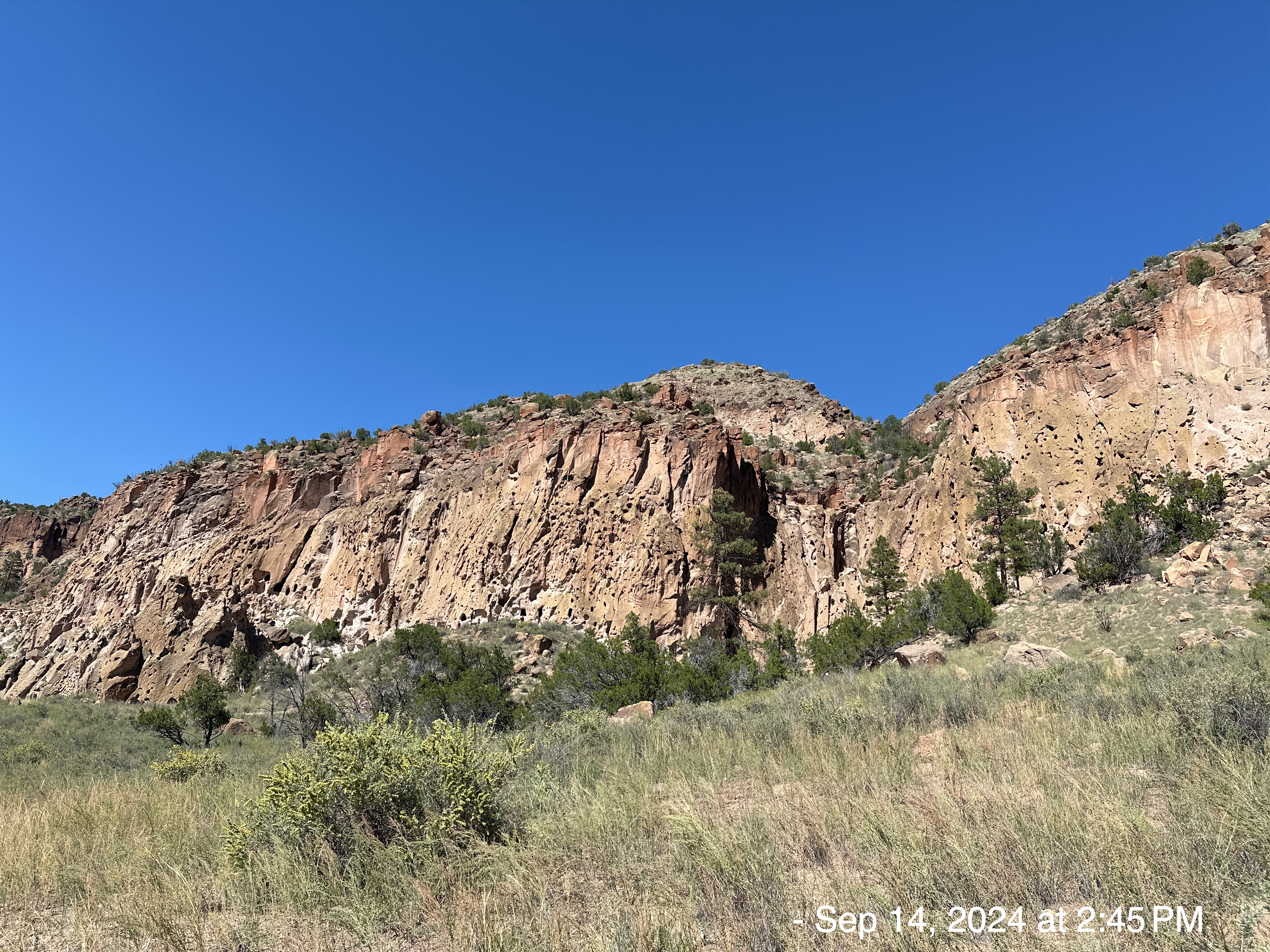
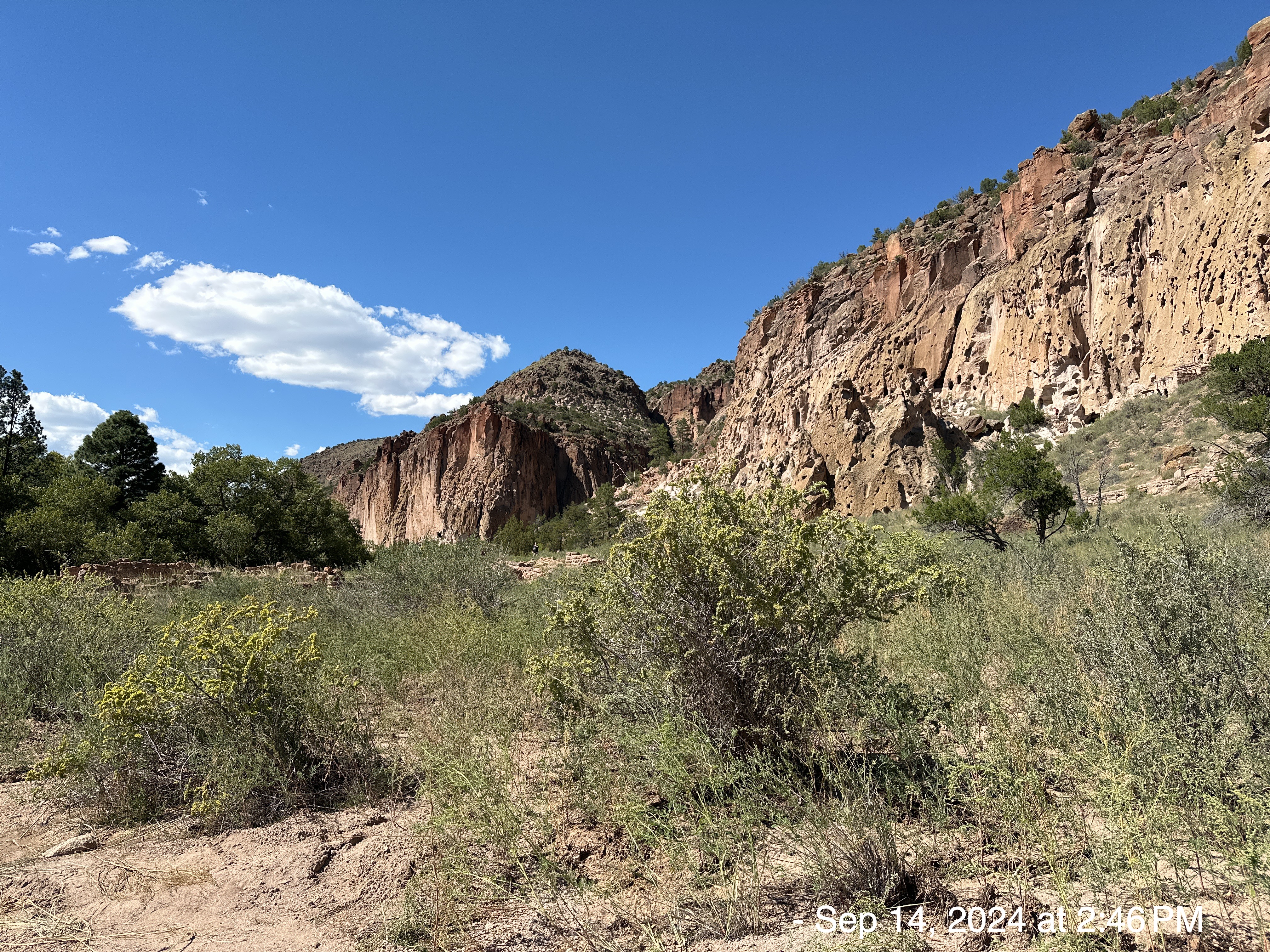
Bandelier National Monument protects part of what is the ancestral and traditional lands of at least 23 tribal nations. Petroglyphs, dwellings carved into the soft rock cliffs, and standing masonry walls pay tribute to the early days of a culture that still survives in the surrounding communities.
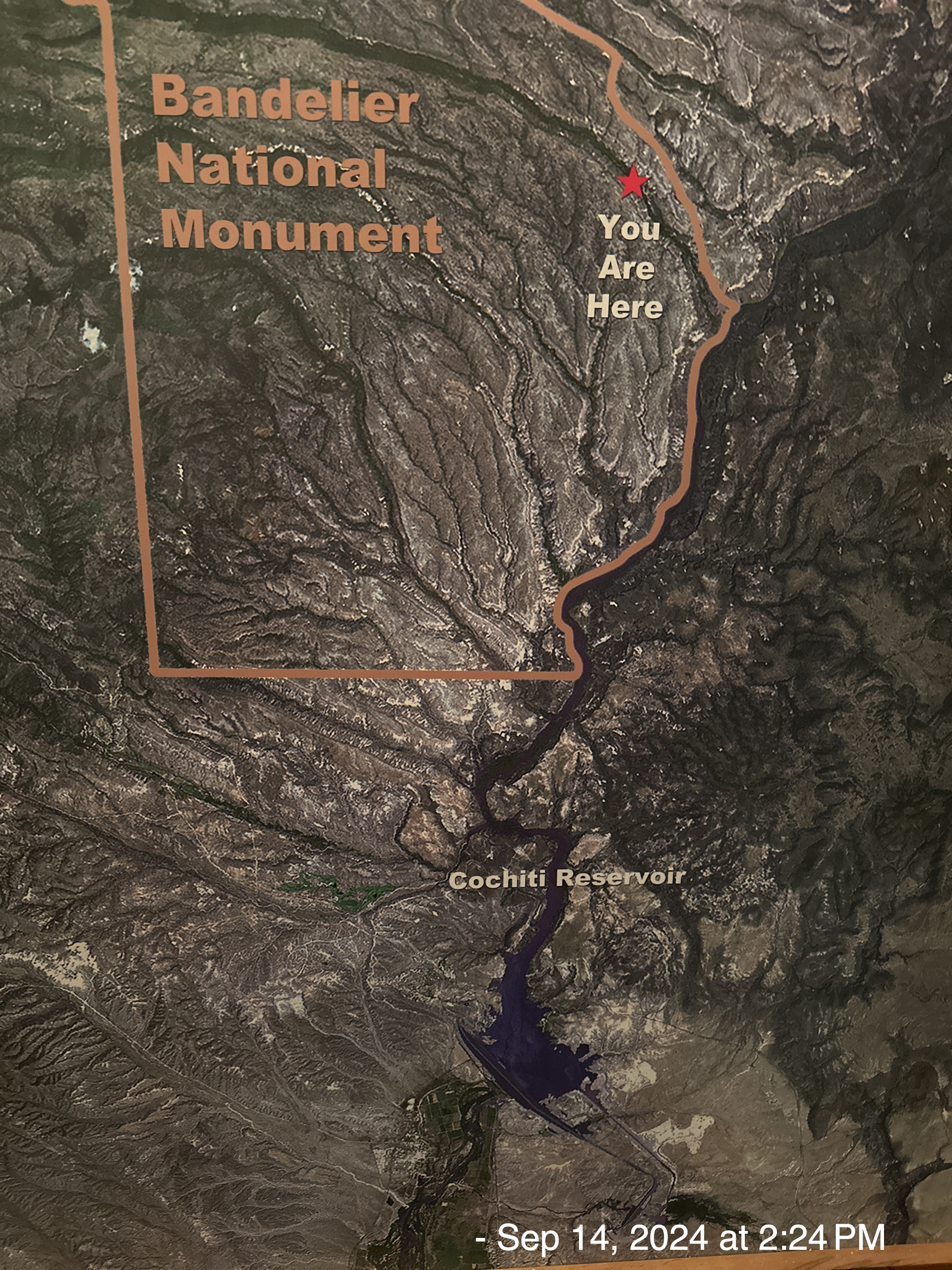
After wandering around Santa Fe, I didn’t want to drive back to my campsite at the south end of Cochiti Reservoir using the same route. So, I decided to go out of my way and visit this national monument. Bandelier was designated by President Woodrow Wilson as a national monument on February 11, 1916, and named for Adolph Bandelier, a Swiss-American anthropologist, who researched the cultures of the area.
The Ancestral Pueblo people lived here from approximately 1150 CE to 1550 CE. They built homes carved from the volcanic tuff and planted crops in mesa top fields. By 1550, the Ancestral Pueblo people had moved from this area to pueblos along the Rio Grande. After over 400 years the land here could no longer support the people and a severe drought added to what were already becoming difficult times. The people of Cochiti Pueblo, located just south and east along the Rio Grande, are the most direct descendants of the Ancestral Pueblo people.
It’s interesting that my campsite was located a couple of miles from the Cochiti Pueblo. I have to say; I much preferred where the Ancestral Pueblo people started, rather than where they ended up.
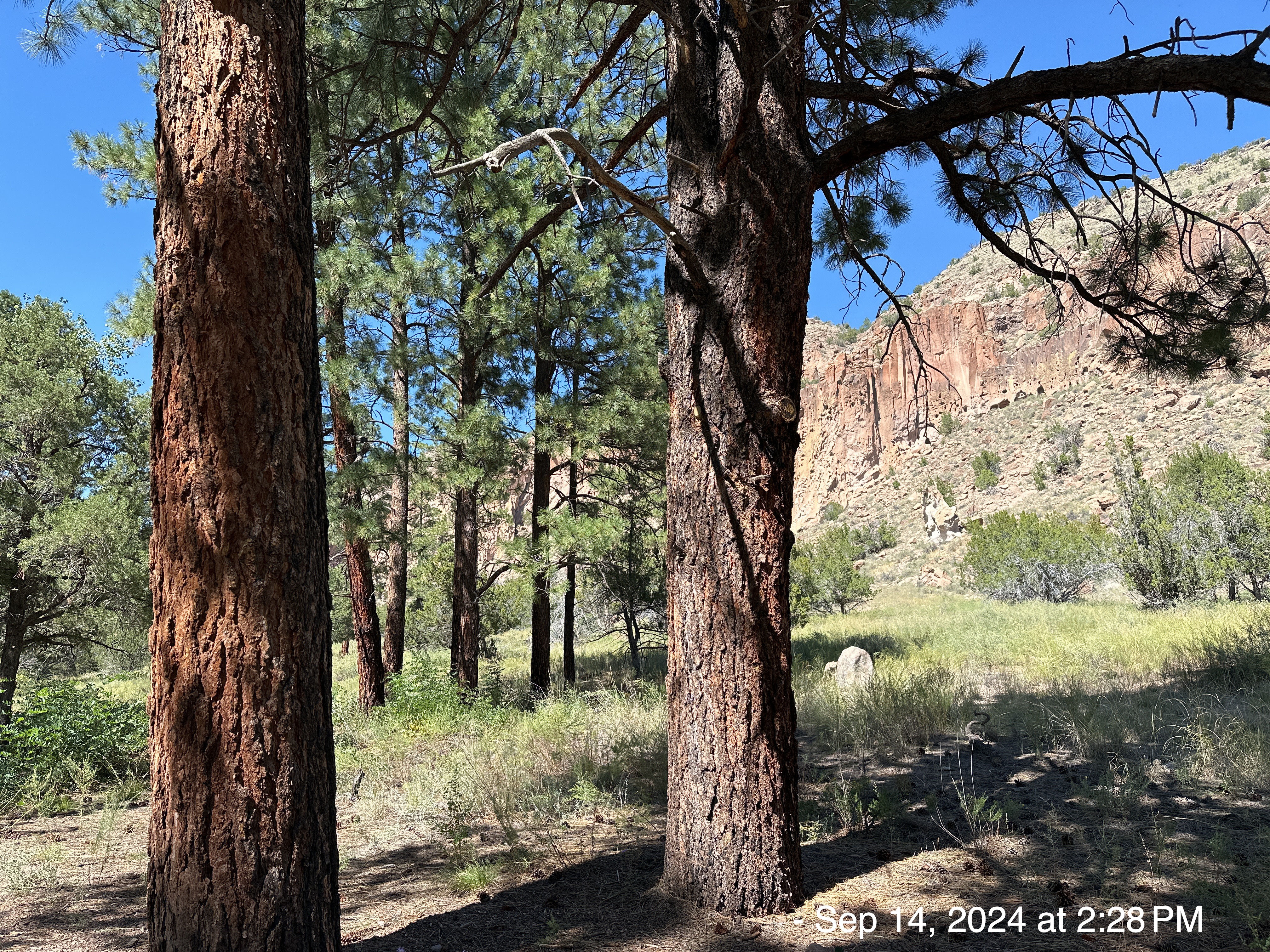
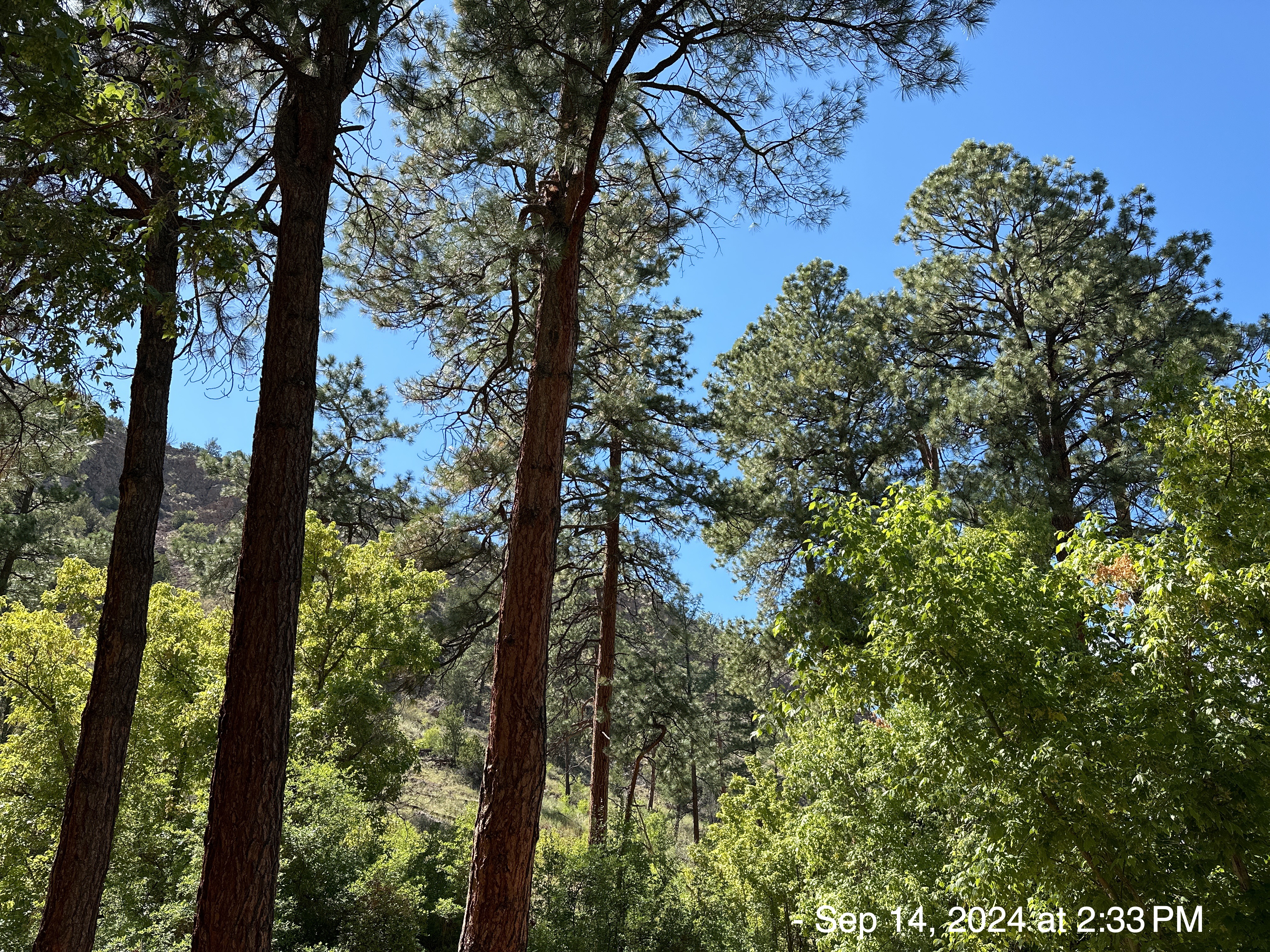
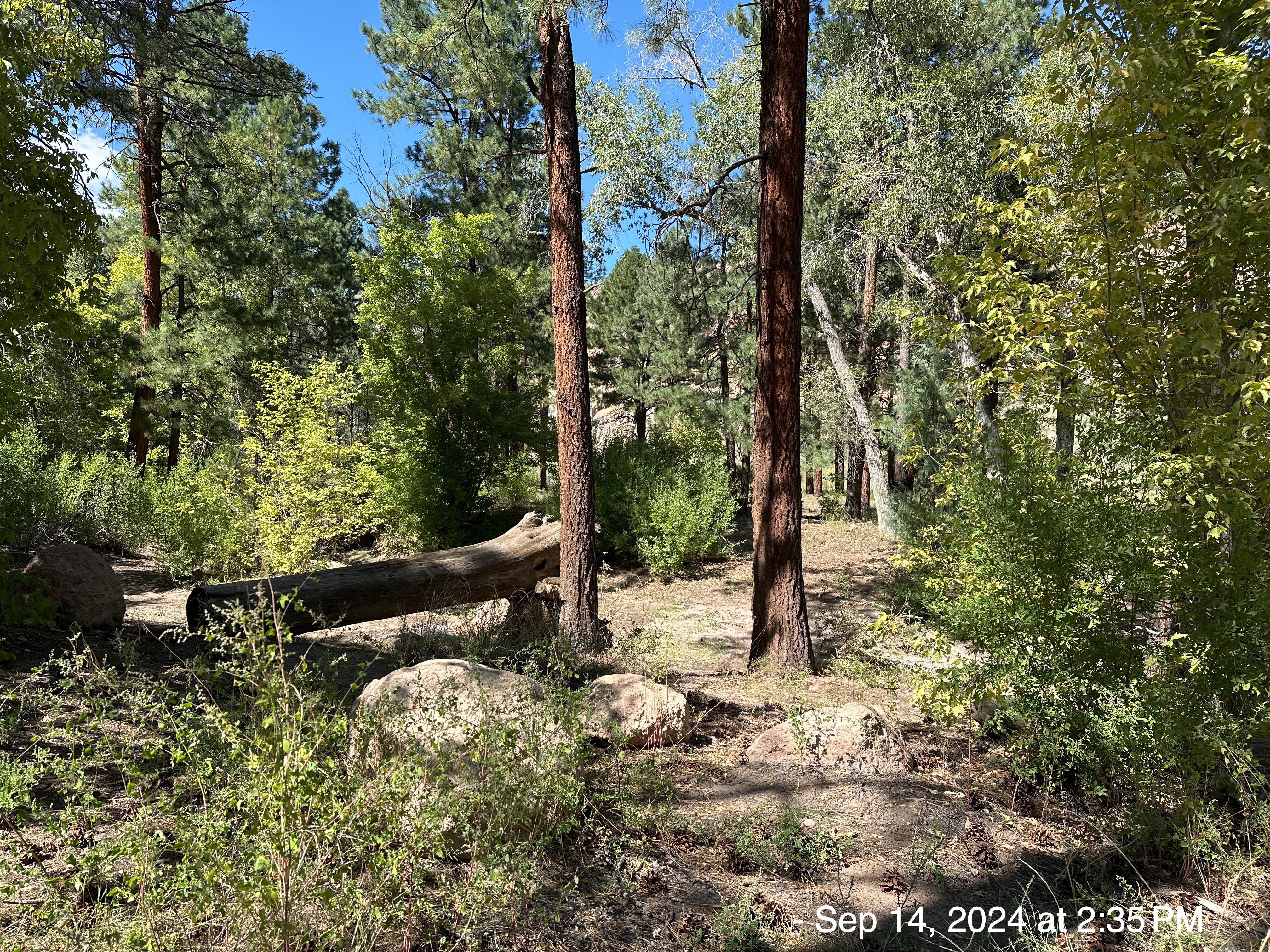
I had no idea that you could camp on the rim of the canyon. If I am ever in the area, I would go camping there in a heartbeat.
Valles Caldera
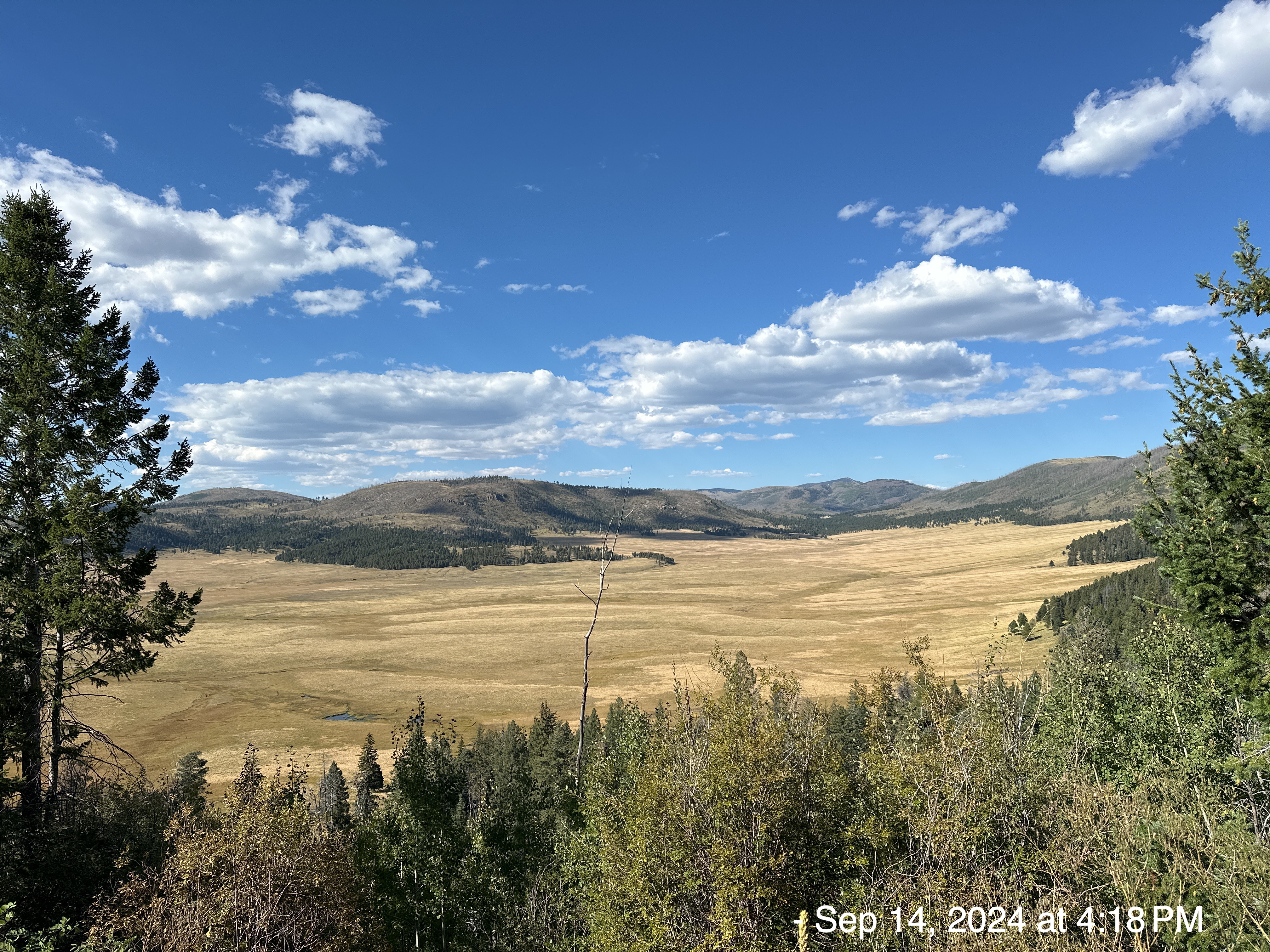
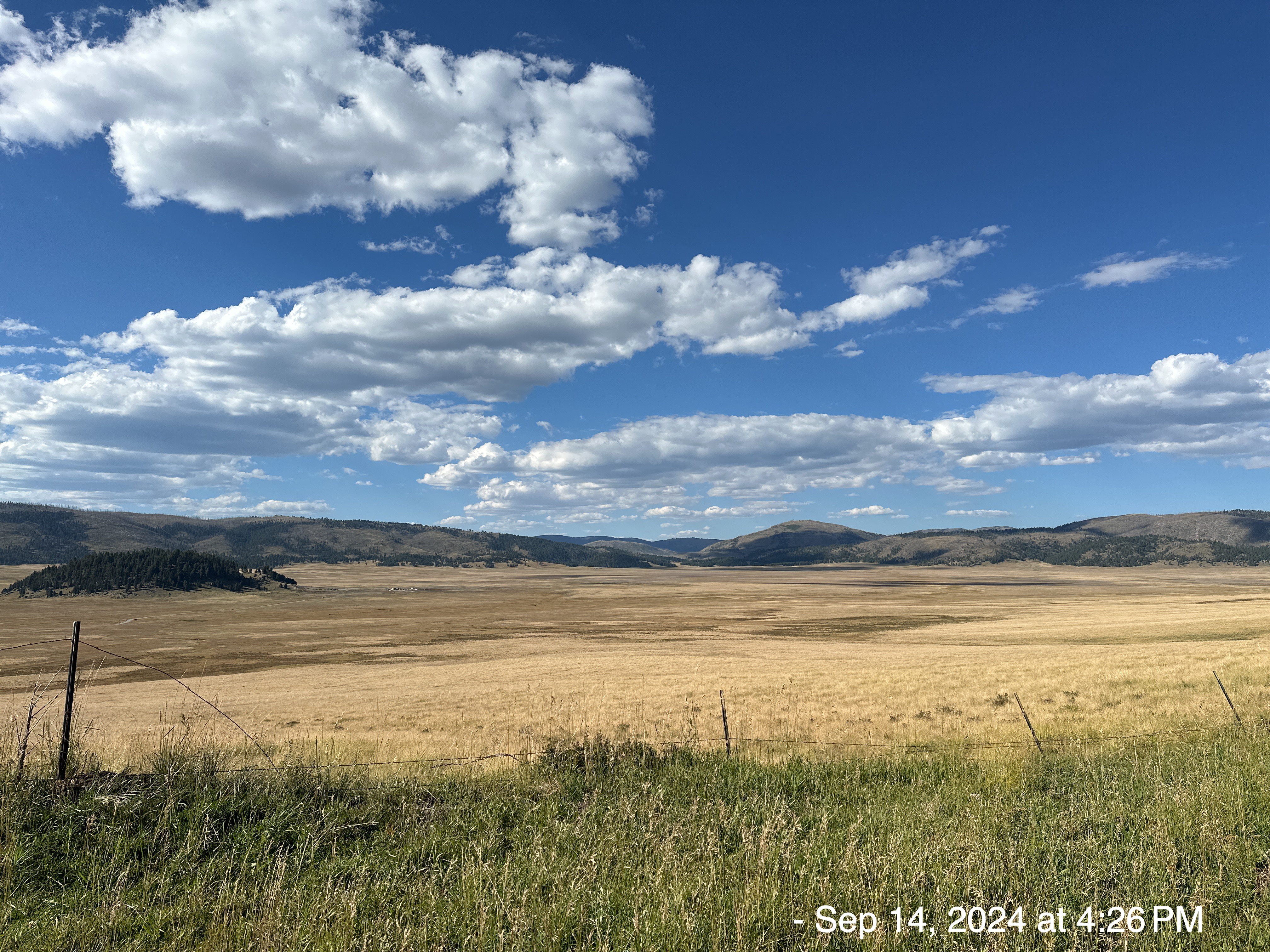
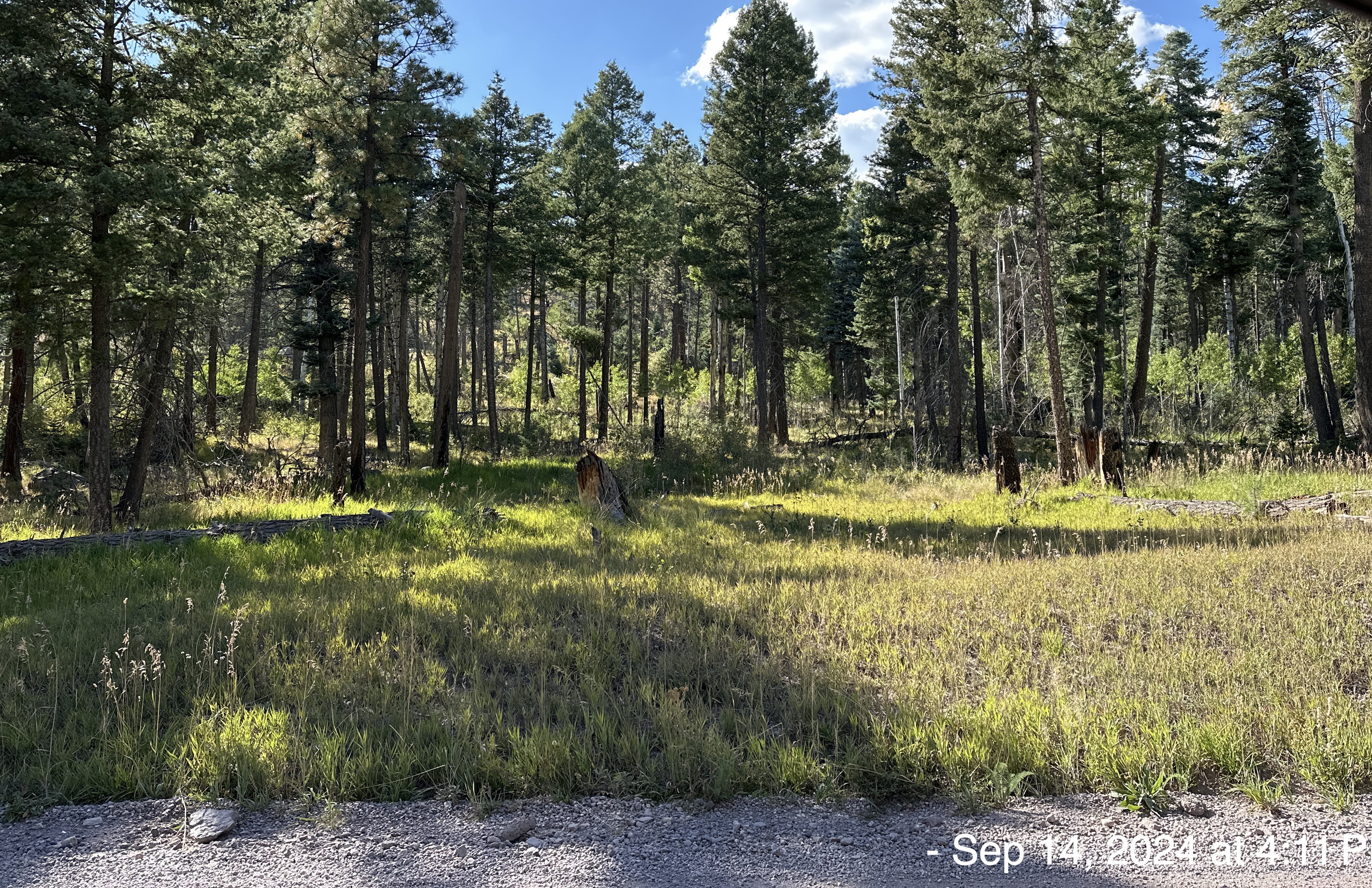
On the way back to my campsite, I came across the Valles Caldera (or Jemez Caldera), a 13.7-mile wide volcanic caldera in the Jemez Mountains. The caldera and surrounding volcanic structures are one of the most thoroughly studied caldera complexes in the United States.
These two pictures don’t do justice to the spectacular view. It was totally worth the extra hour to drive back.