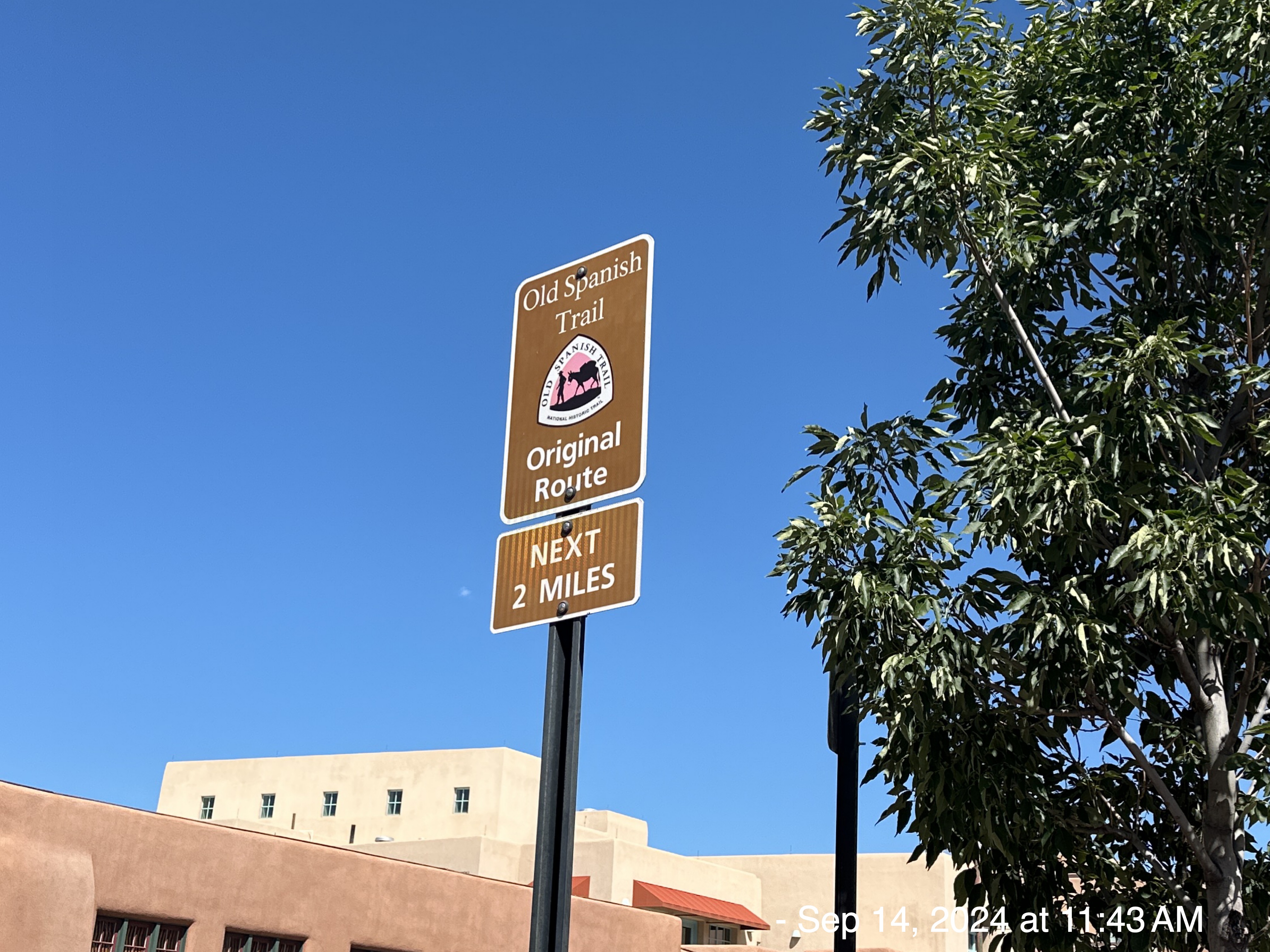
Milestones
- Part of my 3rd Annual “Bike-A-Palooza” (SEE the Whole Trip)
I was camping at Cochiti Recreation Area, and I had a spare day off, to do anything I wanted. So, I decided to drive to the Plaza in downtown Sante Fe, and just wander around. It was so enjoyable.
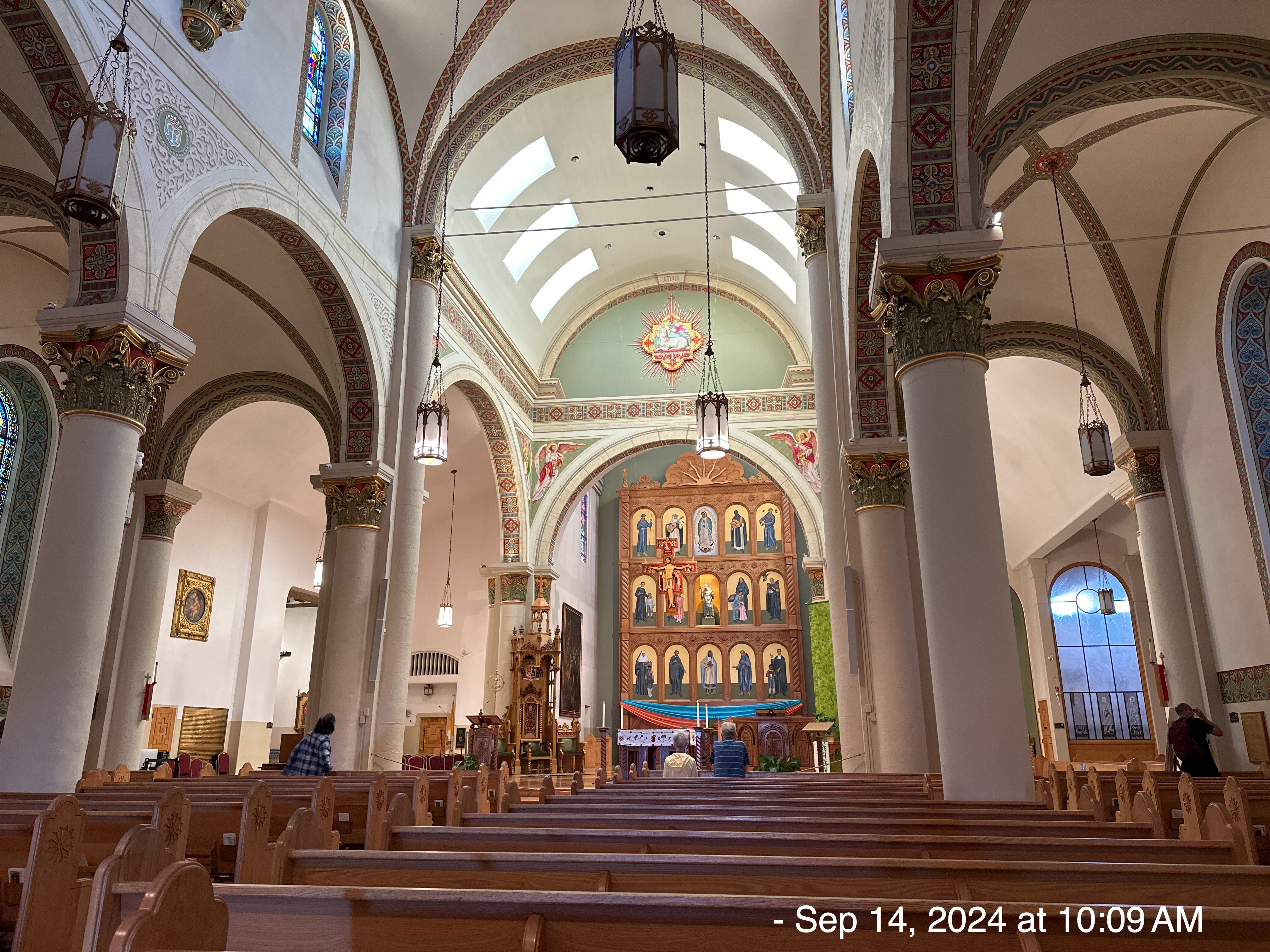
Cathedral Basilica of Saint Francis of Assisi
The cathedral was built by Archbishop Jean Baptiste Lamy between 1869 and 1886 on the site of an older adobe church, La Parroquia (built in 1714–1717). An older church on the same site, built in 1626, was destroyed in the 1680 Pueblo Revolt.
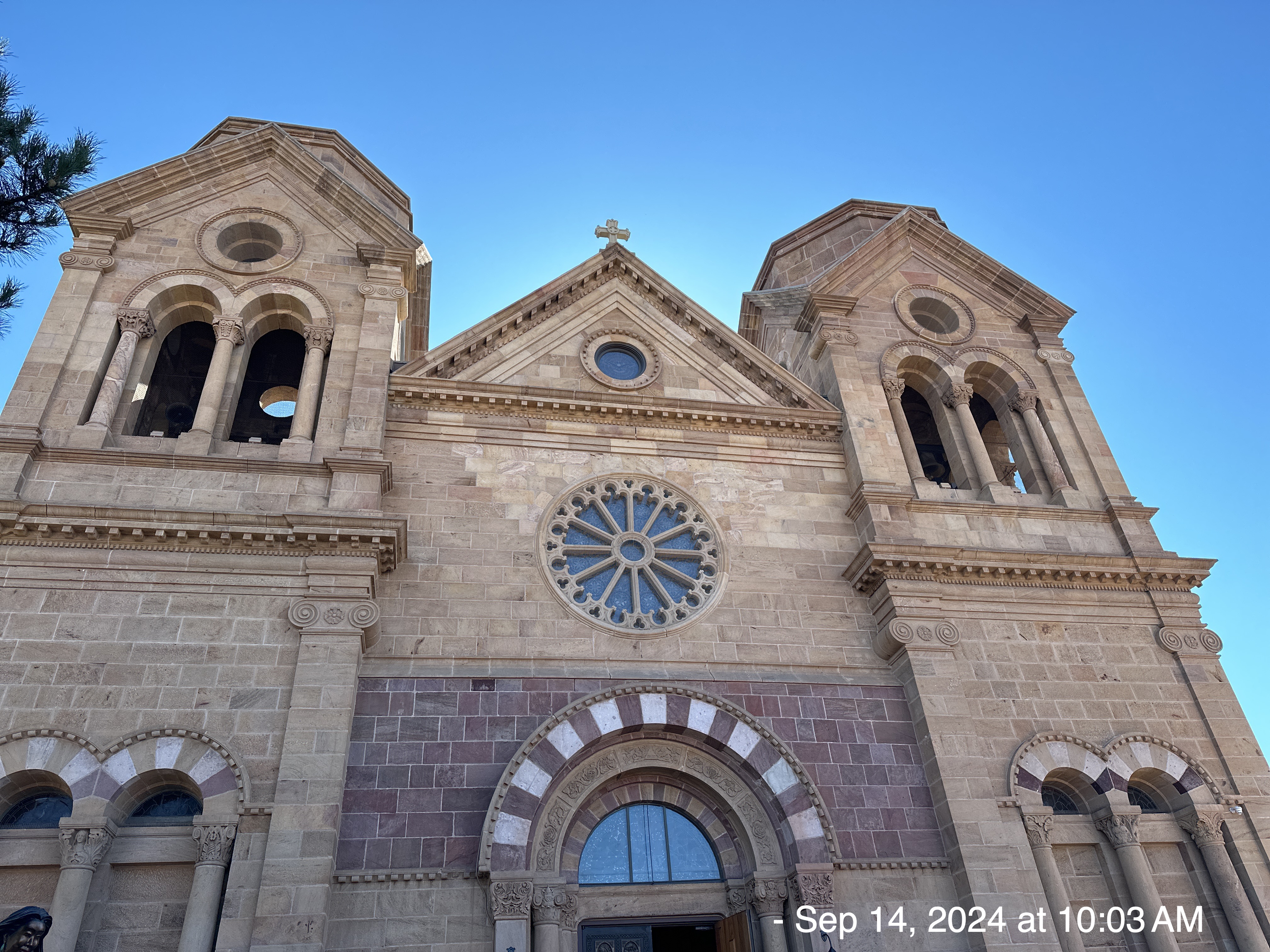
The large rose window in front and those of the Twelve Apostles in the lateral nave windows were imported from Clermont-Ferrand in France.
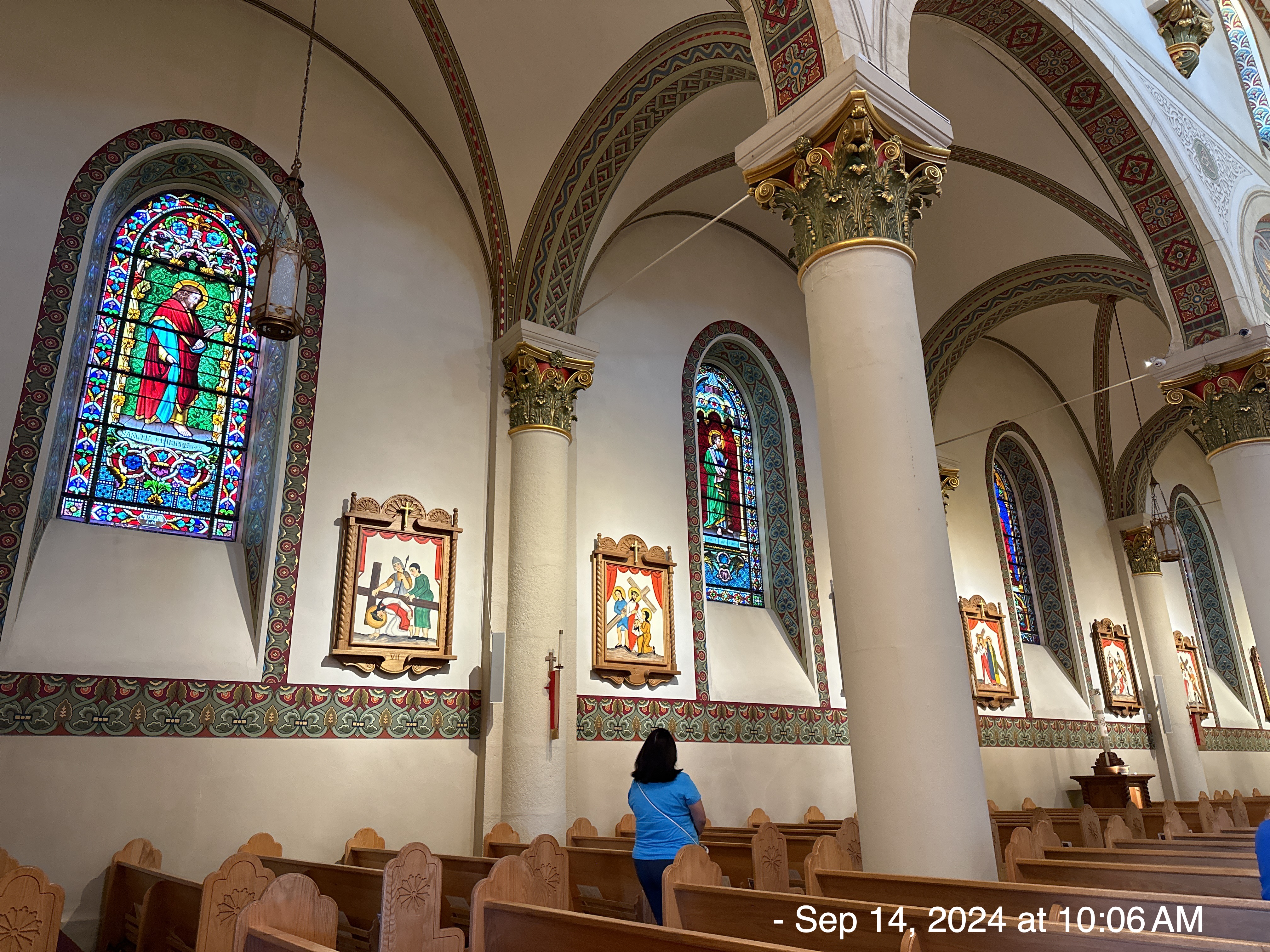
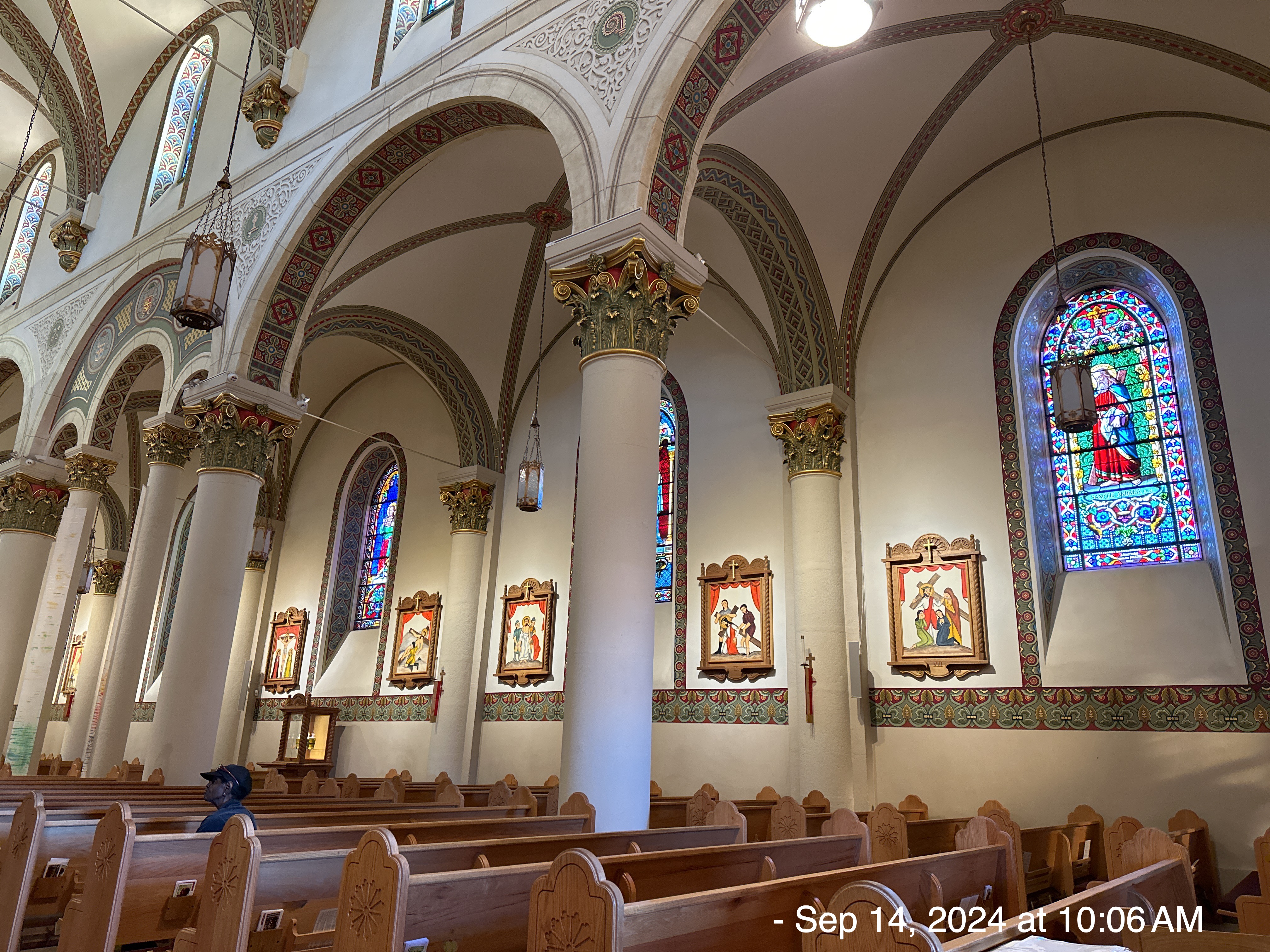
The altar screen, a reredos, was created for the 100th anniversary of the cathedral in 1986. In the center is an 18th-century statue of St. Francis. He is surrounded by painted images of saints of the New World.
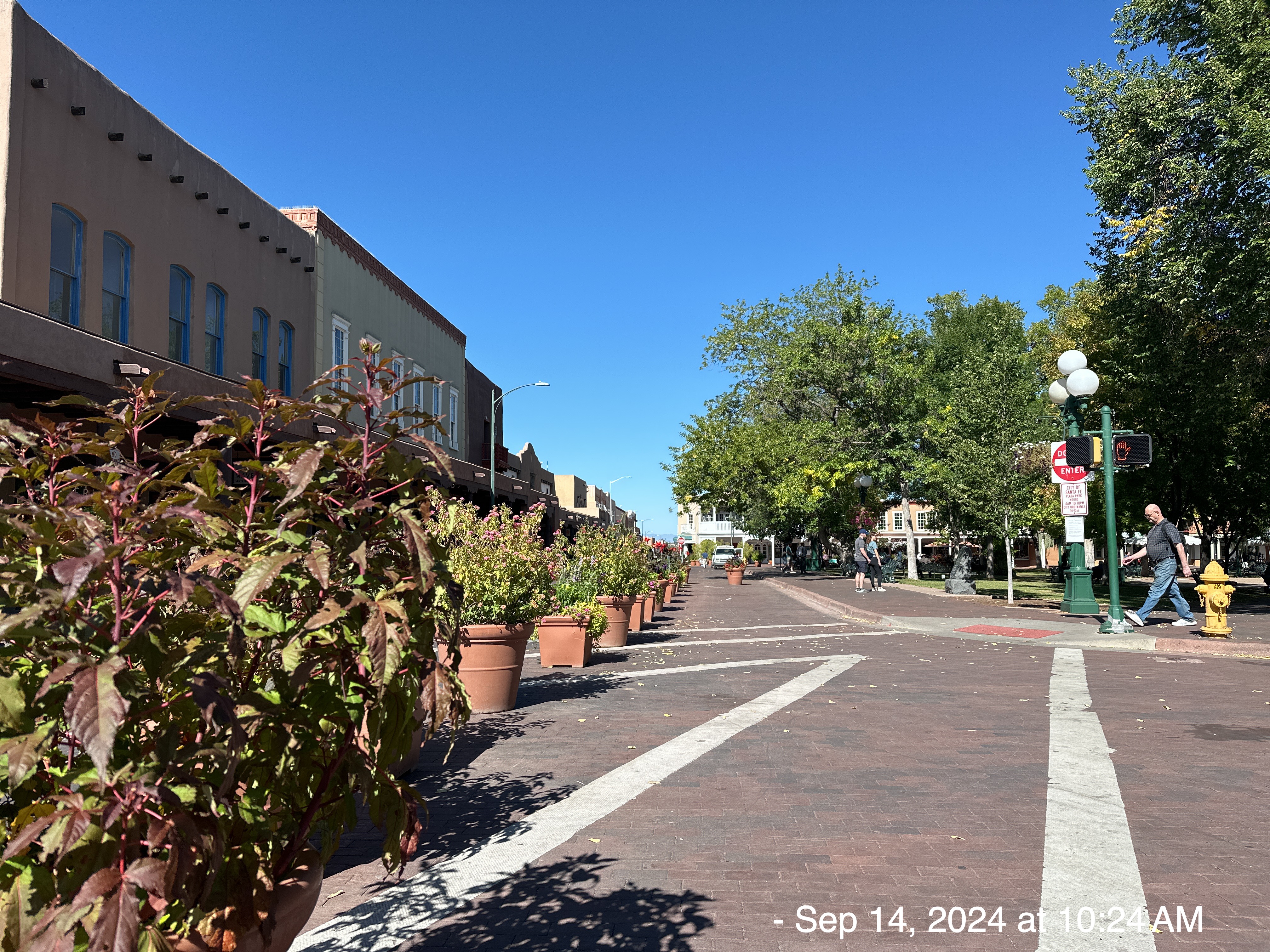
Santa Fe Plaza
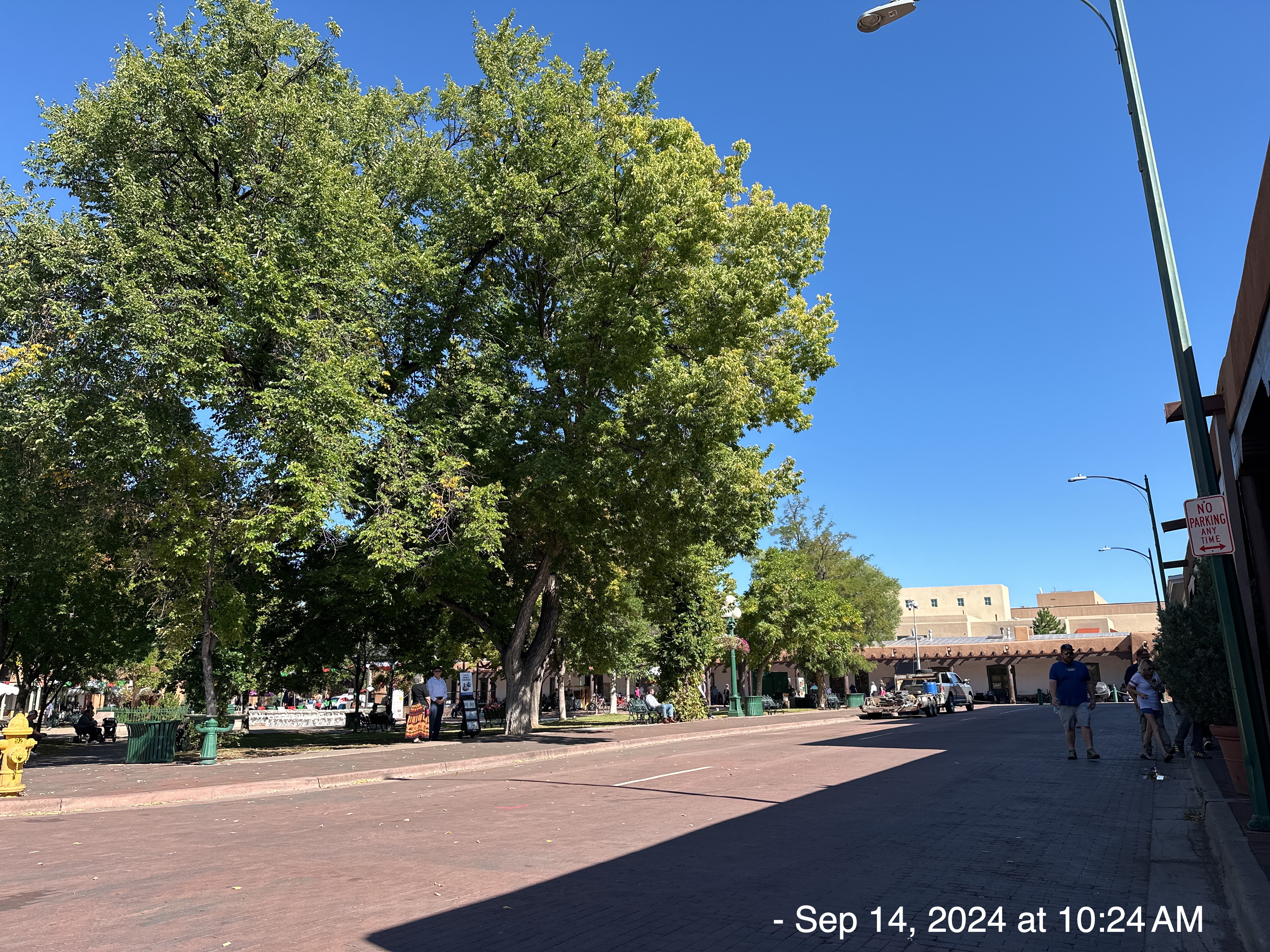
The plaza is a National Historic Landmark in downtown Santa Fe, New Mexico in the style of traditional Spanish-American colonial cities. All Spanish colonial towns with a regional governor’s office were required by the civic planning section of the laws of the Indies to have a Plaza de Armas to marshal the palace guard in. The original Plaza was a presidio surrounded by a large defensive wall that enclosed residences, barracks, a chapel, a prison and the Governor’s palace.
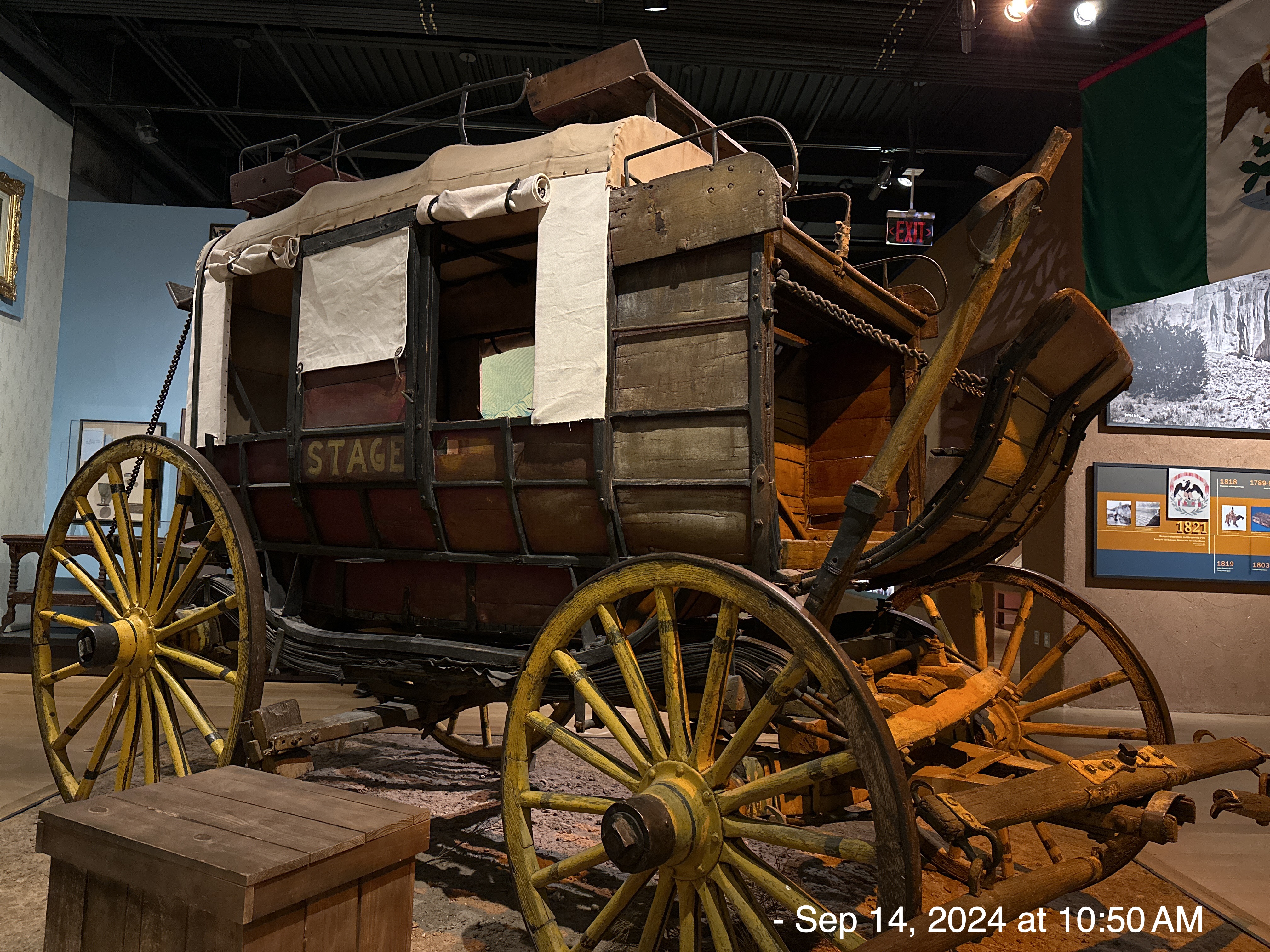
With Mexico’s Independence from Spain, in 1821, the Santa Fe Trail, a trade route connecting New Mexico with Missouri, was opened with its western terminus at the Santa Fe Plaza.
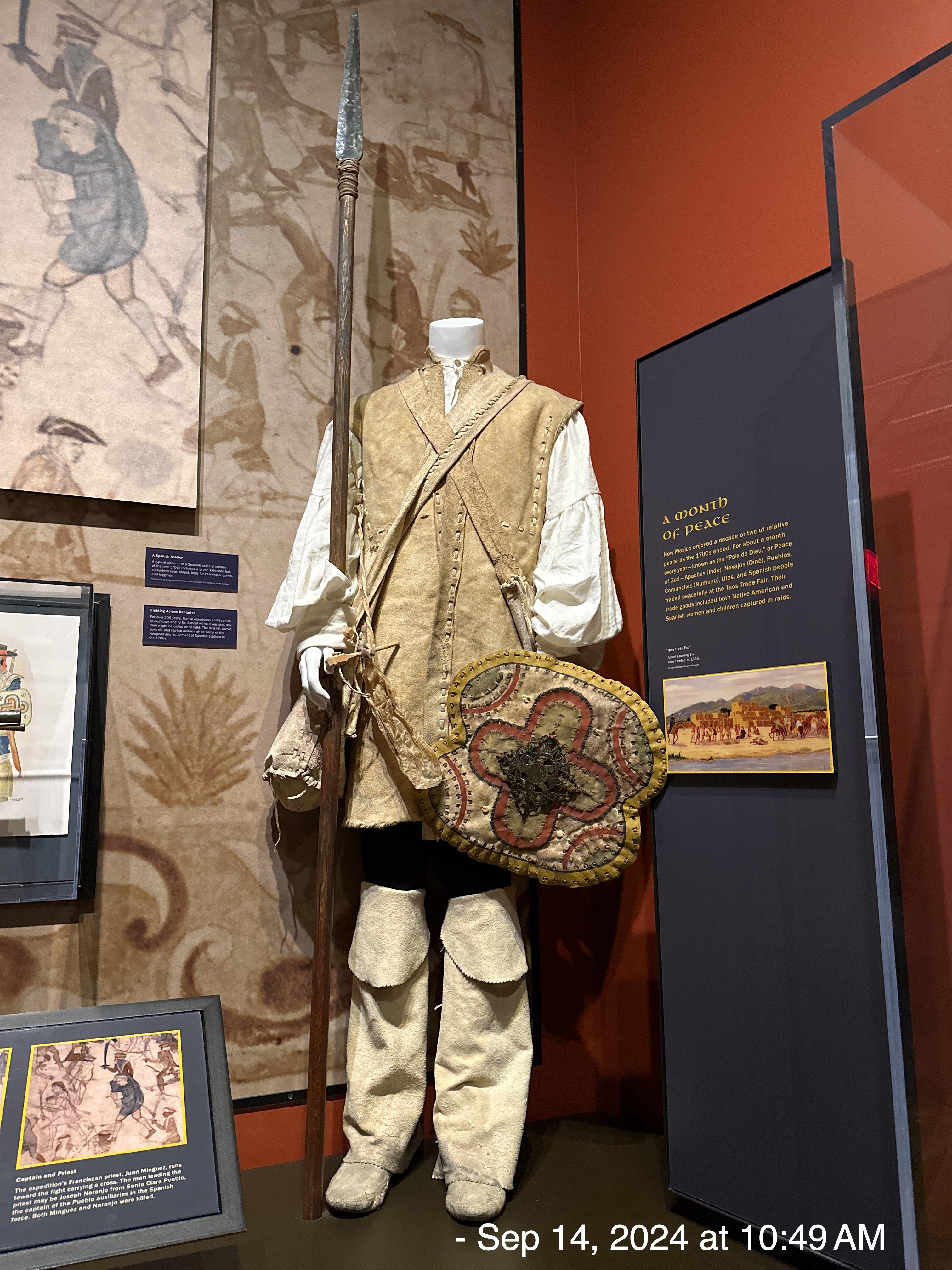
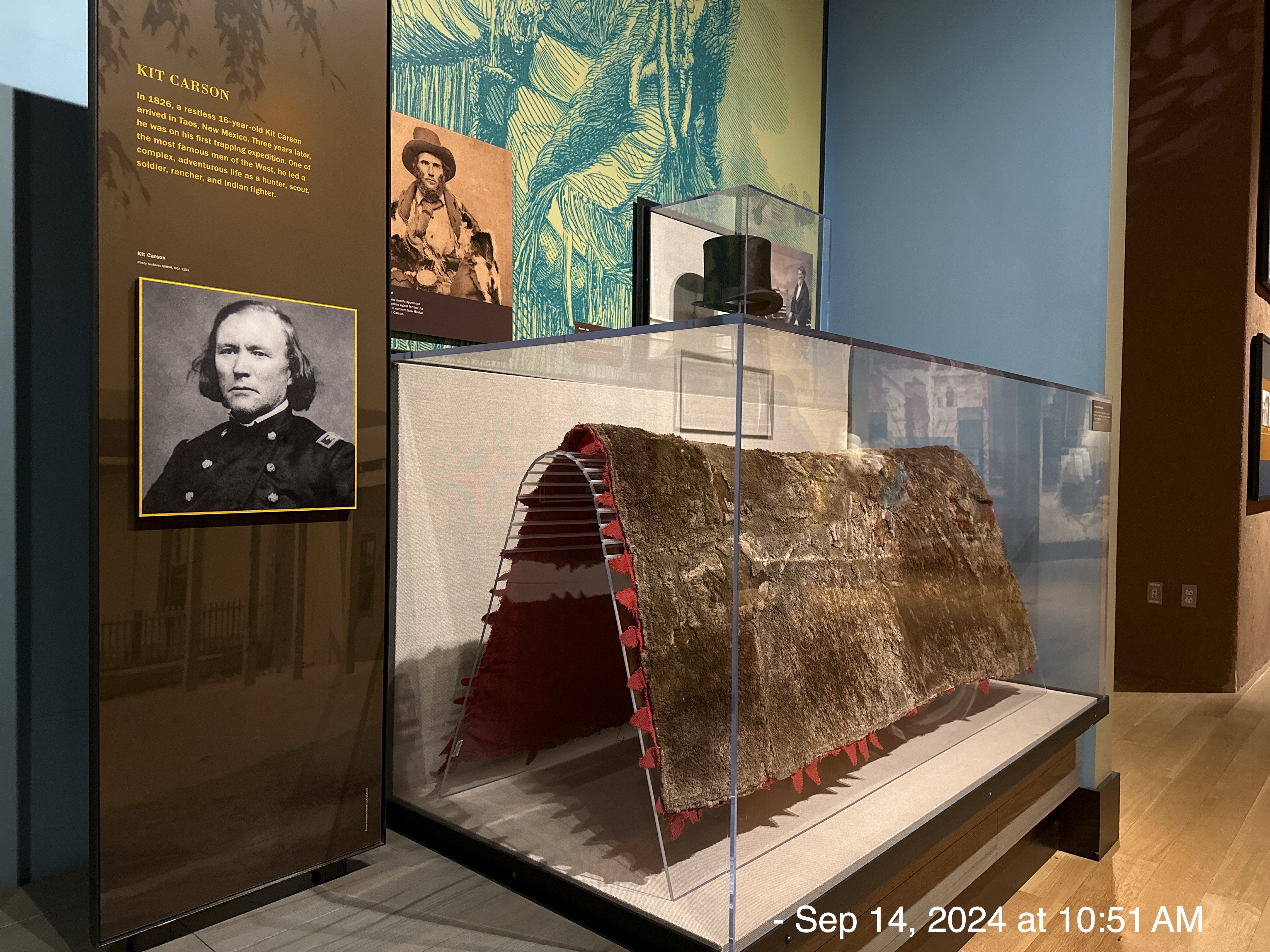
New Mexico History Museum and Palace of the Governors
Erected in 1610 by order of the Spanish Crown, the Palace of the Governors is the oldest public building in continuous use constructed by European settlers in the continental United States.
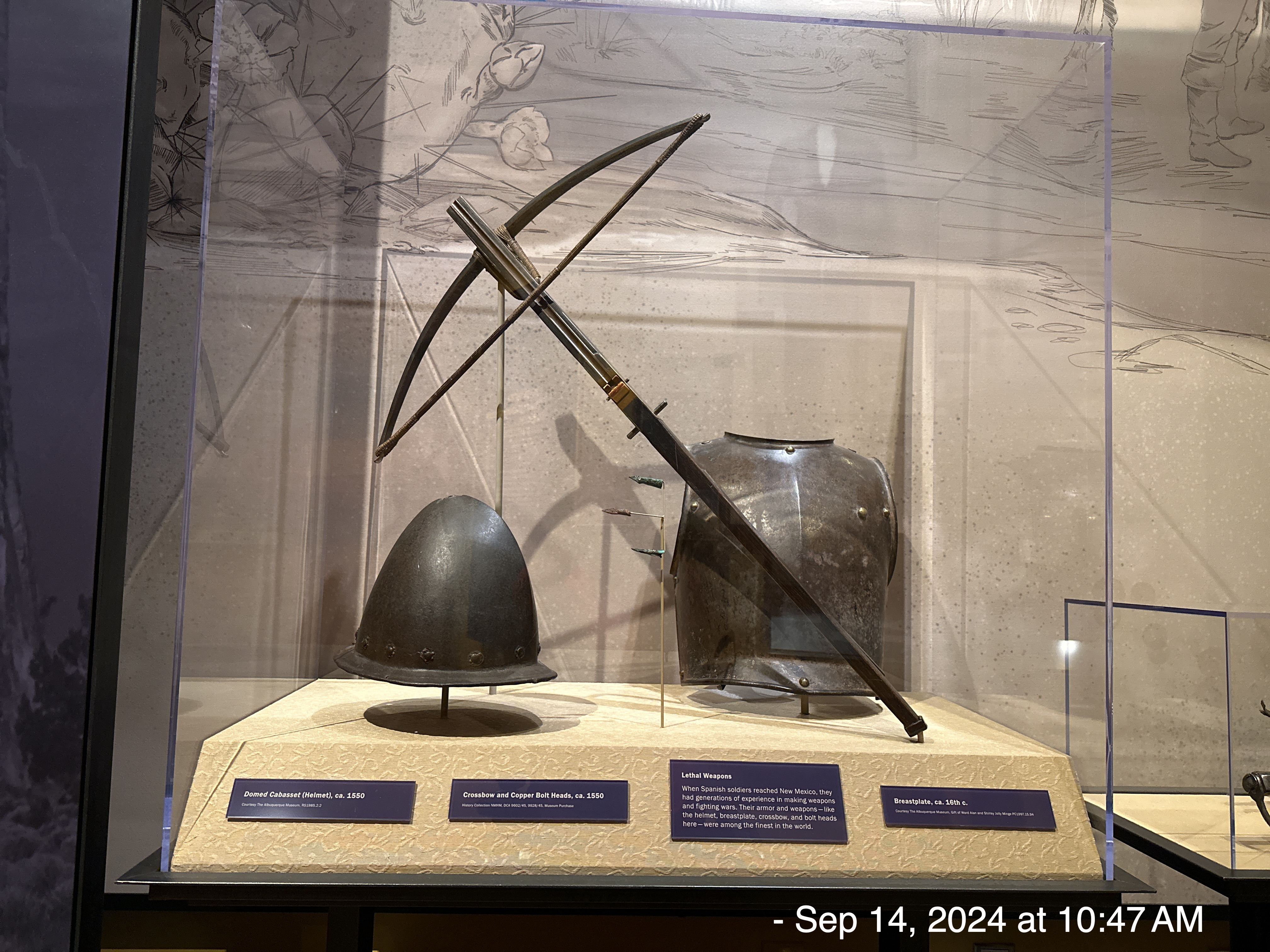
Relics…
Religion…
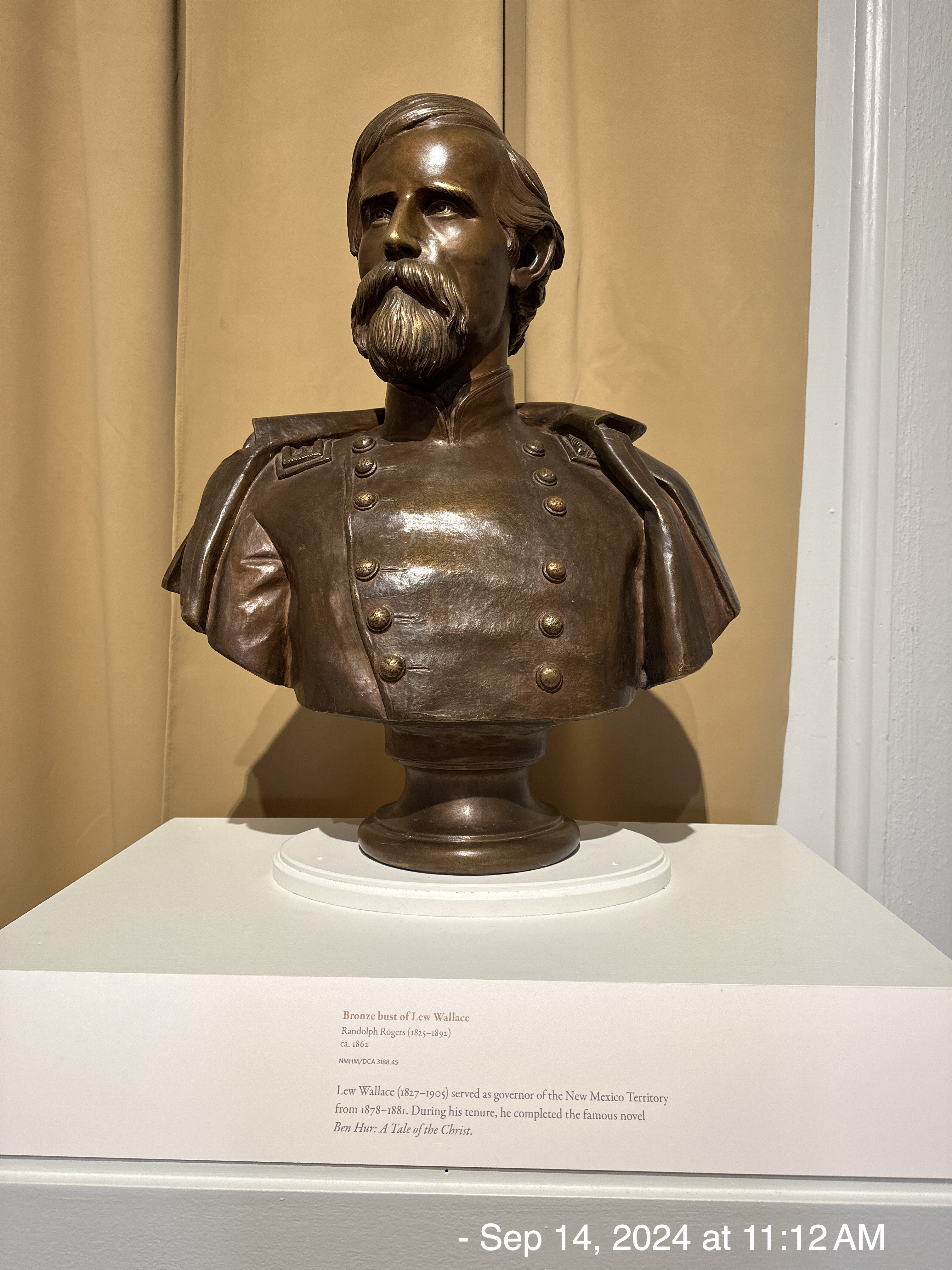
Lew Wallace (while he was Governor of New Mexico Territory) wrote the novel “Ben-Hur: A Tale of the Christ”. It was published in 1880, and it is considered the most influential Christian book of the nineteenth century. It became a best-selling American novel, surpassing Harriet Beecher Stowe’s Uncle Tom’s Cabin (1852) in sales. Ben-Hur remained at the top of the U.S. all-time bestseller list until the 1936 publication of Margaret Mitchell’s Gone with the Wind. The 1959 MGM film adaptation of Ben-Hur is considered one of the greatest films ever made and was seen by tens of millions, going on to win a record 11 Academy Awards in 1960, after which the book’s sales increased and it surpassed Gone with the Wind. It was blessed by Pope Leo XIII, the first novel ever to receive such an honour.
Rockets…
On January 20, 1942, an executive order established a training range for U.S. crews in the Tularosa Basin, called the Alamogordo Bombing Range, known today as the White Sands Missile Range.
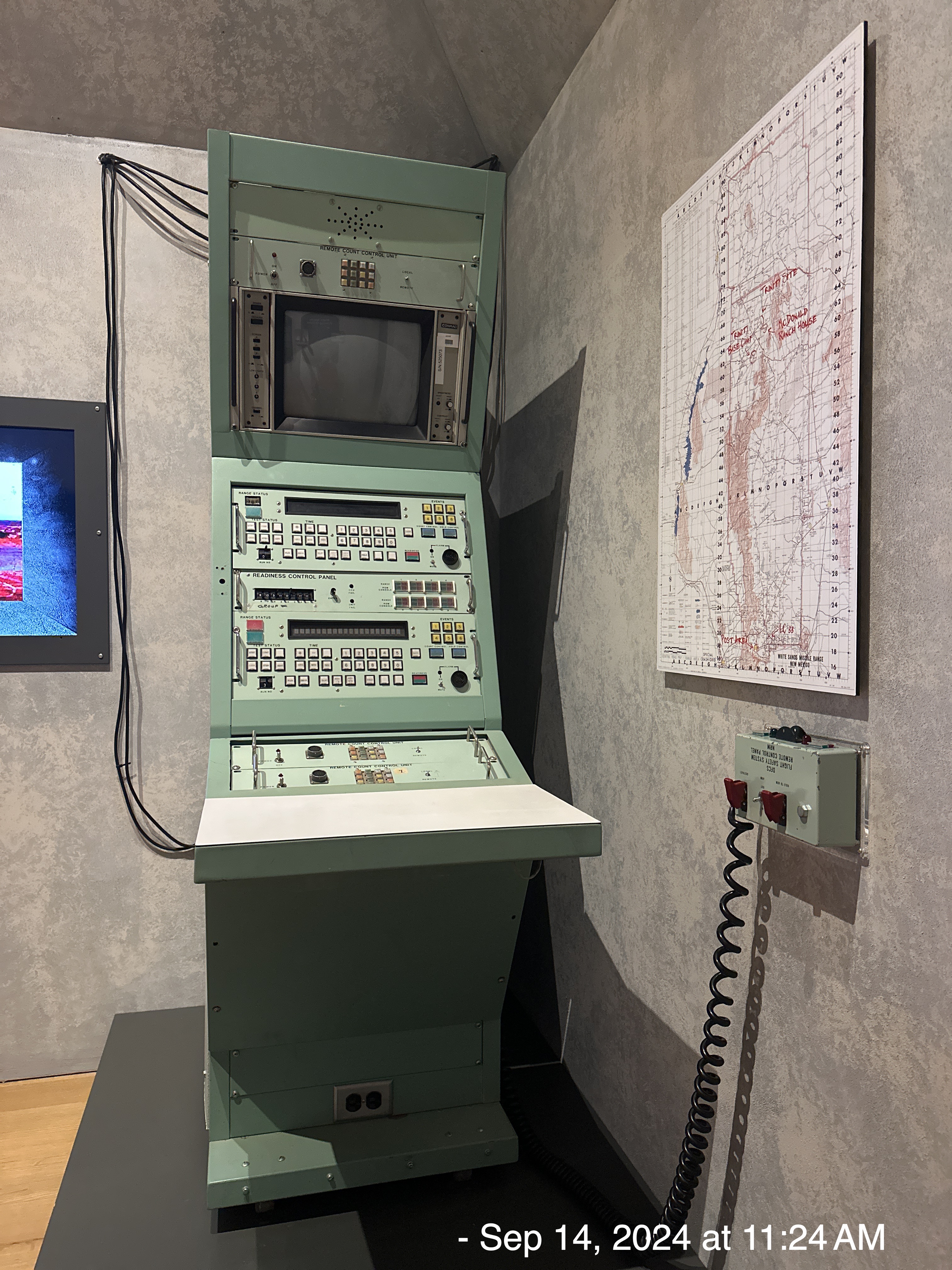
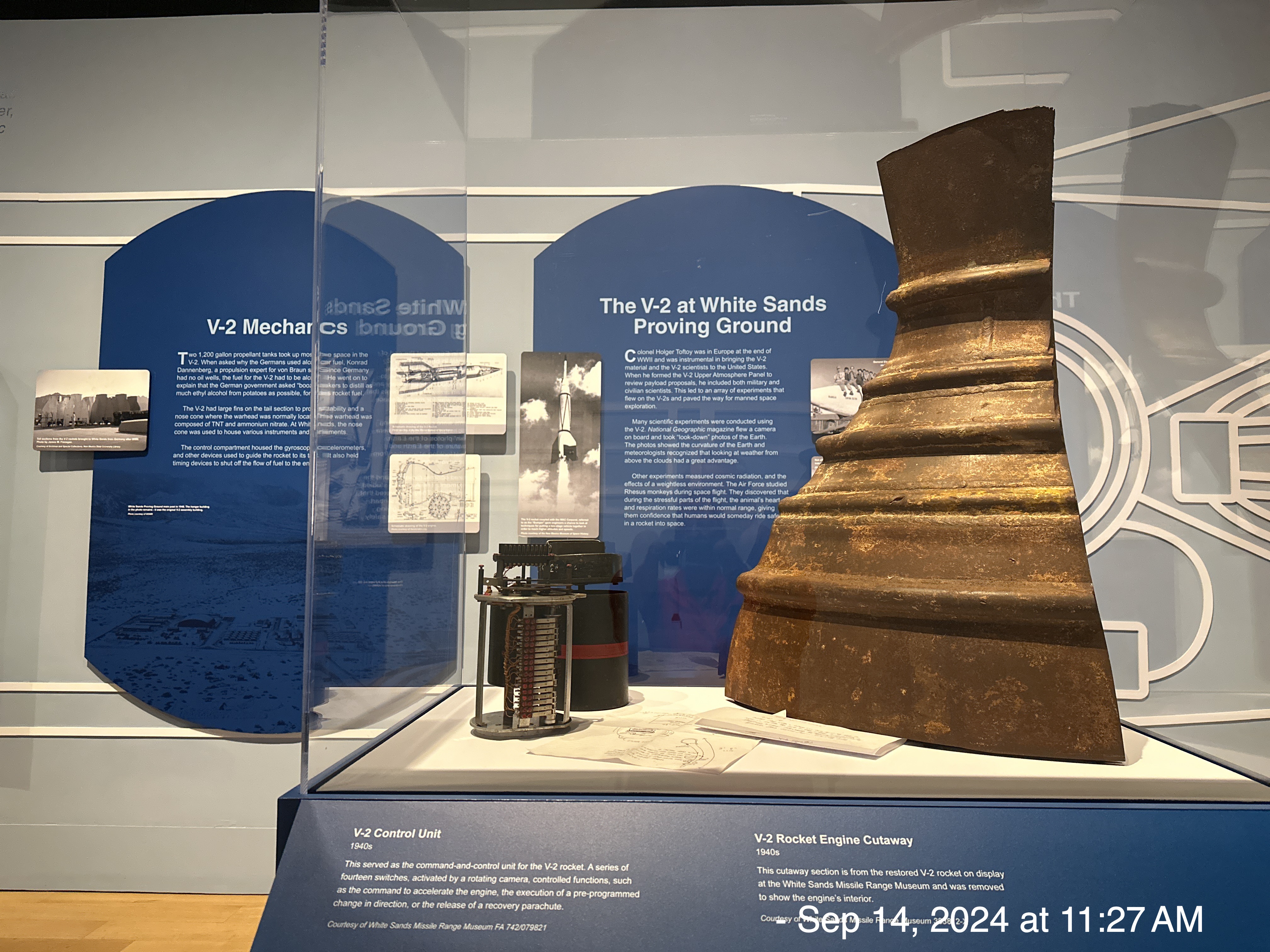
After the conclusion of WWII, 100 long-range German V-2 Rockets, captured by U.S. military troops, were brought to White Sands Missile Range.
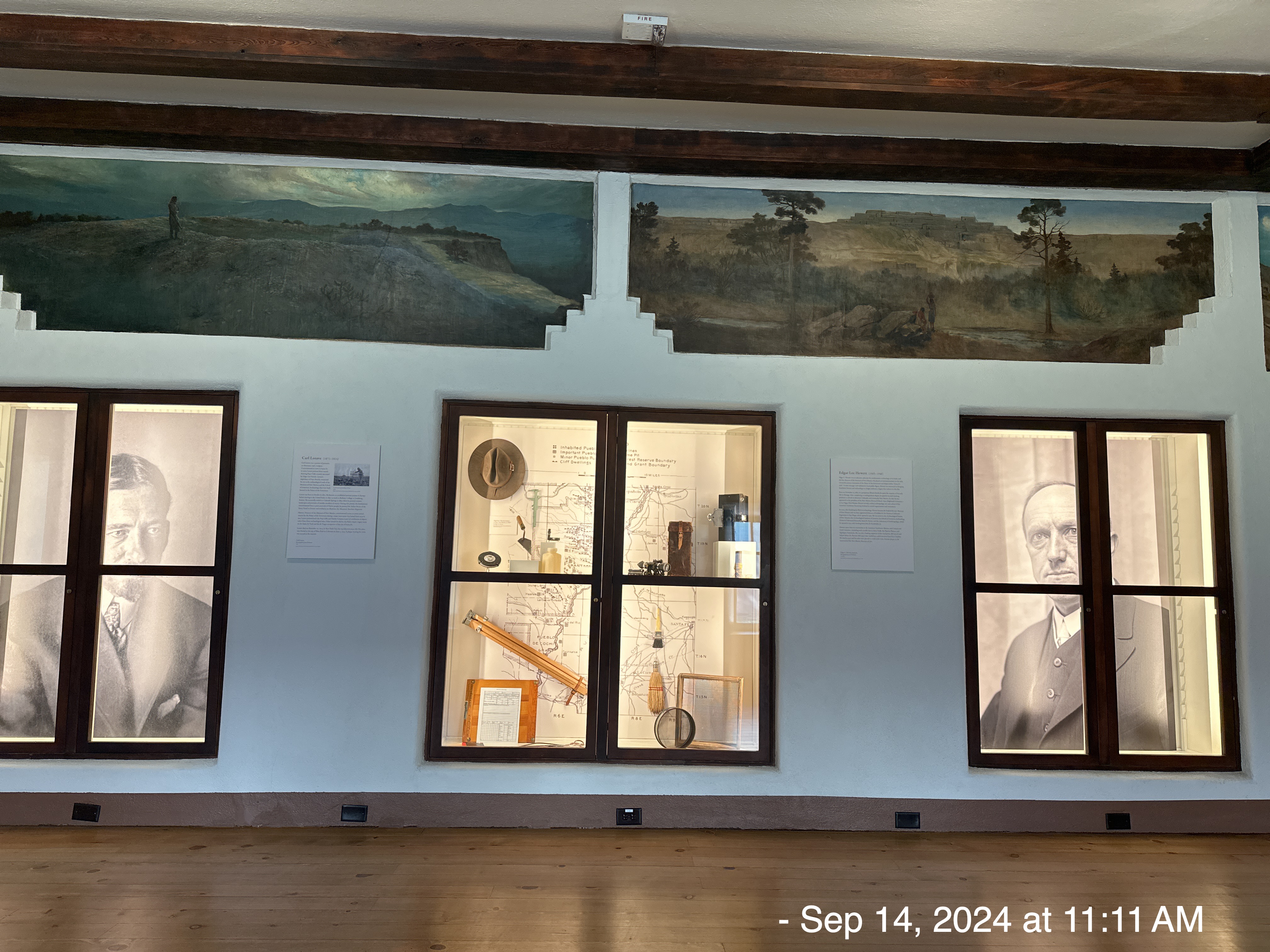
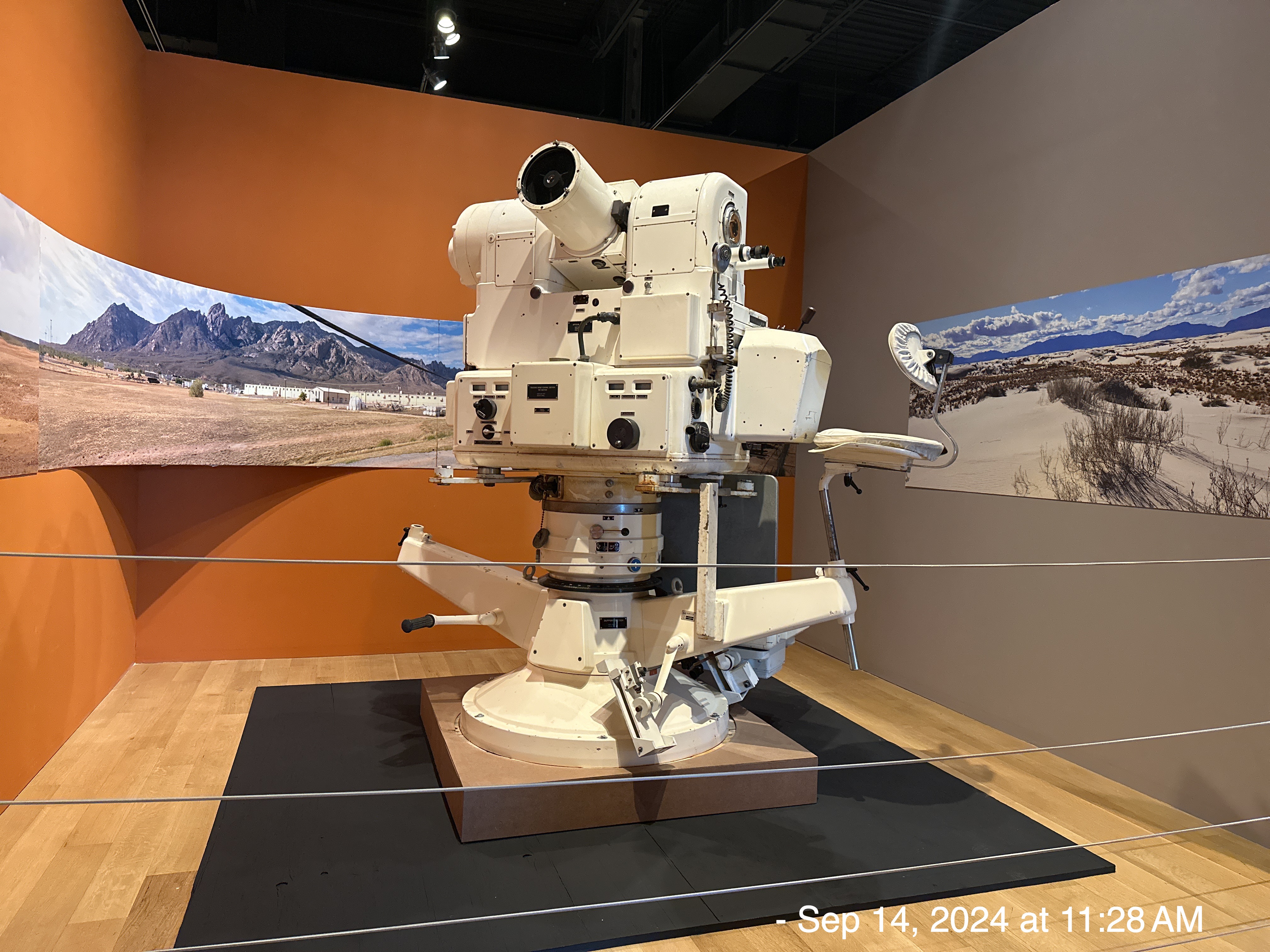
The following is a Contraves Electro Optical Tracking System, Model F (EOTS-F), and it was used at White Sands Missile Range. This cinetheodolite was located at one of the many optical instrumentation sites on the Range, and was used to record data during performance testing of missiles, aircraft, and other experimental weapon systems. These fixed cinetheodolites were retired in 1992 to make way for the new Kineto Tracking Mount System. A Cinetheodolite is a combination of a camera (“cine”) and the surveyor’s theodolite, mounted on a tracking mechanism. It tracked a missile through the course of its trajectory, observing its in-flight behavior
Basically, a cinetheodolite determined an object’s position versus time. It recorded on film the azimuth and elevation angles of the line of sight from the station to the object being tracked. The cinetheodolite required two operators, one for azimuth tracking and one for elevation tracking
Railroads…
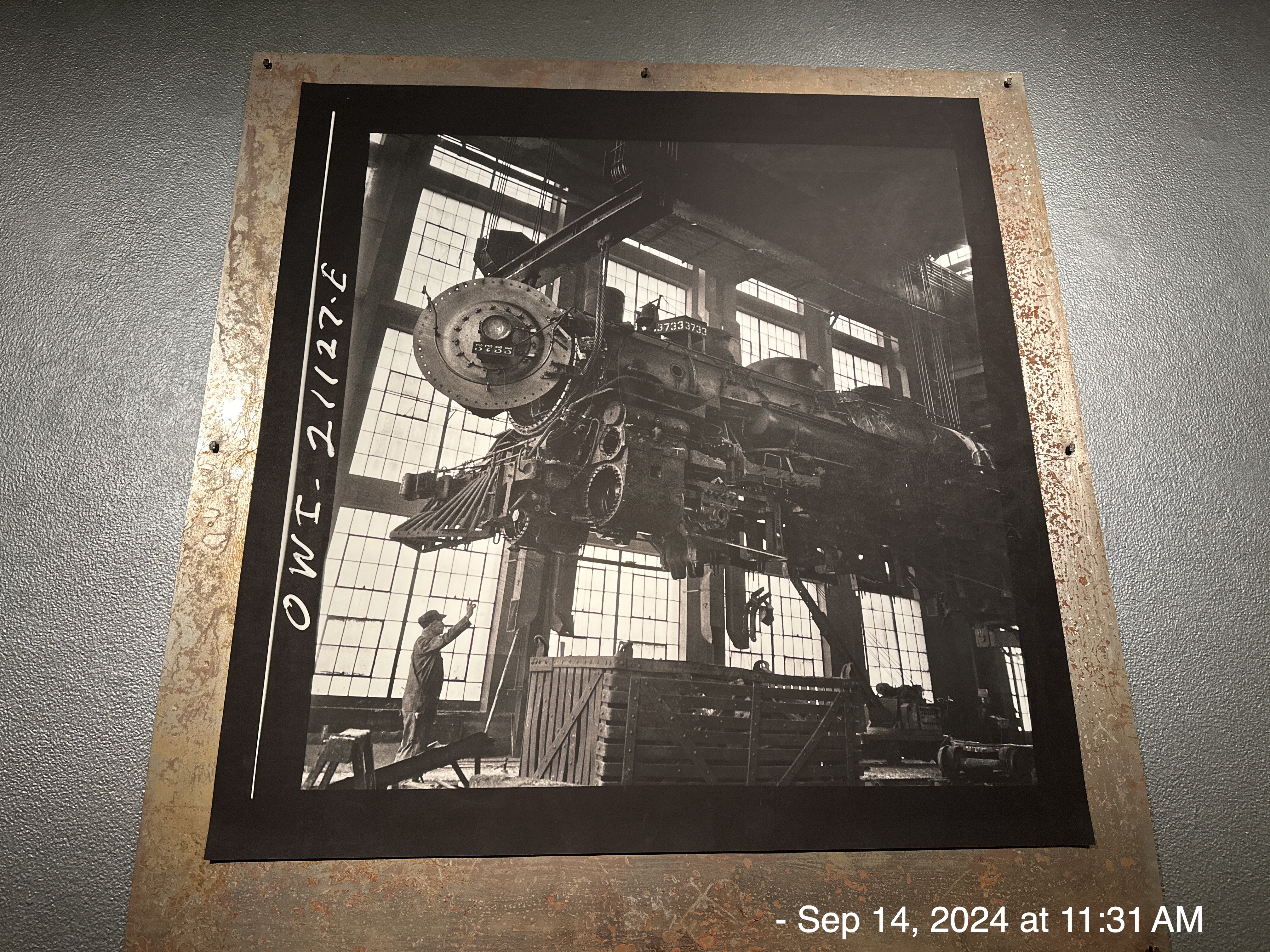
In 1880 the Atchison Topeka and Santa Fe railroad came to Albuquerque. But more importantly, the company located its locomotive repair shops in the town. At their height the locomotive shops employed 2,000 people. The quadrant system for Albuquerque addresses actually originated with this giant facility.
The following picture was in the NMHM and is part of the Library of Congress collection of photographs from the Office of War Information (OWI) which portrayed American life between 1935 and 1944.
and Restaurants…
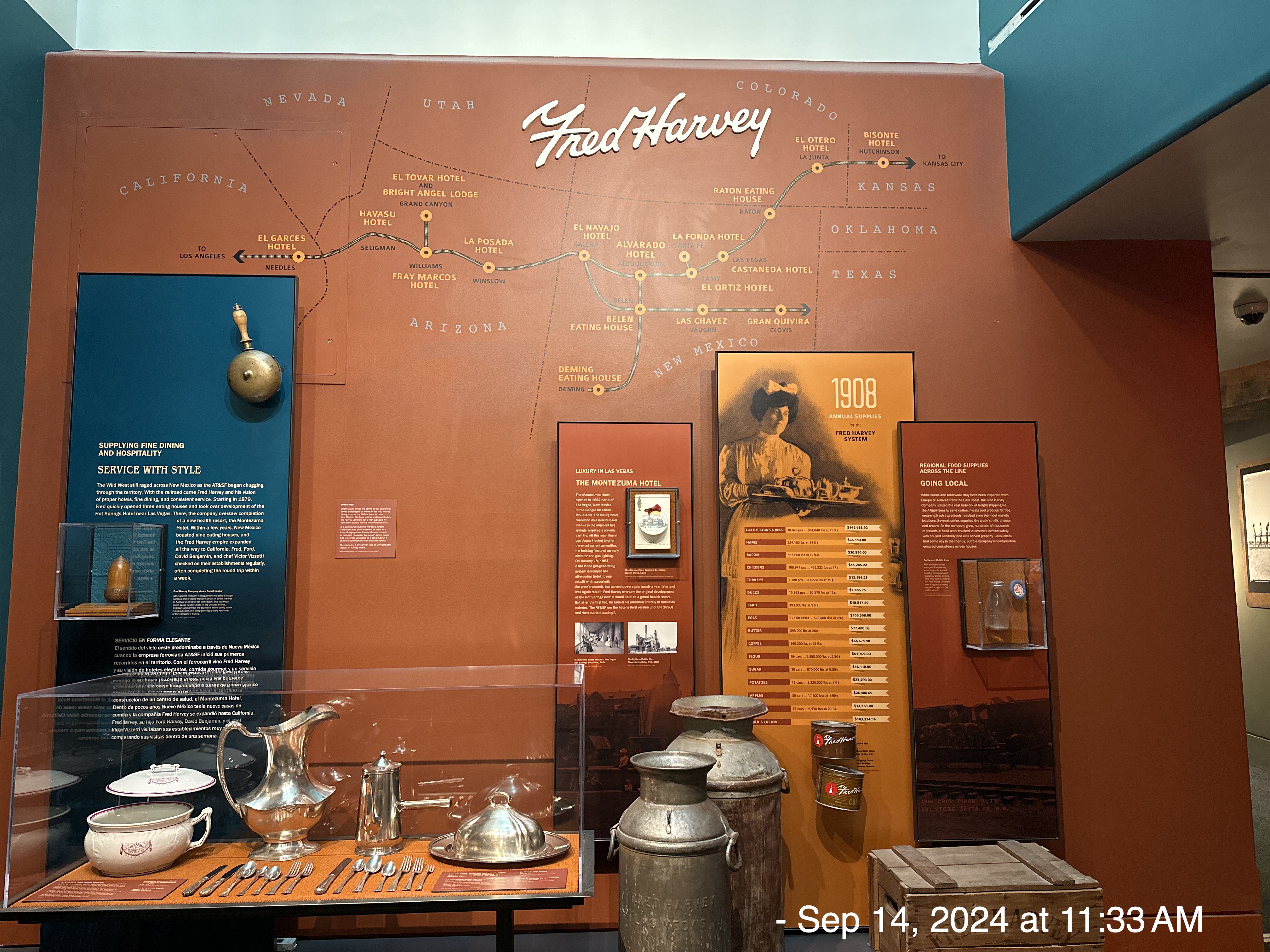
Frederick Henry Harvey (June 27, 1835 – February 9, 1901) was an entrepreneur who developed the Harvey House lunch rooms, restaurants, souvenir shops, and hotels, which served rail passengers on the Atchison, Topeka and Santa Fe Railway, the Gulf Colorado and Santa Fe Railway, the Kansas Pacific Railway, the St. Louis-San Francisco Railway, and the Terminal Railroad Association of St. Louis.
As an innovative restaurateur and marketer, Fred Harvey is credited with creating the first restaurant chain in the United States.
Always such interesting commentary, and I love your quotes of the day.
Marian and I have visited several Harvey House locations in our adventures.
Very interesting story.
It’s deja vu all over again as Yogi Berra said. Loved your pics! Santa Fe is filled with history and the plaza square – quite special.