The Spiral Galaxy is an intermediate spiral galaxy in the constellation Canes Venatici. It was discovered by Pierre Méchain in 1781. It is one of the largest and brightest nearby galaxies, similar in size and luminosity to the Andromeda Galaxy.
M106 has also played an important role in calibrating the cosmic distance ladder. M106 contains Cepheid variables similar to both the metallicities of the Milky Way and other galaxies’ Cepheids. By measuring the distance of the Cepheids with metallicities similar to our galaxy, astronomers are able to recalibrate the other Cepheids with different metallicities, a key fundamental step in improving quantification of distances to other galaxies in the universe.
Viewing Location – Near the Salton Sea, Imperial County, CA
- Lat/Lon: 33.3815562,-115.6448477
- Sky Magnitude: 21.65 magnitudes/square arcsecond
- Sky Luminance: 0.237 mcd/m2
- Bortle Scale: 4 (rural/suburban transition) equal to a Sky Magnitude between 21.69–20.49.
Observation
- Catalog Designation: Messier 106, NGC 4258.
- Celestial Coordinates: RA 12h 18m 57.5s | Dec +47° 18′ 14″
- Observation Duration: 1 night, 294 x 10sec = 49 minutes
- CCD temperature in degrees Celsius: 26
USE IMAGE SLIDER TO SHOW/HIDE ANNOTATIONS
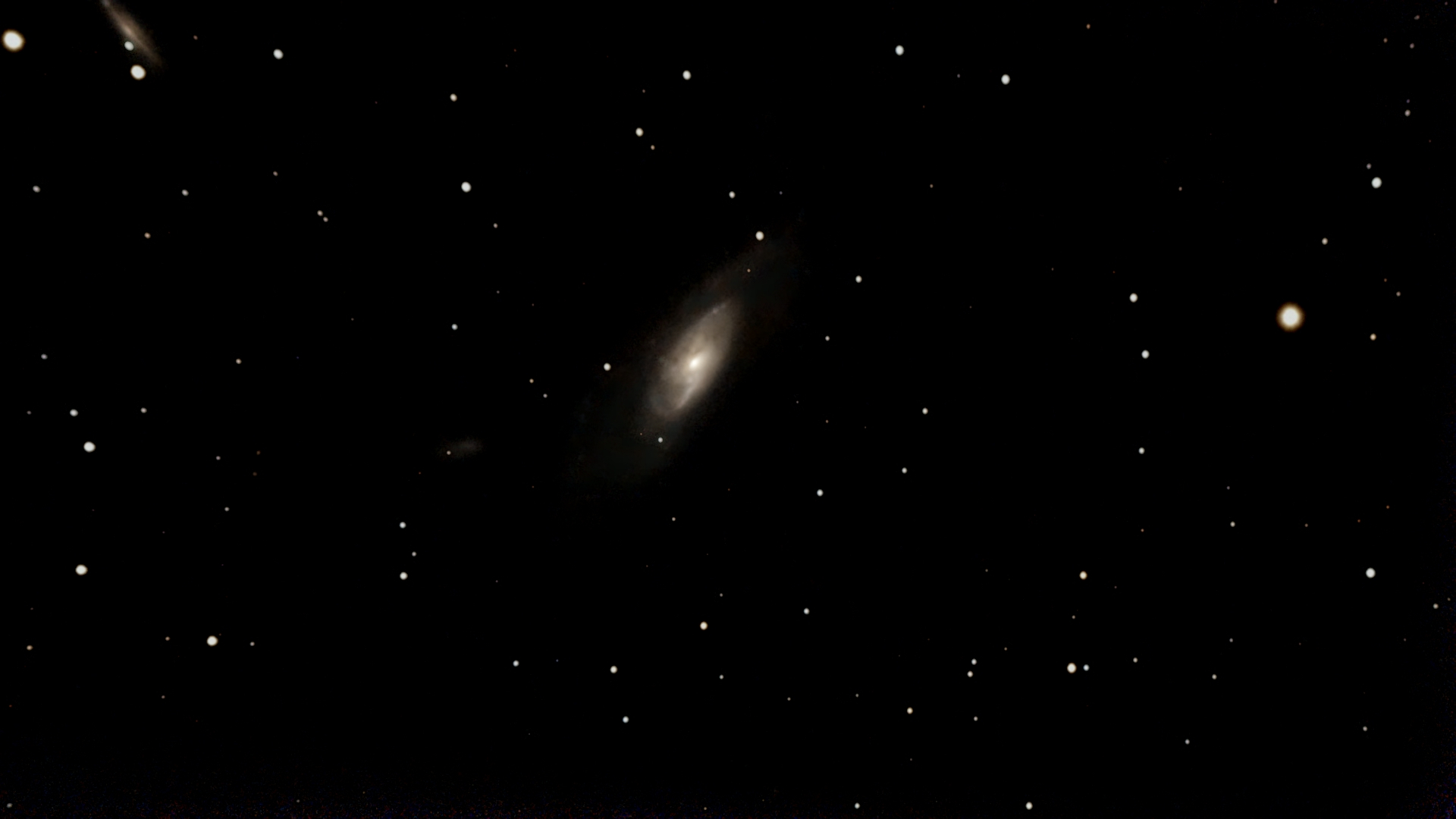
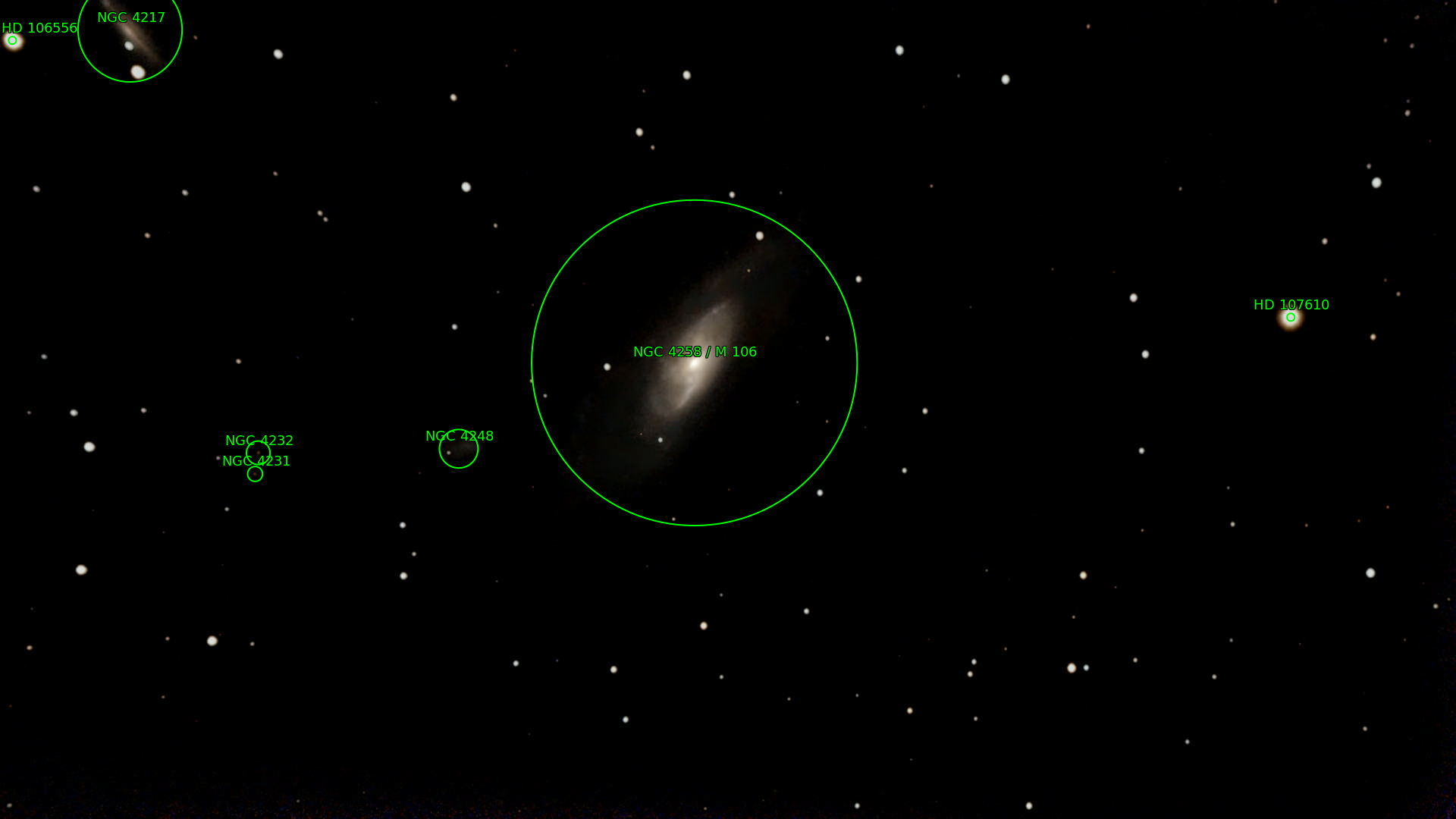
Annotations provided by Astrometry.net through an automated process of “plate solving”.
ZOOM – FULL SCREEN
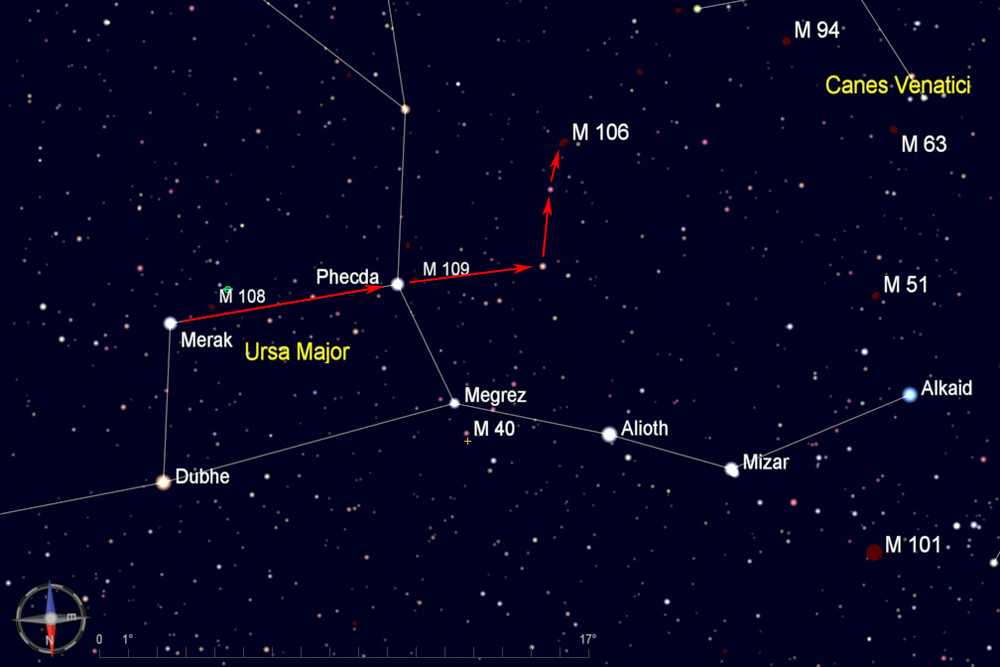
Surrounding Constellation – Canes Venatici
Canes Venatici is Latin for ‘hunting dogs’, and the constellation is often depicted in illustrations as representing the dogs of Boötes the Herdsman, a neighboring constellation. Canes Venatici is bordered by Ursa Major to the north and west, Coma Berenices to the south, and Boötes to the east.
Hi Van,
Great to see the latest experience you have had. Very exhilarating!
What adventurousness on your part, proud of you for defying any doubts.
Beautiful pictures, beautiful life!
Hoping to talk soon.